
REVIEW · MUNICH THIRD REICH AND WWII HISTORY TOURS
Munich: National Socialism Historical Tour in GERMAN
Munich shows its Nazi origins in plain sight. This 2-hour, German-language walk tracks how National Socialism formed in the city, with black and white photos that help you picture Munich in the 1920s and 1930s as you move street to street. The route starts at Königsplatz and ends at Odeonsplatz, so the story has real geography, not just facts on a page.
I also like how the tour uses a professional city guide to connect major dates and places, especially the events around November 9, 1923, and the later Beer Hall Putsch tied to November 9, 1933. It is not just a history lecture. You get explanations that point you toward what to look at while you’re standing there.
One consideration: this is a walking tour with no entrance fees included, so if you’re hoping for a lot of inside-the-building time, you might feel you only got a partial look. It also runs rain or shine, so comfortable shoes matter.
Key things to know before you go
- Königsplatz to Odeonsplatz route: you cover multiple landmark locations tied to the rise of the NSDAP
- November 9, 1923 plus November 9, 1933: the guide connects dates to specific spots in Munich
- Führerbau and today’s Documentation Centre area: propaganda-era architecture explained in context
- Gestapo headquarters site pass-by: you hear how state power worked in daily life
- Black-and-white photo handouts: you see Munich in the 1920s and 1930s as the guide describes the events
- Choose private or group: the same core story, with a format that can fit your travel style
Walking the Nazi-era map, Königsplatz to Odeonsplatz
This tour is built around one simple idea: history becomes easier to understand when you can see the streets where it happened. You begin at the main entrance of the Staatliche Antikensammlungen, and your guide is easy to spot, wearing a BIG BLUE BAG with the white words Weis(s)er Stadtvogel. That little detail helps, because you do not waste time figuring out where to meet.
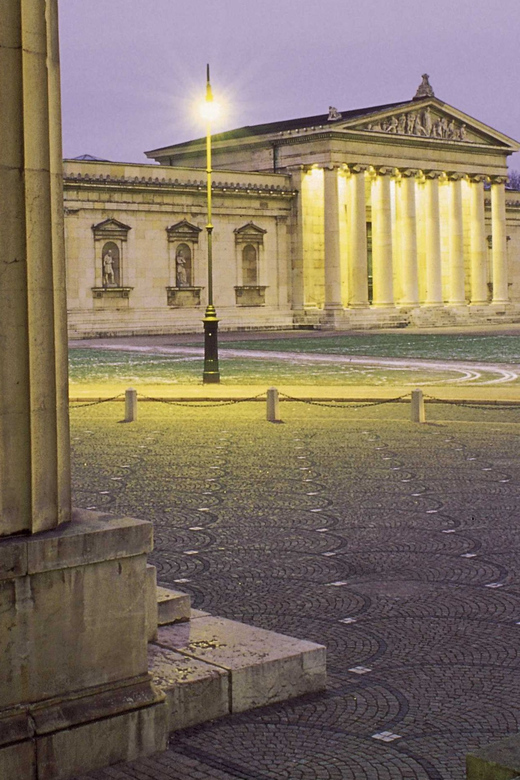
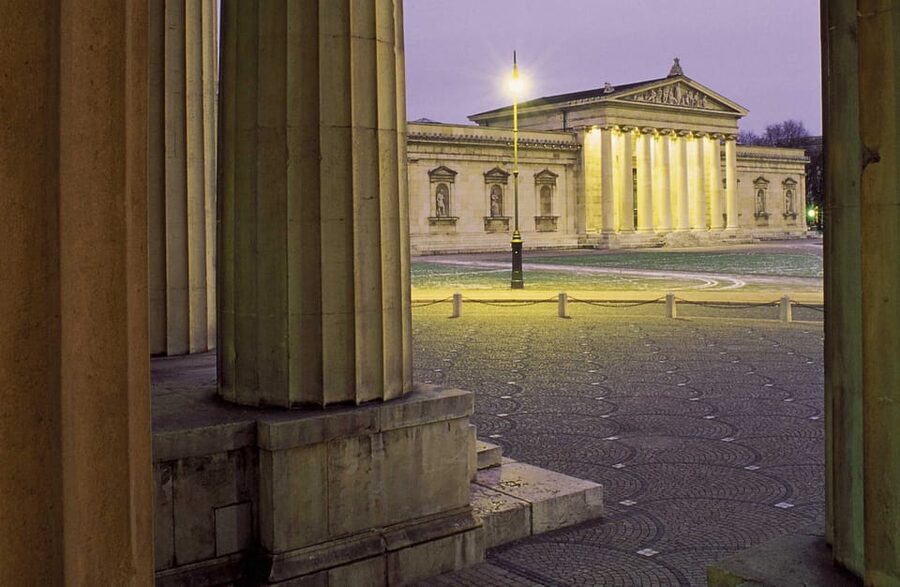
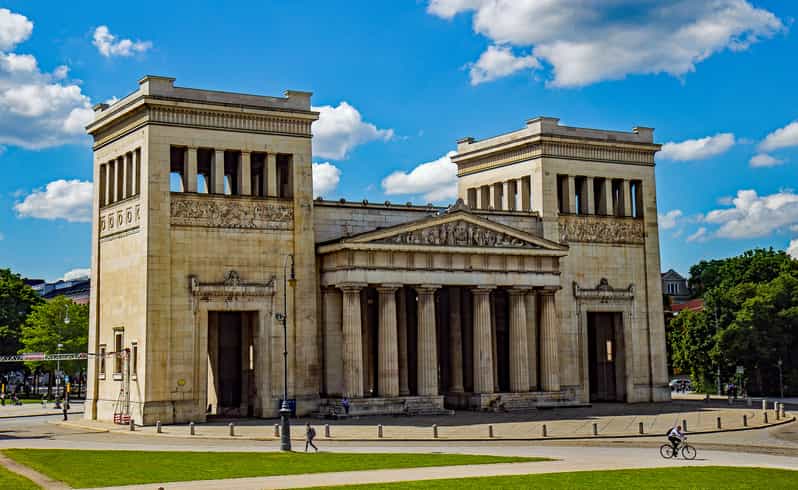
From there, you walk into Munich’s political geography, starting at Königsplatz. This area matters because it is tied to how the movement wanted to stage itself, and how public space can be used for intimidation, symbolism, and recruitment. As you move along, you are not only hearing about National Socialism in Germany. You’re watching how the city’s layout supported the movement’s message.
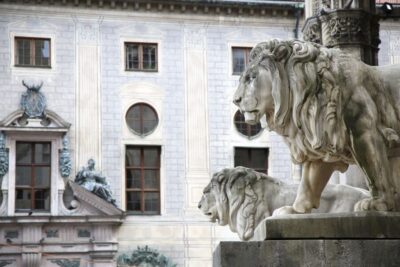
The walk continues toward the former Führerbau, and along Briennerstrasse, which is one of those streets where the architecture and spacing make it easier for a guide to point out scale and visibility. Then you reach Feldherrnhalle at Odeonsplatz. This end point is especially strong because it connects the talk directly to the Beer Hall Putsch on November 9, 1933, so you finish with a clear, place-based climax.
Other walks through the same years
- Munich: Third Reich & WWII Walking Tour
★ 4.6 · 6,181 reviews - Third Reich Walking Tour Munich
★ 4.5 · 4,291 reviews - Munich: Birthplace of the Third Reich Guided Walking Tour
★ 4.6 · 771 reviews - Munich World War II Sites Including Dachau Concentration Camp
★ 4.5 · 570 reviews
November 9, 1923 and 1933: how the dates become a story
A lot of people know the National Socialist timeline in loose terms. What makes this tour useful is that it treats the dates like milestones you can track in order. The tour highlights the events of November 9, 1923, then comes back to the later November 9, 1933 story at Feldherrnhalle. Hearing both tied to specific spots helps you notice the movement’s pattern: it uses dramatic moments, then builds momentum from them.
The guide’s approach, especially with the walking route, helps you understand that the movement did not appear fully formed. The NSDAP rose to power over time, and the guide explains that rise while you’re passing locations that carried political meaning for the movement. You get a clearer sense of how ideology turned into authority, and how Munich became part of the engine rather than just the background.
If you are the kind of traveler who likes a clear timeline, this tour fits. If you prefer museums and quiet reading time, it still works, but you’ll need to accept that the focus is street-level explanation, not deep archival browsing.
Königsplatz: the starting point that frames the whole movement
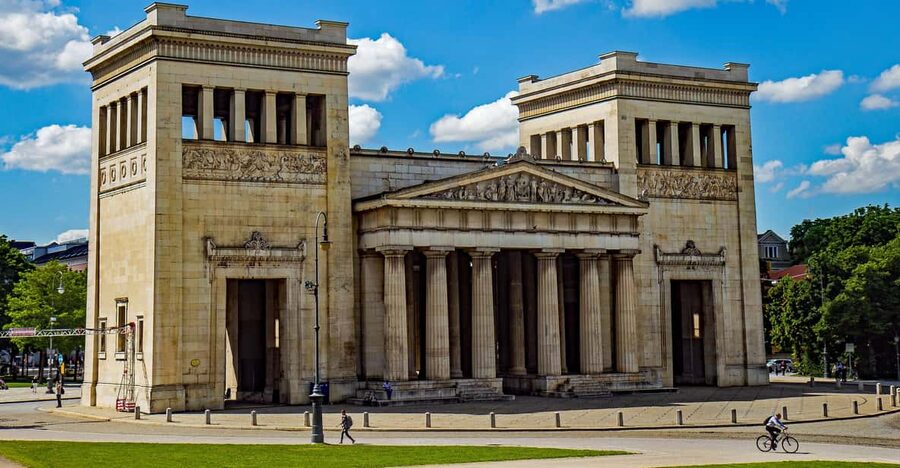
Königsplatz is where the tour begins, and that choice is not random. Starting here gives you a foundation for how the movement wanted to present itself, visually and politically. You’re not yet at the most famous locations from later years, but you are at a place where the guide can set the tone: this was where early momentum mattered.
As you listen, pay attention to the way the guide connects architecture and space to symbolism. Even without going inside any buildings, you can understand the point: public areas can function like stages. When a movement believes it is destined for the future, it often tries to make today look inevitable, and it does that through careful use of location and spectacle.
For me, this is one of the most valuable parts of the tour because it teaches you how to observe. You leave knowing what to watch for when you see “memorial” spaces in other cities.
The former Führerbau and the Munich Documentation Centre area
Next up is the former Führerbau, which the tour frames as a key site related to the era of the movement. You also hear about the Munich Agreement in 1938 at this location, and the fact that today the area is associated with what is now the Munich Documentation Centre for the History of National Socialism.
That’s an important shift in perspective. The tour takes you from propaganda-era meaning into modern documentation. Standing near the former structures, you can understand how power used specific buildings and settings, and then you see how present-day institutions try to preserve context rather than repeat slogans.
If you’re worried that this tour might only cover the dramatic events, this stop is a good balance. It helps explain the broader political machinery, including how Germany’s leadership era decisions shaped Europe. You are not only learning what happened in the streets. You’re learning how power operated through agreements and institutions too.
Briennerstrasse: why the walk between stops matters
Briennerstrasse is part of the route, and I’m glad it’s included because it turns the tour into more than a series of bullet points. Streets like this create a natural “in-between” zone where you can reset your attention and absorb the guide’s connections. You hear explanations while you’re transitioning, and that matters because it keeps the story from feeling chopped into disconnected scenes.
This section also helps you pace the experience. You get to look up and around, not only at plaques, but at the urban feel. Even when the tour does not provide a museum-style stop, the walking segments are where the guide’s narrative often clicks for first-timers.
So if you’ve got limited time in Munich and want an efficient introduction, the route structure is part of the value. Two hours can feel short, but the movement between landmarks prevents “information overload” because it stays tied to what you’re seeing.
Passing the former Gestapo headquarters site
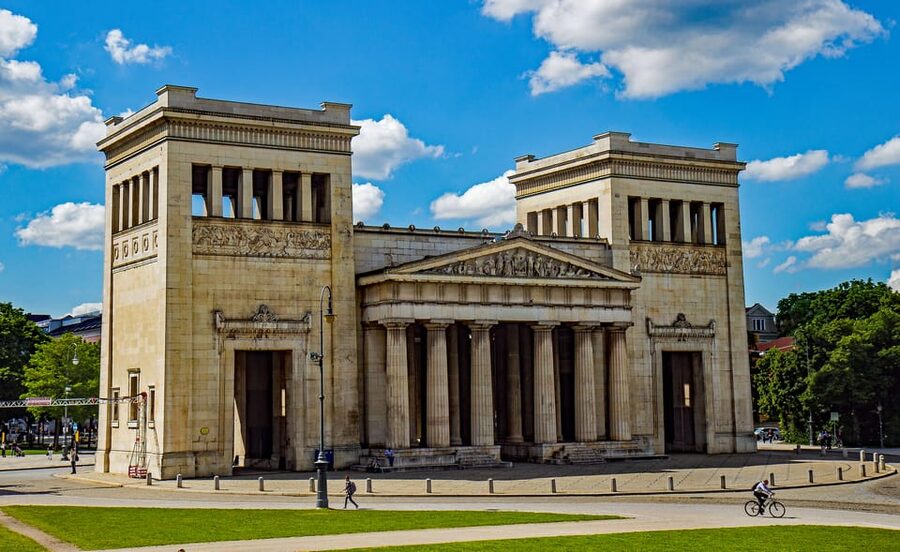
One of the more serious moments on the tour is when you pass the former Gestapo headquarters. The guide brings in how the NS regime worked, not just how it staged rallies. That distinction matters.
Hearing about the rise of the NSDAP is important, but understanding the machinery of control gives you the fuller picture of what National Socialism meant for people in Germany. Even as a pass-by, this stop tends to shift the tone from spectacle to consequences. You start thinking about fear, enforcement, and the everyday reality behind propaganda.
In a short walking tour, you will not get a full lesson in secret police organization. Still, the fact that this location is on the route helps you avoid a common mistake: treating the era as only about meetings, speeches, and dramatic marches. Power needs systems, and that system is part of the story.
More of the story, told properly


Feldherrnhalle at Odeonsplatz: the Beer Hall Putsch on November 9, 1933
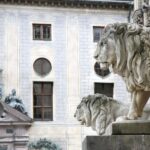
The endpoint at Feldherrnhalle in Odeonsplatz anchors the most famous dramatic moment referenced on the route, the Hitler’s Beer Hall Putsch on November 9, 1933. Finishing here helps because the guide can connect the meaning of that day to the physical space.
When you stand at Feldherrnhalle, it is easier to understand why the movement loved symbolism and public theater. Moments like these rely on visibility and momentum. The guide links the event to the broader rise of National Socialism, so you can see how a failed or contested moment can still feed a larger political outcome.
This is also a good time to pause mentally. If the tour left you with names and dates, this final stop turns them into something you can remember. You walk away with a mental map, not just notes.
Black-and-white photographs: why the visual aids help
The tour includes historic black and white photographs that depict Munich in the 1920s and 1930s. I consider this a big plus, because a guide’s words are often easier to hold onto when you can match them to an image. Even if you know the broad story, seeing what the city looked like before later changes makes the events feel less abstract.
These images also help you interpret the spaces. When the guide mentions where crowds gathered, or how the movement presented itself, the photographs help you visualize scale, clothing, and the atmosphere of that time. It is one of the ways a short walking tour can do more than just point and explain.
If you’re an independent traveler who likes to compare your own impressions to what you learn, this photo element is a practical tool. It gives you a reference point you can revisit later in your own memory.
What you get for $34 in 2 hours, and who this suits
At $34 per person for a 2-hour tour, the value is mostly about guide-led orientation. You are paying for someone to connect the rise of National Socialism to specific Munich locations in a logical sequence. If you’re doing this on a day when you want a focused intro and you do not want to spend hours researching, the time-to-information ratio is strong.
You also get some flexibility: you can choose a private or group tour. That matters because sensitive topics like this are sometimes easier when you can control pacing and questions. In a group, you benefit from shared attention and you might hear questions you did not think to ask. In a private format, you can steer the level of detail toward what you need.
This tour is also clearly geared toward people who can walk comfortably. You should bring comfortable shoes, and the tour runs rain or shine. There’s no mention of indoor time beyond what you might observe from the street, and entrances fees are not included.
So who should book it? This works well for first-time Munich visitors who want a structured overview of the Nazi-era origins of the movement in the city. It also fits travelers who like a guide’s narrative and street-level context more than pure self-guided reading.
Practical details that make the day smoother
Plan for a straightforward walking experience. You start at the main entrance of the Staatliche Antikensammlungen. Then you follow the guide through several iconic points: Königsplatz, the former Führerbau, Briennerstrasse, a pass-by of the former Gestapo headquarters, and finally Feldherrnhalle at Odeonsplatz.
It is a German-language live tour. If you’re not comfortable with German, you might need to rely on your own background knowledge, because the tour is not described as multilingual. Still, even basic understanding of key terms can help you follow the main plot as the guide ties events to locations.
For your gear, keep it simple: comfortable shoes. The tour happens rain or shine, so dress for the weather and expect you’ll be outside the whole time.
Also, note the accessibility info: it is listed as wheelchair accessible, but it is also marked not suitable for people with mobility impairments. If mobility is a factor for you, it’s worth double-checking the exact route needs and whether your situation matches what the operator can accommodate.
Should you book the Munich National Socialism Historical Tour?
If you want a guided, street-by-street introduction to how National Socialism took root in Munich, I’d say yes. The route is compact enough for a busy day, but it still touches the core landmarks tied to the movement’s rise, including Königsplatz, the former Führerbau area tied to the Munich Agreement and documentation today, the pass-by of the former Gestapo headquarters, and Feldherrnhalle for the Beer Hall Putsch on November 9, 1933. The black-and-white photographs are a real help, especially for first-timers trying to visualize the era.
I would think twice if you need lots of indoor time or specific entrance-based exhibits, because entrances fees are not included and this is focused on the walking and explanation. Also, if you’re looking for a language other than German, you should plan ahead since the live guide language is listed as German.
Overall, this is a serious tour done in a practical format: you walk, you learn, you leave with a usable sense of place.
FAQ
How long is the National Socialism Historical Tour in Munich?
The tour duration is 2 hours.
What language is the tour guide speaking?
The live tour guide speaks German.
How much does the tour cost?
The price is $34 per person.
Where is the meeting point?
Meet in front of the main entrance of the Staatliche Antikensammlungen.
How do I recognize the tour guide?
The tour guide will be wearing a BIG BLUE BAG with the white words Weis(s)er Stadtvogel written on it.
Is the tour private or group?
You can choose between a private or group tour.
Does the tour run rain or shine?
Yes, it takes place rain or shine.
What should I bring?
You should bring comfortable shoes.
What is included, and are entrance fees covered?
A city guide is included. Food and drinks, hotel pickup and drop-off, and entrance fees are not included.
Is the tour wheelchair accessible?
The activity is listed as wheelchair accessible, but it is also noted as not suitable for people with mobility impairments.
More Tours in Munich
More Tour Reviews in Munich
The Same Years, Other Routes


Newest Munich and Bavaria reviews
- Scenic Adventure Private Day Tour to The Konigssee Salzburg★ 4.5 · 3 reviews
- Jewish Museum & Jewish Quarter Guided Tour with Tickets★ 4.0 · 3 reviews
- Private Linderhof Castle, Entry-Ticket – optional Toboggan Run★ 5.0 · 3 reviews
- Private Transfer from Munich to Salzburg, English-speaking driver★ 3.5 · 3 reviews
- Private tour from Munich to Rothenburg and Harburg★ 5.0 · 3 reviews
- Arrival Transfer Munich Train Station to Munich by Luxury Van★ 5.0 · 3 reviews
Munich Third Reich and WWII History Tours, compared.
 ★ 4.6Third Reich & WWII Walking TourFrom $316,181 reviews
 ★ 4.5Third Reich Walking Tour MunichFrom $454,291 reviews
 ★ 4.6Birthplace of the Third Reich Guided Walking TourFrom $29771 reviews
 ★ 4.5Munich World War II Sites Including Dachau Concentration CampFrom $105570 reviews
 ★ 5.0Munich City Walking Tour, includes Third Reich & ViktualienmarktFrom $31458 reviews
 ★ 4.5Third Reich & WWII Walking TourFrom $35417 reviews
 ★ 4.9Munich 3-Hour Segway Tour: Nazi Munich & Royal ArchitectureFrom $91194 reviews
 ★ 5.0Dachau Concentration Camp Memorial Site And Third Reich Day Tour From MunichFrom $145185 reviews