
REVIEW · WALKING TOURS
Munich: Private Walking Tour of the Historical City Center
Munich has stories on every corner. This private walking tour keeps you in the historical city center for a fast, story-led orientation of where modern Munich began and where darker moments unfolded.
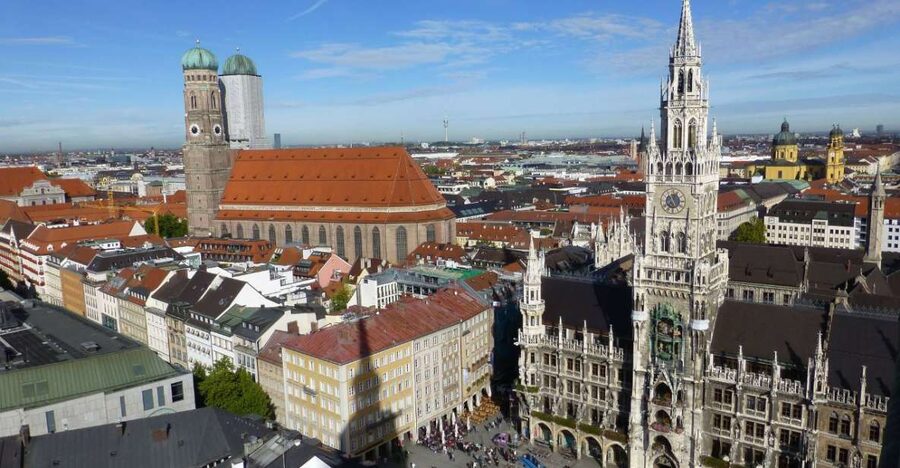
I love how the route ties landmarks to clear meaning, especially the Rathaus-Glockenspiel clock tower and the legends around the Frauenkirche. I also like the option to add the Residenz Museum if you want to go beyond the street-level sights.
One possible drawback to consider: if your group is small, you may struggle to hear a guide who speaks very quietly, so you will want to choose a good meeting spot and lean in.
Key things I’d make sure you notice
- Marienplatz start at the fish fountain, right in the action, with an easy visual anchor for your guide
- Rathaus-Glockenspiel meaning, not just a stop to look up, but a story to understand what you are seeing
- St. Peter and the Frauenkirche legends, including the devil’s footprint and why the towers matter
- WWII-era detail without the fluff, from Eva Braun’s Munich ties to Georg Elser’s daring plan
- Beer culture with real dates, including Hofbräuhaus founded in 1589 and beer gardens tied to long tradition
- Viktualienmarkt at the finish, a practical place to snack or keep exploring after the tour
Marienplatz fish fountain to Old Town bearings
Your tour begins at the fish fountain in front of the Town Hall on Marienplatz, address Marienplatz 8. It is a smart starting point because Marienplatz is where Munich’s center-life happens, and you will quickly get your bearings without needing transit or confusing directions.
From there, you are guided through the Old Town core with a focus on what each place meant, not just what it looks like. This is one of the biggest advantages of a private format, because you can pause, ask, and adjust your pace as you go.
If you want photos, give yourself a little time at the Town Hall area. Even before the clock show, the square has layers, and your guide will help you notice details you would normally walk past.
More of the Altstadt on foot
- Munich: Third Reich & WWII Walking Tour
★ 4.6 · 6,181 reviews - Third Reich Walking Tour Munich
★ 4.5 · 4,291 reviews - Munich: Old Town & Viktualienmarkt City Walk in German
★ 4.7 · 2,304 reviews - Munich: Night Watchman Walking Tour
★ 4.7 · 2,092 reviews
Mary’s Column, Marienplatz, and why the square has its name
A key stop is the explanation behind Mary’s Column and how it gave its name to the central square, Marienplatz. It is the kind of detail that turns a famous meeting spot into something you actually understand.
Instead of treating this as trivia, your guide uses it to connect Munich’s religious and civic identity. That matters, because you will keep seeing the same themes later when the tour shifts toward the city’s cathedral, monastic origins, and political turning points.
If you like history that feels local rather than textbook, this is where the tour starts to feel personal. You end up with a mental map of the city’s priorities, faith, and power.
St. Peter and the monastic roots of Munich
One of the earliest stops is St. Peter, described as the oldest catholic church in the city. Your guide connects this church to the idea that monks helped give rise to the city.
This is useful if you are the type who tends to think of Munich as only a modern beer-and-bavarian-capitals destination. It reminds you that the city’s story began with religious communities and early settlement patterns, long before the ornate squares and grand institutions came later.
Practical tip: churches can mean different rules for what you can wear and how loud you should be. If you plan to enter, dress with respect and follow your guide’s lead so you do not waste time at the doorway.
Frauenkirche double towers and the legend of the devil’s footprint
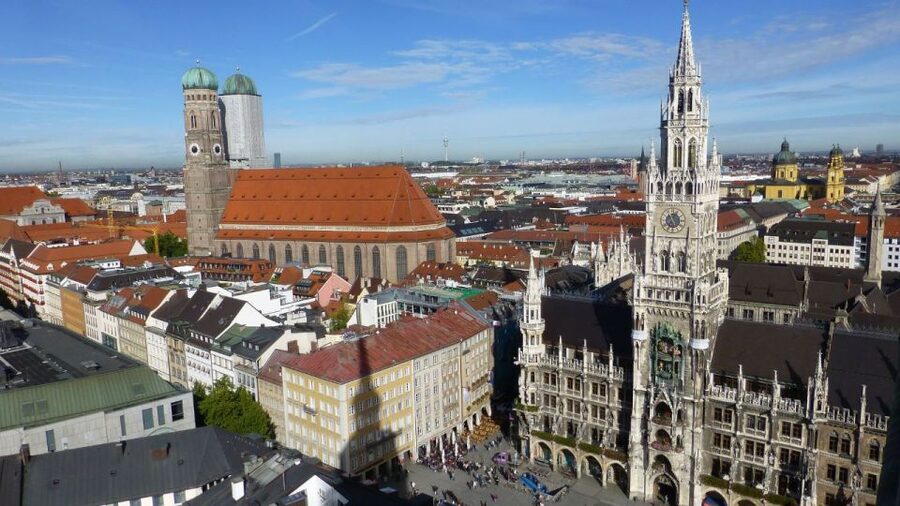
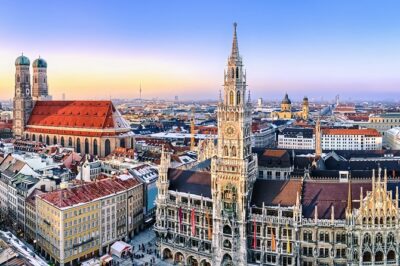
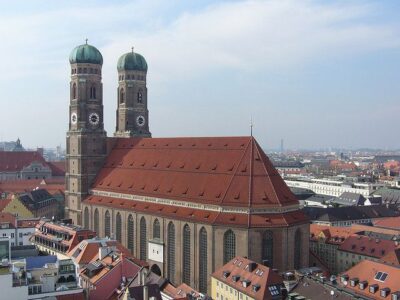
Next comes the Frauenkirche, Munich’s large cathedral with the iconic double towers. From what your guide will point out, you will get a good view of those towers, which are a defining part of the skyline.
Then the tour adds a local legend: the devil’s footprint. Even if you do not care about folklore, it is a quick way to remember that major buildings in Europe often carry symbolic stories people used to explain the world when facts were harder to come by.
What I like about this stop is that it balances awe with clarity. You are not just looking at stone, you are learning what locals say the stone represents.
Rathaus-Glockenspiel meaning, Old and New Town Hall
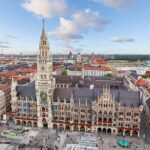
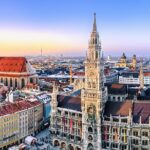
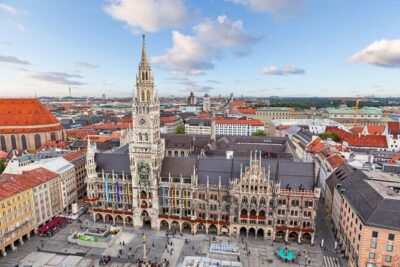
The Rathaus-Glockenspiel is the big visual moment at the Town Hall area. Your guide explains the meaning behind the clock tower, so when the figures and bells are the focus, you know what you are looking at and why it matters to Munich.
You also see the Old and the New Town Hall. Seeing them side by side helps you understand how civic power in Munich grew and evolved, rather than treating the city center as one static monument.
If you care about architecture, this is a great section because it turns the landmark into a timeline. Even a short walking tour can cover this well when your guide knows how to pace the story around the buildings themselves.
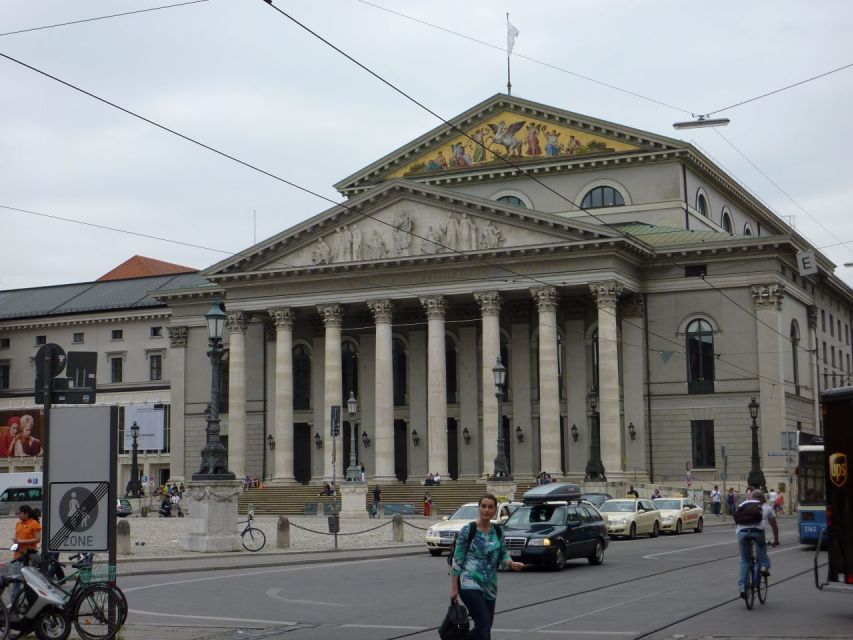
Odeonsplatz and the Beer-Hall-Putsch march of 2,000 men
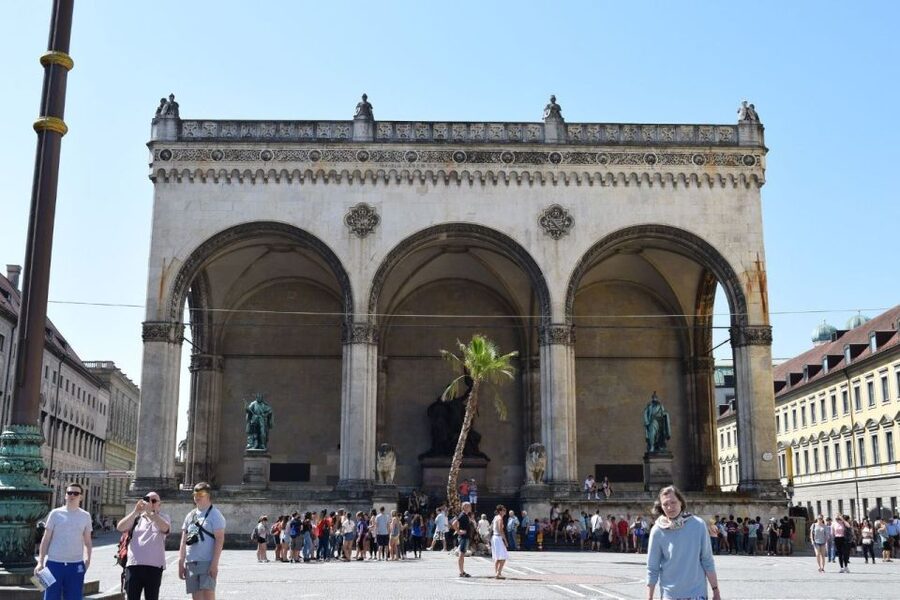
The tour moves into a darker chapter at Odeonsplatz with the Beer-Hall-Putsch. You will hear about the moment when two thousand men led by Adolf Hitler marched to the center of Munich in the Nazis first attempt to seize power.
This is handled as a street-level reality check. You stand in a real place where the political story unfolded, and the guide ties the event back to why it mattered for Germany’s later path.
A quick consideration: WWII-themed topics can feel heavy, so if you want a lighter Munich day, you might not love this part. On the other hand, if you are the type who wants context, this is one of the most valuable sections of the whole tour.
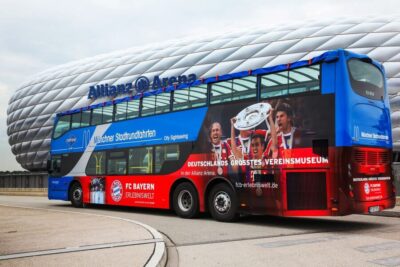
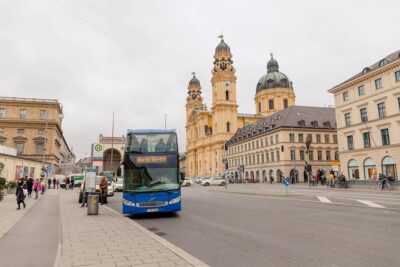
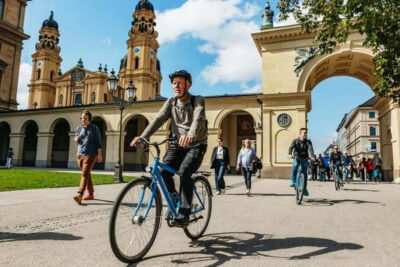
Other ways round the city centre
Eva Braun and Georg Elser: Munich’s role before the war truly exploded
Two names get special treatment here: Eva Braun and Georg Elser.
Your guide talks about Munich as the hometown of Eva Braun, who later became the wife of Hitler. You also hear about Georg Elser, a Munich carpenter who tried to prevent the outbreak of WWII by planning a daring assassination on the Fuhrer’s life.
This is not just a collection of biographies. The value is the cause-and-effect feel. The story connects personal choices to national outcomes, and it helps you understand how Munich was not just a backdrop, but a place where events could have changed history.
If you are traveling with teens or curious friends, this section often lands well, because it shows that history involves decisions by real people, not only governments and armies.
Hofbräuhaus and beer gardens dating back nearly 450 years
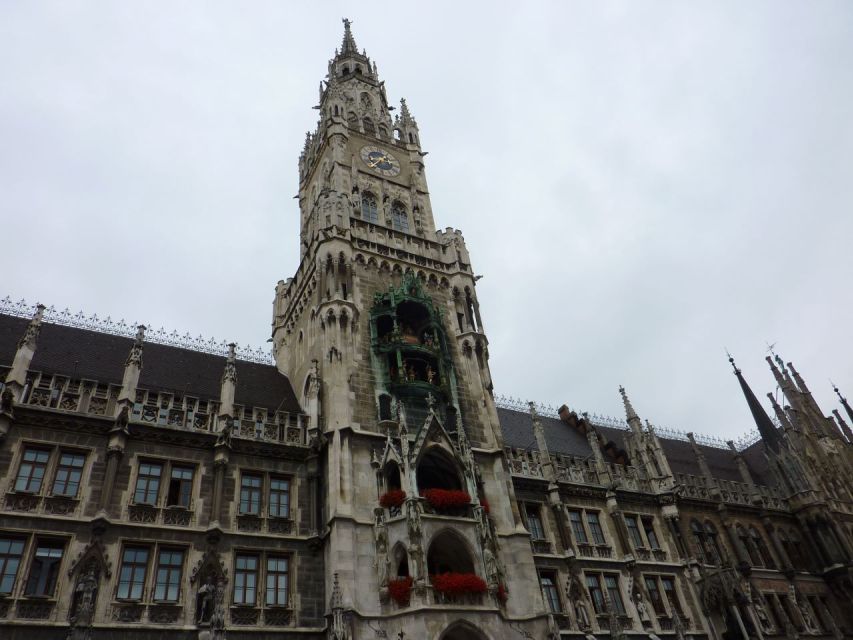
Then the tour snaps back to Munich’s signature culture with beer. You pass or learn about some of the famous beer gardens, described as established nearly 450 years ago, which gives you an instant sense of how long beer has been part of the city’s social rhythm.
A key anchor is the royal brewery known as Hofbräuhaus, established in 1589. That date is the kind of detail that makes it easier to understand why Munich’s beer scene feels more like tradition than trend.
This portion is also practical. Your guide can point you toward where the locals tend to hang out, so when the tour ends, you have realistic options for a post-walk drink or snack plan.
Note: food and drinks are not included, so do not expect a tasting. Use this time to learn where to go, then decide on your own pace.
Viktualienmarkt finish: the market and a central beer garden
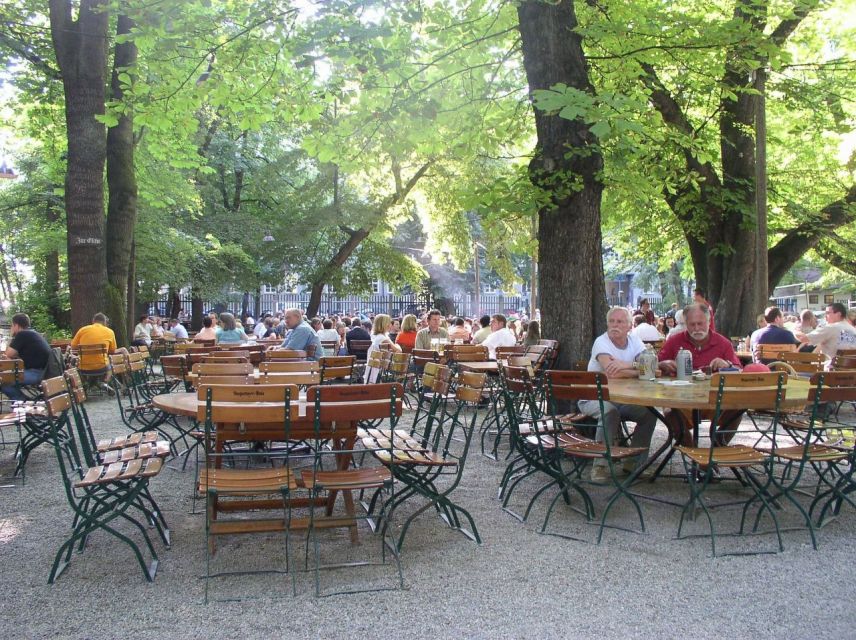
The tour wraps up by passing Viktualienmarkt, a public food market with local delicatessen and fresh produce. It is one of those places that instantly feels usable, even if you only have a short time.
You are also guided past one of the most central beer gardens in Munich. This matters because it gives you an easy next step: if the walking tour made you hungry, you can follow the momentum and keep exploring without planning your route from scratch.
If you want to stretch the day, the finish location is a strong springboard. You can linger for a snack, grab something for later, or just take in the market atmosphere at your own tempo.
The Residenz Museum option: when it’s worth adding time
There is an optional choice to have your guide lead a visit to the Residenz Museum. If you pick that option, you get a chance to connect the city’s public street identity to royal and court-level power.
This is a good add-on if you want more than church towers and civic squares. The Residenz is the kind of stop that helps you understand how Munich’s elites shaped the city’s look and institutions.
Two practical things to keep in mind: entrance fees are not included, and the tour is listed for 3 hours total. So if you add the museum, you should expect that it will take a chunk of that time and can affect how much time you spend outdoors.
Price and what it means for value in a private group
The tour is priced at $288 per group up to 15 people for a duration of 3 hours. The value here depends on how many people you bring.
- If you filled the group (up to 15), the cost works out to roughly $19 per person.
- If it is just two people, the per-person cost is much higher, which is exactly when guide voice clarity becomes more important.
This is the biggest reason I treat private tours like a math problem first, story problem second. If you are a small group, you may prefer to confirm you can hear well at the meeting point and keep your position close to your guide.
What you are really paying for is a guided focus on meaning at key sites, plus the flexibility to ask questions in real time. If you like structured, story-led walking, this format often feels worth it.
Pacing, meeting point setup, and how to get the most from 3 hours
With only 3 hours on foot, you should expect short stops and strong storytelling rather than long museum time. That makes the tour ideal for a first day in Munich, or for anyone who wants a foundation before picking deeper, independent visits.
The meeting point on Marienplatz is easy to find visually, but arrive a few minutes early so you are not rushing to start. If you need the guide to meet you slightly earlier, it can be possible since one guide was noted as accommodating to a request for an earlier meet.
For a smoother experience, come with comfortable shoes. A city center walking tour is simple in concept, but Munich weather changes fast, and you want your legs to do the work, not your discomfort.
Who this Munich tour suits best, and who should consider another option
This tour fits best if you want a guided walk that connects landmarks to stories, especially the clock tower, the cathedral legends, and the WWII-era context. If you enjoy history with names and human decisions, the Eva Braun and Georg Elser material is likely to be a highlight.
It is also a strong choice if you want to keep things efficient. You hit a lot of major sights without needing to plan multiple tickets and transit segments.
One group type to reconsider: wheelchair users, since the tour is not suitable for wheelchairs. If accessibility is a concern, you will want a different format or a route built for mobility needs.
If you are very sound-sensitive, pick a spot close to the guide during the stops. A private group can still feel frustrating if you cannot hear, and one guide was described as difficult to understand due to quiet volume.
Should you book this private walking tour of Munich’s historical center?
Book it if you want a structured introduction to Munich that connects the street-level sights to the meaning behind them. The best parts are the clear landmark stories like the Rathaus-Glockenspiel explanation, the St. Peter to Frauenkirche sequence, and the WWII context that makes Munich feel like a lived place rather than a postcard.
Skip it or adjust expectations if you are coming mainly for a relaxed scenic walk. This is not just pretty streets, it is a guided narrative, including heavy WWII material. If you love that, you are in the right place.
Finally, if you are booking as a small group, plan to stay close to your guide and prioritize hearing. The tour works best when the storytelling is coming through clearly.
FAQ
How long is the Munich private walking tour?
It lasts 3 hours.
What is the meeting point for the tour?
You meet at the fish fountain in front of the Town Hall, Marienplatz 8, 80331 München.
Is this tour private?
Yes. It is a private group.
What languages are offered?
The tour guide works in English and German.
Is the Residenz Museum visit included?
It is included only if you choose the option to have your guide lead a visit. Entrance fees are not included.
Are entrance fees included for sights like the Residenz Museum?
No. Entrance fees are not included.
Are food and drinks included?
No. Food and drinks are not included.
What is the price?
It is $288 per group, up to 15 people.
What is the cancellation policy?
Free cancellation is available up to 24 hours in advance for a full refund.
Is the tour suitable for wheelchair users?
No, it is not suitable for wheelchair users.
Three More Munich Walks


More Tours in Munich


More Tour Reviews in Munich

Newest Munich and Bavaria reviews
- Scenic Adventure Private Day Tour to The Konigssee Salzburg★ 4.5 · 3 reviews
- Jewish Museum & Jewish Quarter Guided Tour with Tickets★ 4.0 · 3 reviews
- Private Linderhof Castle, Entry-Ticket – optional Toboggan Run★ 5.0 · 3 reviews
- Private Transfer from Munich to Salzburg, English-speaking driver★ 3.5 · 3 reviews
- Private tour from Munich to Rothenburg and Harburg★ 5.0 · 3 reviews
- Arrival Transfer Munich Train Station to Munich by Luxury Van★ 5.0 · 3 reviews
Walking Tours, compared.
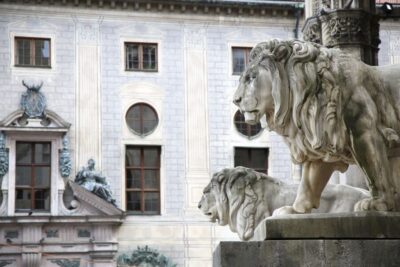 ★ 4.6Third Reich & WWII Walking TourFrom $316,181 reviews
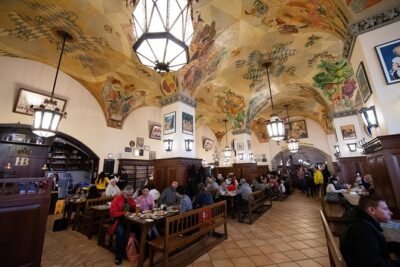 ★ 4.5Third Reich Walking Tour MunichFrom $454,291 reviews
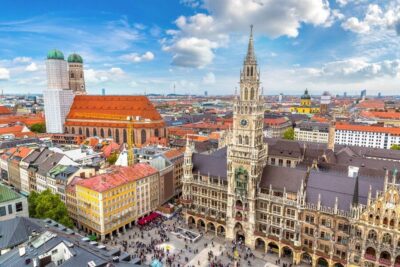 ★ 4.7Old Town & Viktualienmarkt City Walk in GermanFrom $232,304 reviews
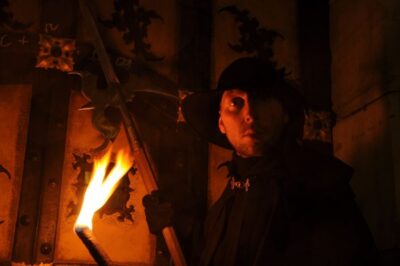 ★ 4.7Night Watchman Walking TourFrom $5302,092 reviews
 ★ 5.0Munich Ghosts and Spirits Evening Walking TourFrom $601,900 reviews
 ★ 4.5Munich Old Town Walking TourFrom $271,287 reviews
 ★ 4.7Walking Tour Old Town and ViktualienmarktFrom $282839 reviews
 ★ 4.6Birthplace of the Third Reich Guided Walking TourFrom $29771 reviews
Listed under