REVIEW · MUNICH THIRD REICH AND WWII HISTORY TOURS
Munich City Walking Tour, includes Third Reich & Viktualienmarkt
A first-day walk that makes Munich click fast. This 3 hour 15 minute route mixes iconic landmarks, local squares, and Third Reich context with a stop for Bavarian beer and food at Viktualienmarkt. I like the small-group feel (max 20) and I like that you get practical pointers on how to move through the city like a local. The guide tips on navigating Munich helped me plan the rest of my days.
One thing to consider: it is a lot of outdoor time. In cold or snowy weather, long narration stops can feel slow, so bring warm layers and plan to stand when you have to.
Key things I’d highlight before you go

- Ozzy’s pacing and explanations help you connect the sites to real Munich life, not just facts on stone
- Third Reich context is handled sensitively, with enough background to make the sights make sense
- Free, ticket-light stops let you focus on the route, not lining up for admissions
- Viktualienmarkt lunch break is a useful reset point mid-walk, with beer and a simple Bavarian snack menu
- Local square hopping (Platzl, Odeonsplatz, Karlsplatz) gives you shortcuts to where you should return on your own
Price and Logistics: what $31.78 really buys you
At $31.78 per person for about 3 hours 15 minutes, this tour lands in the “good value, especially for first-time visitors” zone. You are paying for a guide, a tight walking route, and a plan that hits major spots without turning into a line-hunting marathon.
A few details make the price feel fair:
- Guided tour included, with a small group (up to 20). That matters because you can actually hear and ask questions.
- Many stops are listed with free admission tickets, which keeps your cost down while still giving you good site coverage.
- The route is designed as an overview, so you finish with a map in your head and a sense of where to go next.
The tradeoff is you are walking. If you want fewer steps and longer time inside each landmark, a walking tour like this can feel “compressed.” It is still manageable for most people, but it is not a sit-down sightseeing bus day.
Other walks through the same years
- Munich: Third Reich & WWII Walking Tour
★ 4.6 · 6,181 reviews - Third Reich Walking Tour Munich
★ 4.5 · 4,291 reviews - Munich: Birthplace of the Third Reich Guided Walking Tour
★ 4.6 · 771 reviews - Munich World War II Sites Including Dachau Concentration Camp
★ 4.5 · 570 reviews
Getting around Munich with less guesswork

The best tours are not only about what you see, they are about how you move. This one is built to help you get oriented right away.
What you can expect in real terms:
- You get guidance on how to navigate Munich after the tour. That includes which areas are worth revisiting and how to structure your follow-up day so you are not crisscrossing blindly.
- You also pick up tips on interacting like a visitor who understands the rhythm of the city. That sounds vague, but it shows up in small things, like where people gather, how to read public spaces, and how to time your wandering.
If you are arriving with only a day or two to spare, doing this early can save you energy later. You get a mental “grid” of the center, and that makes independent exploring feel easier.
Frauenkirche and the German Hunting and Fishing Museum: Munich’s serious face

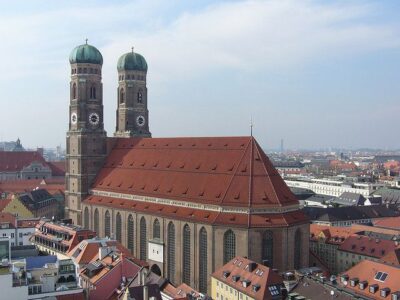
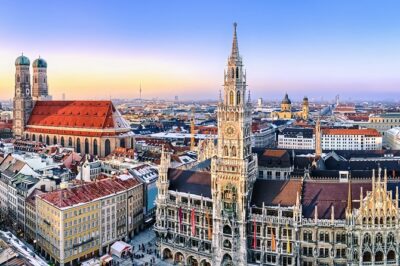
The first stop is the Frauenkirche. Munich’s twin-towered cathedral is iconic for a reason, and the value of seeing it on a guided walk is that you understand what you are looking at. Expect a focus on late Gothic architecture, the church’s historic role, and the attention-grabbing legend connected to the site, including the Devil’s Footstep idea you may hear about during the visit.
Then the tour shifts into a very different mode with the German Hunting and Fishing Museum. This is housed in a former Augustinian church, and that setting changes the vibe. Instead of “pretty city building,” you get a museum full of hunting and fishing history on a large floor plan (3,000 square meters). The exhibits are described with stuffed wildlife, antique weapons, and legendary Bavarian creatures like the Wolpertinger.
Why this combination works:
- Frauenkirche gives you the big, public Munich symbol.
- The museum adds a more niche angle on Bavarian life and tradition, which makes the day feel more than just postcard stops.
Possible drawback: if you are the type who wants only the biggest famous sights and nothing unexpected, this museum stop might feel off-theme. But it is exactly the kind of left turn that helps a tour feel like Munich, not just a checklist.
Hofbräuhaus and Isartor: beer hall energy meets medieval street walls

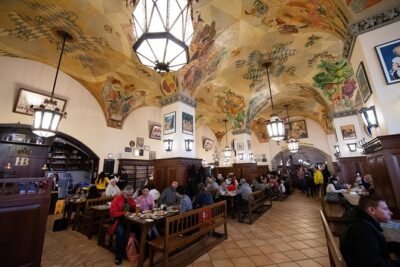
Next comes Staatliches Hofbräuhaus. The hall has been around since 1589, and the point of bringing you here on a walking tour is not that you must spend ages inside. It is that you see how central beer culture is to the city’s identity. The tour describes home-brewed Bavarian beer, hearty food, and traditional live music. Even if you do not order right away, you get the “why” behind Munich’s beer-garden culture.
From there, you move to Isartor, one of Munich’s last medieval city gates. Built in 1337 as part of fortifications, it is a quick stop, but it is the kind of sight that changes how you see later buildings. You also get the Valentín Karlstadt Museum mentioned at the gate, which adds a layer of Bavarian comedy and local identity to a structure that otherwise would read as just old stone.
Small practical tip: these stops are short by design. If you like to linger, you may want to plan a return to the Hofbräuhaus area later. But as an orientation tour, it does its job.
Marienplatz to Max-Joseph-Platz: the center of gravity

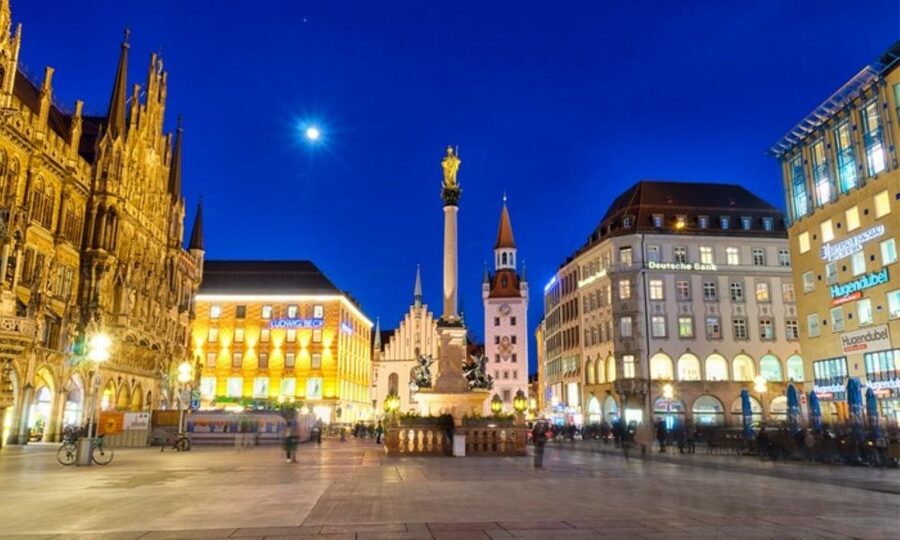
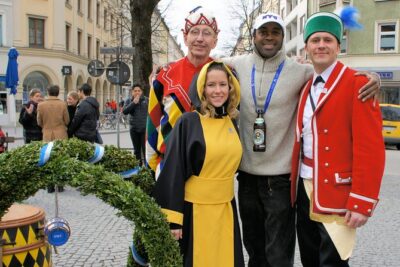
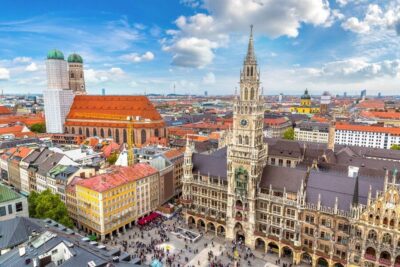
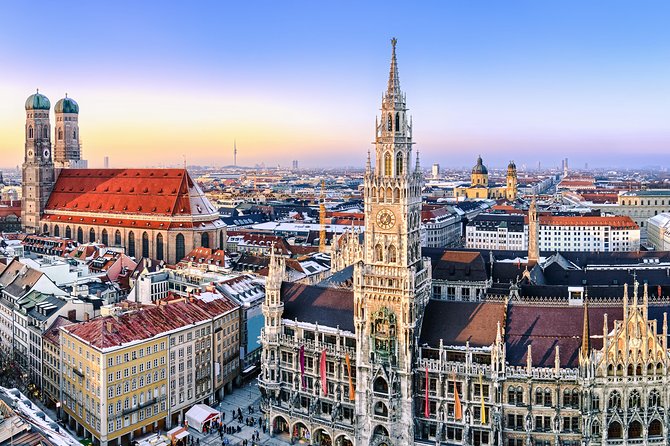
At Marienplatz, the tour puts you in Munich’s main square since 1158. You will see the New Town Hall area and the famous Glockenspiel attraction, plus the Mariensäule nearby. This stop is longer, which makes sense because Marienplatz is one of those places where the city feels fully turned on, even when you are not buying anything.
Then you head to Max-Joseph-Platz, a grand square connected to major institutions like the National Theatre and the Munich Residenz area. Even if you do not go inside, you can sense the scale and importance. It is named after King Maximilian Joseph, and there is a statue honoring him. If you are the kind of traveler who likes to understand power and placement, this stop helps you see how Munich’s identity is tied to royal-era planning.
One consideration: Marienplatz can be visually overwhelming because there is always something happening around it. That is where having a guide helps, you learn what to look at first so you do not wander in circles.
Odeonsplatz and the Third Reich context: the hard history part

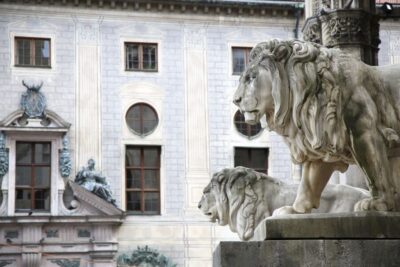
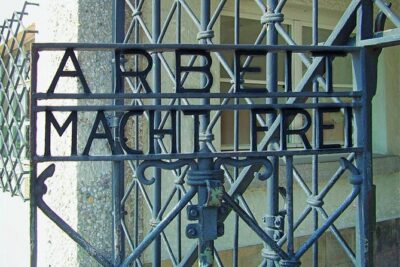
This is where the tour earns its name for handling Third Reich context. The route includes Odeonsplatz, a major central square designed in the early 19th century by Leo von Klenze. On the itinerary you also have the Theatine Church and Feldherrnhalle area, plus the Residenz, and those are exactly the kinds of places where history can feel close and complicated.
From what the tour is described as doing, the guide connects that setting to what came before and what followed, including sensitive explanations rather than a quick, surface-level mention. The reviews also reference that the guide covers the topic in a way that gives you context and helps you think critically about how history and current events connect.
If you want a “feel-good only” tour, this might be uncomfortable. But if you want a Munich tour that treats the real past seriously, this part is one of the strongest reasons to book.
Practical takeaway for you: ask questions if anything feels too fast. If the guide is moving on, it is okay to slow the moment down and clarify. A good guide expects that.
Another lap of the market
From Maximilianeum to Platzl: palaces, politics, and the older streets

After Odeonsplatz, the tour swings toward Maximilianeum. The description here is clear: it began as a school-support building for gifted students under King Maximilian II in 1852, and since 1949 it has housed the Bavarian State Parliament. The location above the Isar River is part of why this stop works visually. You get a sense of modern governance sitting in an impressive architectural setting.
Then you move to Platzl, a charming square in the historic center known for traditional atmosphere. It is strongly tied to the Hofbräuhaus area, and it is also described with cobblestones, historic buildings, and lively restaurant energy. This is a good stop for you to notice street layout and building scale, because Platzl is the kind of place where returning later feels natural. You will know where to start your evening walk.
If you are hungry at this stage, you might be. But the tour schedule saves the real food reset for Viktualienmarkt.
St. Michael and St. Peter: church interiors that change your sense of scale

Two churches, two different kinds of wow.
First is St. Michael München, described as Munich’s largest Renaissance church. Expect it to be tied to the Jesuit order, with a striking facade and a vast barrel-vaulted ceiling. The stop also mentions the royal crypt inside, which connects the church to Bavarian rulers.
Then comes St. Peter’s Church, also known as Alter Peter. It is said to be Munich’s oldest parish church, dating back to the 12th century. The headline feature is the 91-meter tower for views over the city, plus the interior mix of Gothic, Baroque, and Rococo elements, including a high altar.
Why church stops can be more than sightseeing:
- They help you understand why Munich built the way it did.
- They give you a “time machine” across architectural styles in a small area.
Possible drawback: if you dislike standing in cold doorways while explanations run long, this is where you may feel it most. The itinerary keeps most stops short, but you will still spend time listening. Dress for it.
Wolfsbrunnen and Karlsplatz: quirky details that make Munich memorable
Not every stop has to be monumental. This tour includes small, oddly charming moments that stick.
At Wolfsbrunnen, you get an Art Nouveau fountain built in 1904. The description includes bronze figures tied to Little Red Riding Hood and a wolf, commissioned by the Wolf family to commemorate their name. It is the kind of detail you would miss if you were only doing the big-ticket sights.
Then you finish the “city-squares” rhythm at Karlsplatz, known locally as Stachus. It is described as one of Munich’s most famous squares, built after medieval city walls were demolished, and it includes the Karlstor gate. There is also a fountain in summer and an ice rink in winter, which makes this stop feel seasonal even if you only pass through.
These small stops are useful because they give you visual anchors. Later, when you wander on your own, you can identify where you are faster.
Viktualienmarkt lunch break: what you should order and why it matters
The biggest food moment is at Viktualienmarkt, Munich’s historic open-air market. You start to feel like you are not just sightseeing anymore. The market has been a hub since the early 19th century, and it mixes fresh produce, Bavarian delicacies, and artisanal goods.
The tour places this lunch stop mid-way, and that timing is smart. You get a chance to reset energy before finishing the final stretch of the walk.
What’s included with the lunch pause:
- A traditional market place snack option, either Bavarian Bratwurst (spicy, cheese, or regular), or Bavarian potato salad with a pretzel
- One Bavarian beer
- A reusable beer bottle holder
The food description also says the selection avoids artificial flavors, colors, preservatives, additives, fillers, and GMOs, which is a nice detail if you care about what is actually in the food.
How to make this stop work for you:
- Pace yourself. Markets can tempt you into extra purchases, and it is easy to overload when the smells hit.
- If you want the Bavarian classic, choose bratwurst. If you want something a bit more filling but simpler, go for potato salad and pretzel.
One important note: the tour data says the lunch in Viktualienmarkt is not included in the base price. So you should budget for it when planning your total day.
The walking reality: what I’d do to stay comfortable
Even with short site stops, you are on your feet for most of the 3 hour 15 minutes. The reviews give you a clear pattern:
- In cold weather, people noticed discomfort from extended outdoor standing.
- The guide reportedly helps with bathroom breaks during the day, which is a big deal on longer walks.
- Some people found the narrative long at times, so keep that in mind if you prefer faster, more stop-and-go sightseeing.
What I recommend you do:
- Bring a real warm layer, not just a light jacket. Munich can feel sharper than you expect when you are standing still.
- Wear shoes that handle cobblestones and uneven sidewalks.
- If you know you get cold, treat this as a “dress like you will be outside” day, because you will.
Who this tour is best for, and who might want a different style
This one is a strong match if:
- You want a first-day overview of central Munich and where everything is.
- You like your sightseeing connected to context, including the harder history topic.
- You enjoy mixing big landmarks with smaller, quirky details like fountains and gates.
It may not be ideal if:
- You hate standing around while a guide explains.
- You prefer more time at fewer stops.
- You are traveling with limited walking tolerance and need a slower pace with less outdoor time.
The group size helps a lot here. With max 20, you usually feel like the guide can manage flow better than on giant tours.
Should you book this Munich walking tour?
I think it is a good booking for most people who want to understand Munich beyond the obvious photos. The mix of Frauenkirche, Hofbräuhaus, Marienplatz, church interiors, and a market lunch gives you a full sense of how Munich works in real life. Add in the Third Reich context coverage, and you get a tour that respects the city’s complexity instead of skimming it.
Book it if you want a guided route that helps you get your bearings fast, plus a practical mid-tour food break. If you are sensitive to cold or you want shorter explanations with more time at each stop, consider whether you can handle standing outdoors, or plan your day with extra warmth and snacks nearby.
In short, if you want Munich to make sense quickly, this is a strong way to start.
FAQ
How long is the Munich City Walking Tour?
The tour is approximately 3 hours 15 minutes.
What is the price per person?
The price is $31.78 per person.
Is the tour offered in English?
Yes, the tour is offered in English.
Is the tour group size limited?
Yes, the tour has a maximum of 20 travelers.
Does the tour include admission tickets for the stops?
Admission tickets are listed as free for the stops included in the itinerary.
Is lunch included in the price?
No. The tour includes a mid-tour pause for a freshly made Bavarian lunch in Viktualienmarkt, but snacks and lunch are not listed as included.
Where does the tour start and end?
The tour starts at Schützenstr 11, 80335 München, Germany, and ends at Odeonsplatz, Odeonspl. 3, 80539 München, Germany.
What food and drink are offered at the Viktualienmarkt break?
The sample menu includes Bavarian bratwurst (spicy, cheese, or regular) or Bavarian potato salad with a pretzel, plus one Bavarian beer, and a reusable beer bottle holder.
Are service animals allowed?
Yes, service animals are allowed.
More Tour Reviews in Munich
Another Lap of the Viktualienmarkt
The Same Years, Other Routes
Newest Munich and Bavaria reviews
- Private Munich Beer Hall Tour with 3-Course Meal & Beer Tastings★ 5.0 · 17 reviews
- The Perfect Start: Munich PRIVATE Tour with Bavarian Breakfast★ 5.0 · 17 reviews
- Munich City Pass: Admission to 45 activities and Public Transport★ 4.5 · 17 reviews
- Private Departure Transfer: Munich Airport★ 3.0 · 17 reviews
- Private One-way Airport Transfer Munich Airport To Munich★ 4.0 · 18 reviews
- Medieval city tour with night watchman in Munich in German★ 5.0 · 18 reviews
Munich Third Reich and WWII History Tours, compared.
★ 4.6Third Reich & WWII Walking TourFrom $316,181 reviews
★ 4.5Third Reich Walking Tour MunichFrom $454,291 reviews
★ 4.6Birthplace of the Third Reich Guided Walking TourFrom $29771 reviews
★ 4.5Munich World War II Sites Including Dachau Concentration CampFrom $105570 reviews
★ 4.5Third Reich & WWII Walking TourFrom $35417 reviews
★ 4.9Munich 3-Hour Segway Tour: Nazi Munich & Royal ArchitectureFrom $91194 reviews
★ 5.0Dachau Concentration Camp Memorial Site And Third Reich Day Tour From MunichFrom $145185 reviews
★ 5.0Munich in the 3rd Reich and WW2 private walking tourFrom $423148 reviews