
REVIEW · MUNICH OLD TOWN AND MARIENPLATZ TOURS
Private Munich Old Town Walking Tour – with optional Breakfast
Munich clicks into place fast. A private, 2-hour Old Town route with Sepp, it covers major sights without map math, and includes free drinks so your group stays comfortable and cheerful. I especially like the optional Weißwurst breakfast, and I love how much you can ask in real time since it is just your group. One possible drawback: the schedule is packed, so if you want long pauses at every stop, you may feel a bit rushed.
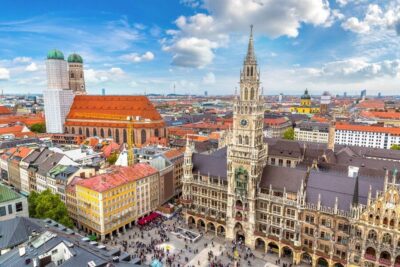
The tour starts at Marienplatz, right where Munich feels like Munich. You will see iconic landmarks like the Rathaus-Glockenspiel and the Frauenkirche, plus you get time at places that taste and feel local, like the Viktualienmarkt food market. If you are visiting on a Sunday, note that the Viktualienmarkt is closed, so you will want to plan around that.
Key highlights at a glance
- Private group focus with a guide you can actually question
- Marienplatz and the Rathaus-Glockenspiel for the classic city-center introduction
- Viktualienmarkt food market time (skip this on Sundays since it is closed)
- Beer hall history at Hofbräuhaus München plus quick views of nearby squares
- Royal Munich sights from Alter Hof to Maximilianstraße
- Big-name churches and the Frauenkirche to wrap your bearings around Old Town
Why a private Munich Old Town walk makes sense
Munich can feel surprisingly spread out, even inside the Altstadt-Lehel area. This tour is designed for people who want a fast, clear route, with someone local guiding you from one key photo spot to the next. You get structure, but not a rigid, scripted lecture. The big win is access: it is private, so you can ask questions as they come up, like why a building looks the way it does or what life in the city used to center on.
You also get built-in comfort. The tour includes mineral water, soft drinks, energy drink, juice, and alcoholic options like beer, wine, and even Prosecco. That matters on a walking tour, because you are not constantly hunting for drinks or paying for small refills between stops. And when you add breakfast, you get a classic Bavarian start that keeps the whole morning feeling coherent.
The practical tradeoff is time. This is about seeing a lot of landmarks, not sitting down for hours at one place. If your ideal pace is slow travel and long museum breaks, you might prefer a longer day tour. But if your schedule is tight, this is the kind of experience that helps you understand Munich quickly and confidently.
More around Marienplatz
- Munich Old Town Walking Tour
★ 4.5 · 1,287 reviews - Munich Old Town Food Tour with 10+ Bavarian Specialties
★ 5.0 · 193 reviews - Munich Old Town Walking Tour
★ 4.5 · 152 reviews - Munich: Guided Tour of the historic Town Hall on Marienplatz
★ 4.8 · 63 reviews
Starting at Marienplatz, Munich’s center of gravity
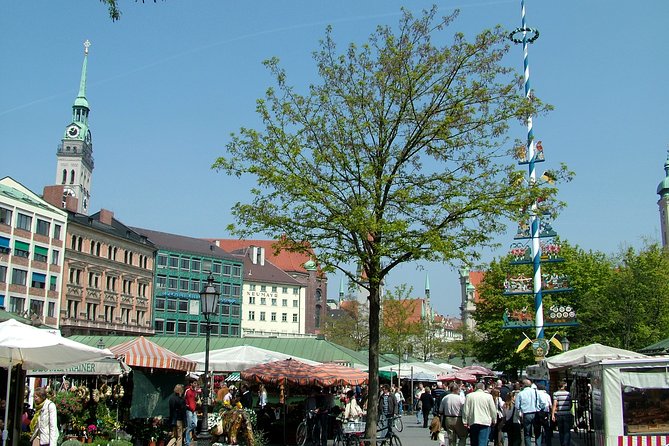
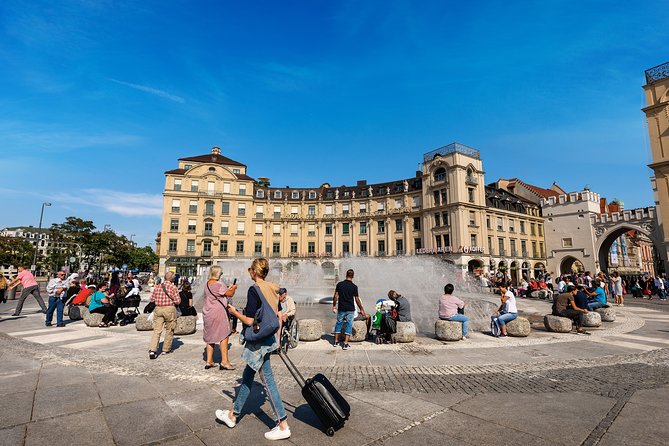
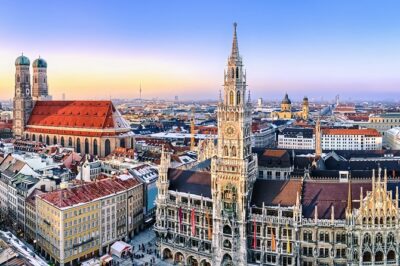
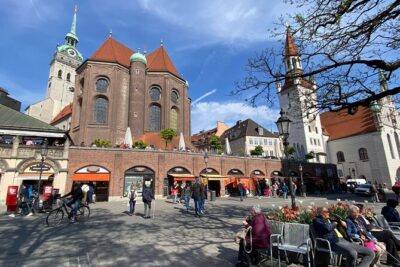
You begin at Marienplatz, Munich’s central square. It is the natural place to start because so many main streets and landmark buildings orbit it. You will use the square as your mental map: once you orient here, everything you see later feels connected rather than random.
From Marienplatz, the tour moves in short hops. That is a big deal because Old Town landmarks are close enough for walking, but not always obvious for first-time visitors. Having a guide means you spend less energy figuring out where to go and more energy noticing details you might miss on your own.
Marienplatz also sets the tone for the tour. This is not just a checklist. You learn how different parts of the city developed and what role they played, whether that is civic life around the Rathaus or cultural importance around major churches.
Marienplatz to the Rathaus-Glockenspiel: the city’s famous clockwork theater
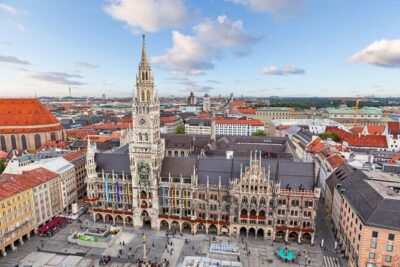
Next up is the Rathaus-Glockenspiel, the world-famous carillon display associated with the Munich town hall. The description is specific: it shows events that date back to the 1500s. Whether or not a show is happening at the exact moment you arrive, this stop is still worth it because you get the story behind why it became such a signature feature.
In practice, this stop helps you “read” the building complex. Rathaus architecture looks impressive from the outside, but the guide’s explanations give it a reason to exist beyond appearance. You also get a sense of how Munich likes to celebrate moments from its past in very public ways, right in the city’s living room.
Viktualienmarkt and the food-market energy you can taste
Then you head to Viktualienmarkt, a famous food market that is a sensory break from pure sightseeing. You get about 20 minutes here, which is enough time to slow down, look around, and try what catches your eye, without turning the tour into a long detour.
Two practical notes matter:
- Admission is free, so you are not paying extra to enjoy the atmosphere.
- The market is closed on Sundays, so plan for a different kind of stop if your tour date lands on a Sunday.
If you are the type who likes to understand a city through food culture, this is one of the most satisfying moments in the walk. Even if you do not buy anything, you still learn how local markets function as social hubs, not just shopping stops.
Hofbräuhaus München and Platzl: beer-hall history near the center
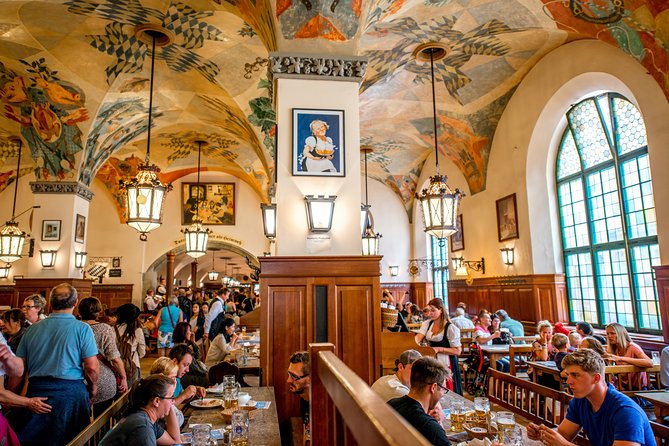
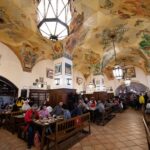
After the market, you move to Hofbräuhaus München, one of the best-known beer halls in the city. The tour focuses on history, and that is exactly the right approach here. A beer hall can look like a single idea from a distance, but in Munich it also connects to civic culture, tradition, and how people gather.
Right around this area, the tour also passes through Platzl, a square that helps you understand the Old Town’s layout. Short stops like this are not just for photos. They are for learning how Munich streets and squares “work” as spaces. In a walking tour, that kind of orientation makes later explorations easier.
One more benefit: this section naturally transitions between different moods. You go from market smells and quick browsing, to historic beer hall storytelling, then back to streets and squares. It keeps the experience varied instead of monotonous.
Alter Hof and Maximilianstraße: where power and style meet
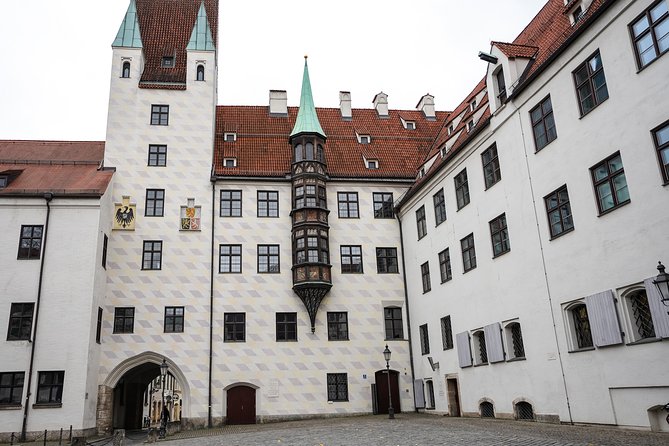
As the walk continues, you get into the older civic and royal-adjacent zone with Alter Hof. You do a walk-through and learn more about this historical sight. Even if you only get a brief window, this is a valuable kind of stop because it helps you connect Munich’s official past to its physical layout.
Then comes Maximilianstraße, one of Munich’s four royal avenues. The description is clear about why it matters: it is famous for high-street fashion brand shops. This is where Old Town architecture and modern retail culture meet. If you enjoy people-watching, window-shopping, or simply comparing eras through what a street sells, you will likely enjoy this segment.
Practical tip: if you are sensitive to crowd flow or shopping-heavy streets, keep an eye on your timing here. This is a nice break in the tour, but it is also a place where foot traffic can feel constant depending on the time of day.
More of the Altstadt on foot
Bayerische Staatsoper: a landmark stop with a real-world scale
Next you reach Bayerische Staatsoper, the Munich national theatre. The tour highlights a specific detail: the venue holds up to 2,100 people. That number is useful because it gives you a sense of scale. You are not just standing near a decorative building; you are near a major performance space that can host events on a large scale.
The 5-minute stop may look short, but in a walking tour, these brief moments help you cover major cultural landmarks without eating up time that you might need for other key sights. It also gives you a mental anchor. Once you know where the opera house is, you can imagine other routes later and feel more confident navigating the city.
Residenz München and the Wittelsbach connection
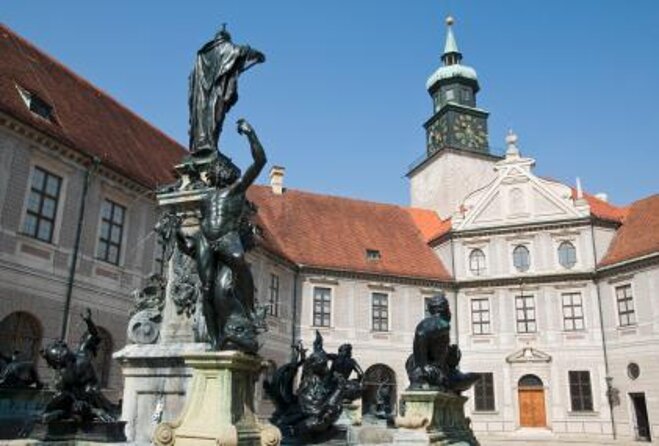
Then you arrive at Residenz München, described as the former royal palace of the Wittelsbach family. This stop is one of the tour’s strongest “big picture” moments because it ties Munich’s identity to the ruling family that shaped so much of the city’s character.
You receive details and context through the guide, which is especially helpful at a palace site, because palace spaces can be confusing when you are looking only at walls and rooms. Even a short explanation can change how you interpret what you are seeing. You stop treating it like a random historic building and start seeing it as a statement of political and cultural power.
Feldherrnhalle and Odeonsplatz: monumental drama in stone
At Feldherrnhalle, located on Odeonsplatz, you see a monumental loggia. The tour description frames it clearly, and that clarity matters: you are not just walking past a pretty facade. You are looking at a designed, theatrical space meant to convey importance.
This stop works well as a photo moment and also as a mental punctuation mark. After you have covered market life, beer hall tradition, and royal avenue style, you reach something heavier and more ceremonial. The guide’s framing helps you notice that shift instead of letting it blur into the rest of the walk.
Theatinerkirche St. Kajetan and the walk toward Frauenkirche
The tour continues to Theatinerkirche St. Kajetan, another major church stop, with explanations about its history. If you like architecture, churches can become a personal highlight on a Munich trip, because the city has a distinctive way of mixing elegance and seriousness in religious buildings.
From there, you also get a walk through a famous shopping street. That gives you a change of pace right before the most iconic church finish. It is also practical: by the time you reach the final sights, you already know which streets feel like “main arteries” for moving around.
Then you reach Frauenkirche, the famous church that often functions as Munich’s visual shorthand. The tour includes time here, around 15 minutes, and focuses on the history of the landmark. This is a great way to end your orientation loop because it is recognizable from many angles. After this stop, you can look at Munich’s center from street corners and feel like you actually understand what you are seeing.
Optional Weißwurst breakfast and the included drinks
One of the smartest add-ons here is breakfast. The optional Bavarian Weißwurst breakfast includes drinks of your choice, and it is designed to pair naturally with the kind of morning walking that comes before or alongside sightseeing.
Even if you are not a breakfast person, the value is more than the food. It is the timing. Starting with something local helps the tour feel anchored, not like you are simply rushing between landmarks. And since the tour already includes drinks such as mineral water, juice, soft drinks, beer, wine, and Prosecco, you can choose what fits your taste.
A practical note: if you drink alcohol, pace yourself. You are walking through a lot of city-center distances and standing for short explanations at multiple stops. If you want to stay alert, water or juice makes the day more comfortable.
Price and value: what you get for $249 per person
At $249 per person, this is not a budget walking tour. You pay for three big things that matter in real life: privacy, guided context, and included extras.
Here is the value logic I would use when deciding:
- Private format: You are not competing with other groups for attention. It is easier to ask questions and keep the experience aligned with your pace and interests.
- A long list of meaningful stops: You cover a wide slice of Munich’s core, from Marienplatz and Rathaus-Glockenspiel through Frauenkirche, plus royal-adjacent and cultural stops like Residenz München and Bayerische Staatsoper.
- Food and drinks included: The tour includes a spread of drinks, and breakfast is available as a typical Weißwurst add-on with drinks of your choice.
If you are traveling as a couple, small family, or group of friends, private value often becomes easier to justify. If you are solo and comparing to cheaper group tours, you might feel the price is steep. But if your goal is to get oriented quickly and enjoy local pace and drink stops without extra payments, this pricing starts to make sense.
Practical tips before you go
These are the small things that make a big difference on a 2-hour Old Town walk.
- Wear comfortable shoes. Even though the time is short, you are on your feet through multiple squares and landmarks.
- Plan around Sunday. If your date is Sunday, remember Viktualienmarkt is closed, so your market moment will not happen.
- Use the private format. Bring a couple of interests, like churches, royal sites, or food and beer. When you do that, the guide can focus your time.
- Ask for help beyond the tour. The guide is known for making the trip feel smooth, including helping with practical next steps like train tickets.
- Avoid expensive detours for getting into town. One useful rule of thumb: trains are often a smarter choice than pricey taxi rides for the ride into Munich’s core area.
Most travelers can participate, and since the starting point is near public transportation, it is not hard to fit this into a day. Still, if anyone in your group has mobility limitations, you will want to consider the walking time realistically based on your group’s needs.
Should you book the Private Munich Old Town Walking Tour?
Book this if you want a fast, organized introduction to central Munich with a guide who can answer questions and keep the walk feeling personal. It is especially worth it if you like seeing both “icon landmarks” like Frauenkirche and the everyday cultural texture that comes from places like Viktualienmarkt and Hofbräuhaus München.
Skip it, or consider another option, if your travel style is slow and unstructured. This is a tight route built to cover a lot, so it rewards travelers who like momentum and crisp orientation more than people who want long lingering stops.
If you are on a short visit, or you want to feel confident navigating Old Town right away, this is an excellent way to get your bearings, eat and drink in a Munich way, and leave with a clear mental map of what matters.
FAQ
How long is the Private Munich Old Town Walking Tour?
It runs for about 2 hours.
Is this tour private or shared?
It is a private tour/activity, so only your group participates.
What language is the tour offered in?
The tour is offered in English.
Where does the tour start?
The meeting point is Marienplatz, 80331 München-Altstadt-Lehel, Germany.
What are the main sights included?
The tour includes Marienplatz, Rathaus-Glockenspiel, Viktualienmarkt, Hofbräuhaus München, Platzl, Alter Hof, Bayerische Staatsoper, Residenz München, Feldherrnhalle, Theatinerkirche St. Kajetan, and Frauenkirche.
Is admission included for the stops?
Admission tickets listed for the stops are free, and all fees and taxes are included in the tour.
What food and drinks are included?
Mineral water, soft drink, energy drink, juice, and beer or wine are included, and Prosecco is also available. Breakfast is optional as a typical Bavarian Weißwurst breakfast with drinks of your choice.
Is Viktualienmarkt open every day?
No. The market is closed on Sundays.
Who is the guide?
The provider is Sepp, The Bavarian Guide.
What is the cancellation policy?
You can cancel for a full refund if you cancel up to 24 hours in advance of the experience start time.
More Tours in Munich

More Tour Reviews in Munich
Still Around Marienplatz
Newest Munich and Bavaria reviews
- Scenic Adventure Private Day Tour to The Konigssee Salzburg★ 4.5 · 3 reviews
- Jewish Museum & Jewish Quarter Guided Tour with Tickets★ 4.0 · 3 reviews
- Private Linderhof Castle, Entry-Ticket – optional Toboggan Run★ 5.0 · 3 reviews
- Private Transfer from Munich to Salzburg, English-speaking driver★ 3.5 · 3 reviews
- Private tour from Munich to Rothenburg and Harburg★ 5.0 · 3 reviews
- Arrival Transfer Munich Train Station to Munich by Luxury Van★ 5.0 · 3 reviews
Munich Old Town and Marienplatz Tours, compared.
 ★ 4.5Munich Old Town Walking TourFrom $271,287 reviews
Munich Old Town Food Tour with 10+ Bavarian SpecialtiesFrom $118193 reviews
★ 4.5Munich Old Town Walking TourFrom $26152 reviews
★ 4.5Munich Old Town Walking TourFrom $271,287 reviews
Munich Old Town Food Tour with 10+ Bavarian SpecialtiesFrom $118193 reviews
★ 4.5Munich Old Town Walking TourFrom $26152 reviews
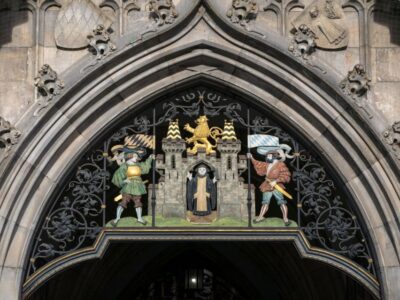 ★ 4.8Guided Tour of the historic Town Hall on MarienplatzFrom $2963 reviews
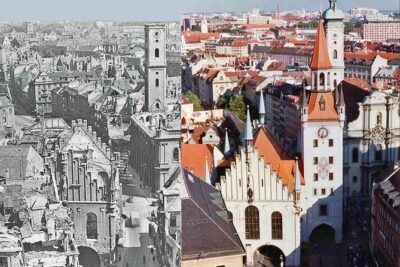 ★ 4.5Private Munich Old Town and Third Reich Walking TourFrom $23940 reviews
 ★ 4.5Private Munich Old Town Walking TourFrom $24024 reviews
 ★ 4.5Segway Tour Munich Old Town 3 hoursFrom $9610 reviews
 ★ 5.0Ten Munich Old town Sights in a Private Express Walking TourFrom $849 reviews