
REVIEW · MUNICH THIRD REICH AND WWII HISTORY TOURS
Third Reich – Facts about WWII : Small Group Walking tour
Munich can feel very orderly, then suddenly you are face to face with propaganda and trials. This small-group walking tour traces World War II and the Third Reich through key sights across the city, guided by Paul Riedel so you are not guessing what you are looking at. I love the small group size because it stays conversational, and I like that you cover major locations in 2 to 3 hours without traffic headaches. One thing to consider, though, is that this route deals with brutal subject matter, so you should be ready for an emotionally heavy walk.
What impressed me most is how the tour uses architecture and street-level landmarks to explain power. You will look at places tied to Nazi public theater, art control, and the machinery of persecution, with the guide connecting the dots as you move. The other standout is how the guide’s pace fits the group, based on the feedback for Paul Riedel, who is described as energetic and attentive.
If you want only light, sightseeing vibes, this is not that. Even when stops are outside and free to look at, the stories revolve around trials, resistance like the White Rose, and the dark role of institutions. Keep your expectations aligned and you will get far more out of the experience.
Key highlights and what makes them special
- Königsplatz and propaganda in plain sight, including the book burning angle and the visual staging linked to Leni Riefenstahl
- Paul von Trost’s Nazi-era architecture, shown through the twin buildings at the Museum für Abgüsse Klassischer Bildwerke and other major stops
- NS power and documentation, with time at the NS-Dokumentationszentrum München and the Brown House story
- Resistance and justice at Justizpalast, including the Scholl sisters and other Nazi-era trials
- From Gestapo to memorial, with the Platz der Opfer des Nationalsozialismus and the monument to victims of the NSDAP
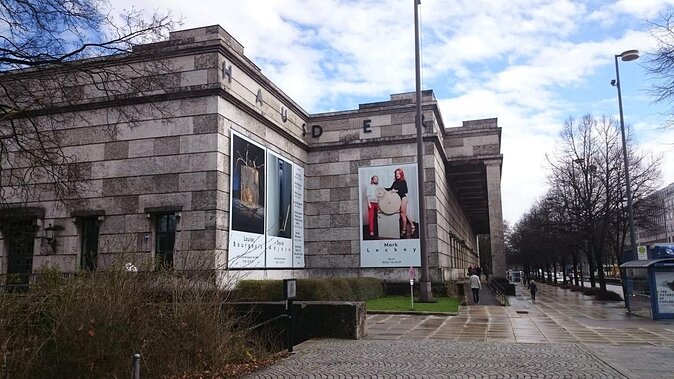
- Art labels and censorship, including Degenerated Art at the Hofgarten and the Haus der Kunst discussion
Why this Munich walk works in 2 to 3 hours
This is a compact, city-center walking route, built for people who want context fast. Munich has plenty of WWII-related sites, but sorting them into a sensible order takes effort. Here, you get a professional guide who keeps the story moving, stop to stop, across key landmarks.
You also avoid the common problem of doing this sort of thing as a solo scavenger hunt. With a group limited to 15 travelers max, it is easier to ask questions and get explanations that match what you are seeing right now, not something you read later at home.
The other practical win: you are not wasting time fighting traffic or searching for parking. This is simply built as a walk, and that matters when you are trying to fit it into a day that already includes museums, meals, and transit.
Other walks through the same years
- Munich: Third Reich & WWII Walking Tour
★ 4.6 · 6,181 reviews - Third Reich Walking Tour Munich
★ 4.5 · 4,291 reviews - Munich: Birthplace of the Third Reich Guided Walking Tour
★ 4.6 · 771 reviews - Munich World War II Sites Including Dachau Concentration Camp
★ 4.5 · 570 reviews
Starting point to final drop, how the route flows
You meet at KarlstorNeuhauser Str., 80331 München at 1:00 pm and end at Haus der Kunst, Prinzregentenstraße 1, 80538 München. That end point is handy because it drops you near a major cultural area, so you can keep exploring afterward without backtracking.
The tour runs about 2 to 3 hours, and it is described as stress-free on foot. Some stops are quick visual stops, while a few get a bit more time for explanation. That tempo is exactly what I think you want for this topic: enough time to absorb what you are seeing, without dragging you through every possible museum room.
Because the tour uses a mobile ticket, it stays simple once you are in the city. It is also listed as close to public transportation, which helps if you are combining it with other plans.
Königsplatz: book burnings, staging, and the power of images
Königsplatz is one of those places where the setting itself tells you something. Expect to focus on how the Nazis used spectacle and controlled messaging. The tour calls out the burning of books, and it also points you toward how film and cameras fit into the propaganda system, including references to Leni Riefenstahl and where cameras were positioned.
You will also notice the square’s material and layout, including the granit plates described for the walk. The point is not the stone, it is what the space enabled. When regimes want obedience, they use more than speeches. They use scenes people can remember and repeat.
Potential drawback here: if you are hoping for long museum-style explanation, this stop is designed to be quick and visual. You get the meaning, but you do not stay parked for an hour.
Museum für Abgüsse Klassischer Bildwerke: Paul von Trost and Nazi-built “culture”
Next you pass by the twin buildings from Paul von Trost, constructed for the Nazis. Even without going inside, the architecture helps you understand how the regime tried to wrap itself in authority and taste. The tour frames these as buildings tied to Nazi cultural presentation, which is useful because it shows you a softer face of the system.
This stop is marked as admission not included, so you should be ready for the possibility that you will look from the outside or that entry would be on your own if you choose to go in. The practical way to handle that is simple: decide up front whether you want to pay for entries on your own at these specific points, or stay with the walking explanations.
NS-Dokumentationszentrum München: the Brown House and the church’s role
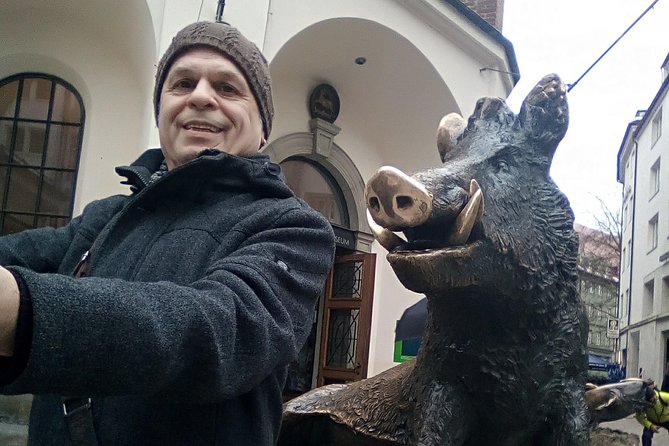
At the NS-Dokumentationszentrum München, the story shifts from visuals to organization. You will hear about the Brown House and how Hitler organized the NSDAP, plus the tour mentions involvement from the church in WWII.
This is a stop where context really matters. The building is not just another stop on a list. It is positioned as a place where you can understand how a movement turned into a system, and how different institutions interacted with it.
Because admission is not included, consider whether you want to spend extra time inside. If you prefer to keep your budget tight, treat this as a guided orientation stop, then decide later if you want to add more time on your own.
Karolinenplatz: Bruckmanns and how Hitler moved into society
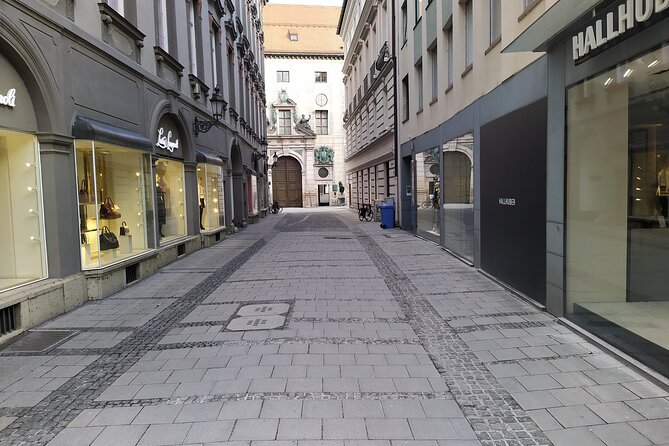
At Karolinenplatz, the tour focuses on the Bruckmanns and their significance in helping Hitler rise as a charismatic figure. You will also hear that they introduced him to society.
This is an important angle because it shows how political power does not only come from rallies and uniforms. It also comes from connections, social acceptance, and people acting as gatekeepers for influence. If you have ever wondered how a figure like Hitler could gain traction so quickly, this stop gives you one piece of the puzzle.
You will likely spend only a few minutes here, but the takeaway is strong: propaganda is a system, and society can be one of its accelerants.
More of the Altstadt on foot
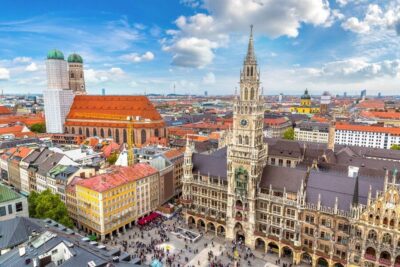
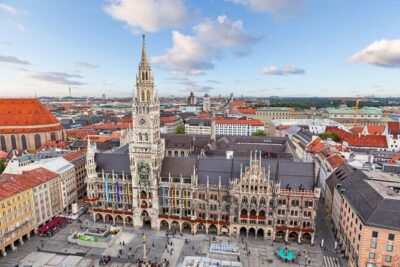
Justizpalast: the Scholl sisters and Nazi-era trials
The walk then turns to justice at the Justizpalast. The tour highlights trials involving the sisters Scholl and Nazi trials more broadly.
Even if you only see the exterior and a sign or two, this is one of the places where you should slow down. The reason is simple. When you stand near a courtroom-related site, it becomes easier to understand what resistance and persecution meant in real life, not just as slogans.
This stop is listed as admission free, so you should be able to keep your day efficient. The lesson here is about how the regime controlled not only public life, but also the legal and punitive systems around it.
Briennerstrasse 7 (Haus der Deutschen Ärzte): doctors and life-and-death decisions
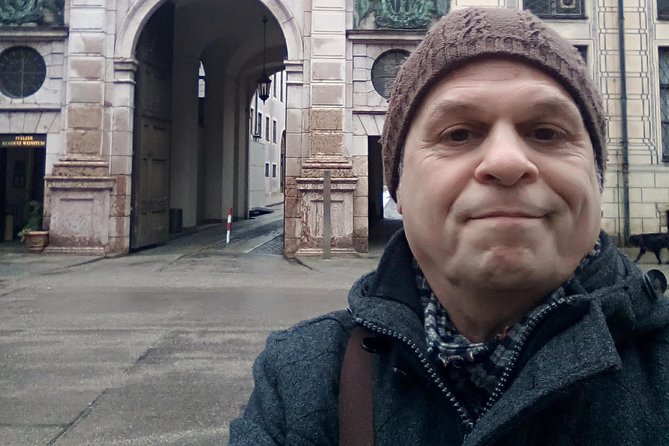
At Briennerstrasse 7, you get a darker stop at Haus der Deutsche Ärzte, including the detail that it is connected to number 23. The tour message is clear: doctors decided about life and death of many.
This is the kind of moment where you will get more from your guide’s framing than from photos. It is easy to look at a building and think it is just another address. The guide’s job is to prevent that by explaining how institutions and professional roles were pulled into the machinery of harm.
Since the tour labels this as free, it is also practical. You do not need extra ticket planning to access the core meaning of the stop, as long as you pay attention to the guide’s explanation.
Platz der Opfer des Nationalsozialismus: Gestapo power and the memorial for victims
The Platz der Opfer des Nationalsozialismus is where the tour moves from explaining systems to acknowledging victims. Before arriving, you will also see the early Wittelsbacher Palais, described as central from the Gestapo.
After that, you spend time on the monument to the victims from the NSDAP. This sequence matters. You are not just seeing history, you are seeing how power operated and who it targeted.
If you are the type who likes to take a breather during heavy tours, this is a good place to do it. The setting is made for reflection, and it gives your brain a pause before moving into art, education, and other major squares.
Residenz München and the world of staged power
At Residenz München, the tour frames it as the residence of kings and dukes from Bavaria, while also noting that a Nazi man lived there. It also mentions the night of the amazones.
This stop is listed with admission not included, so you should consider whether you want to pay separately to go inside. Even without entry, the guide can connect the theme: a palace space used by rulers is also where the regime could place itself, turning authority into a visual statement.
One consideration: if you are short on time or you do not like adding optional paid entries, you might not get as much as you could from this particular stop. But you still get the narrative link that matters.
Hofgarten and Degenerated Art: censorship as a cultural lesson
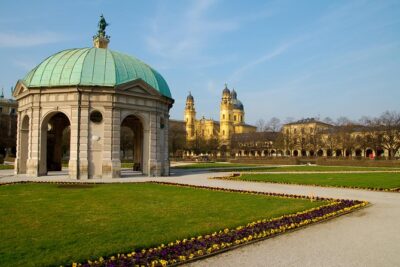
Next up is the Hofgarten, where you will hear about Degenerated Art, tied to an exhibit of expressionist artists.
This is one of the more “understandable” concepts for many people because it shows how ideology reaches into everyday culture. The label Degenerated Art is not just a vague insult. It is a tool to control what people see, collect, and respect.
The tour calls this stop free, which is great for value. It means you can keep your day moving and still get an important piece of the broader story about Nazi control of art and taste.
Ludwig Maximilian University: the White Rose resistance angle
At Ludwig Maximilian University, the focus turns to the Scholl sisters and the White Rose resistance against the Nazis.
This stop helps you see that opposition existed, even in a place tied to education and public life. The tour’s choice to include a university setting means you get a counterpoint to the squares and state buildings, a reminder that resistance was not only about secret meetings. It was also about ideas.
This stop is marked free, so you are not asked to buy an extra ticket to access the guided explanation here.
Odeonsplatz: Hitler Putsch and the square as a historical stage
The tour then reaches Odeonsplatz, highlighting the Hitler Putsch as an “exiting chapter from this tragedy,” along with other major events in the Nazi campaign. You visit Odeonsplatz twice, with time allocated for explaining the context of the Putsch and its role in the wider story.
It is also one of those sites where, standing in the open space, you can almost feel how marches and speeches become history. The same square can host different layers of the past depending on who is standing where and why.
This is listed as free, which keeps costs predictable. The drawback is that this is a busy, public-feeling kind of stop. If you want silence and privacy, you might find it hard, but the guide’s attention to key details will help you “see through” the crowd.
Haus der Kunst: Paul von Trost again, and art under pressure
At Haus der Kunst, the tour discusses another Paul von Trost work and speaks about art in the building.
This stop is marked as admission not included, so you will want to plan based on your preferences. If you love art and want more than exterior context, you may choose to add entry on your own. If you are primarily in this for the guided narrative and city connections, you may find that the walking explanations are enough.
Either way, the value here is the link between the built environment and the ideological control of culture, especially when paired with the Degenerated Art conversation at the Hofgarten.
Price and value: is $109.86 worth it?
At $109.86 per person, this is not a “budget-only” tour. But for Munich, where transport and museum planning can add up fast, the value comes from three things you cannot easily replicate alone:
First, you get a professional guide for the full 2 to 3 hour walk. That is what turns scattered addresses into a connected story about the Third Reich, Nazi organization, resistance, and the aftermath.
Second, the small group size helps you get the kind of explanations that fit what you are seeing. For history walks, that matters more than people expect. A larger group often forces generic commentary. Here, it is set up for a more personal feel.
Third, you save time. The tour is built to cover major sites in one outing, and it is designed to avoid the “where do I go next” stress. If you are juggling limited days in Munich, that time savings is real money in practice.
Where the price can feel less like a deal is when several stops are marked as admission not included. If you plan to enter every ticketed building, your total cost can rise. If you mostly want the guided street-level context, it stays closer to what you expect.
Who should book this tour, and who might not love it
I think this tour fits best if you want a structured way to understand Munich’s role in World War II and Nazi rule, without planning a route day-by-day.
It is also a strong match if you enjoy learning through place-based details, like how architecture communicates power, or how art is treated as part of political control.
You might want to skip it if you want a light sightseeing day, or if you get overwhelmed easily by trial stories and institutional violence. This is not just a photo walk. The content is serious.
Should you book Third Reich – Facts about WWII?
Yes, I would book it if you value clarity and efficiency, and you want a guide to connect key World War II and Third Reich sites across Munich’s center. The biggest reasons to choose it are the small group, the guide’s energetic, paced approach (Paul Riedel is the name to look for), and the way the tour ties together propaganda, resistance, and the legal and cultural systems of the era.
If your main goal is to only enter lots of paid museums, you can probably do better by building a separate ticket plan. If your goal is understanding, get a guide and walk it while the city is still in front of you.
FAQ
How long is the Third Reich – Facts about WWII small group walking tour?
It runs about 2 to 3 hours.
What is the meeting point and start time?
The start is KarlstorNeuhauser Str., 80331 München, Germany, with a start time of 1:00 pm.
Where does the tour end?
It ends at Haus der Kunst, Prinzregentenstraße 1, 80538 München, Germany.
What is the price and what’s included?
The price is $109.86 per person, and it includes a professional guide.
Is admission included for all stops?
No. Some stops are marked as admission not included, while others are free.
How big is the group?
The tour has a maximum of 15 travelers.
Is free cancellation available?
Yes. You can cancel up to 24 hours in advance for a full refund.
More Tours in Munich
More Tour Reviews in Munich
The Same Years, Other Routes

Newest Munich and Bavaria reviews
- Scenic Adventure Private Day Tour to The Konigssee Salzburg★ 4.5 · 3 reviews
- Jewish Museum & Jewish Quarter Guided Tour with Tickets★ 4.0 · 3 reviews
- Private Linderhof Castle, Entry-Ticket – optional Toboggan Run★ 5.0 · 3 reviews
- Private Transfer from Munich to Salzburg, English-speaking driver★ 3.5 · 3 reviews
- Private tour from Munich to Rothenburg and Harburg★ 5.0 · 3 reviews
- Arrival Transfer Munich Train Station to Munich by Luxury Van★ 5.0 · 3 reviews
Munich Third Reich and WWII History Tours, compared.
 ★ 4.6Third Reich & WWII Walking TourFrom $316,181 reviews
 ★ 4.5Third Reich Walking Tour MunichFrom $454,291 reviews
 ★ 4.6Birthplace of the Third Reich Guided Walking TourFrom $29771 reviews
 ★ 4.5Munich World War II Sites Including Dachau Concentration CampFrom $105570 reviews
 ★ 5.0Munich City Walking Tour, includes Third Reich & ViktualienmarktFrom $31458 reviews
 ★ 4.5Third Reich & WWII Walking TourFrom $35417 reviews
 ★ 4.9Munich 3-Hour Segway Tour: Nazi Munich & Royal ArchitectureFrom $91194 reviews
 ★ 5.0Dachau Concentration Camp Memorial Site And Third Reich Day Tour From MunichFrom $145185 reviews