
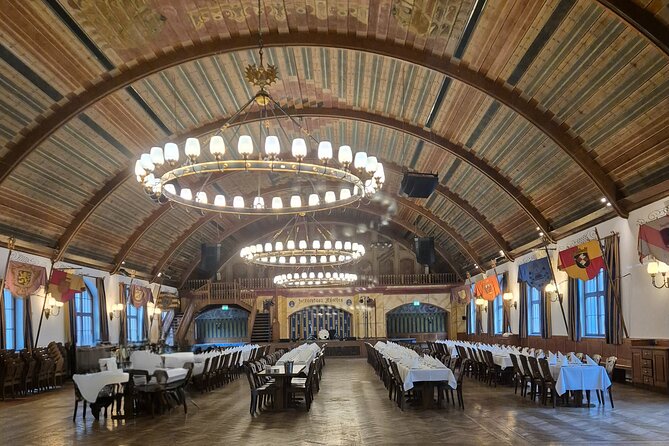
REVIEW · MUNICH THIRD REICH AND WWII HISTORY TOURS
Third Reich Tour Munich
Munich can feel normal until you learn why. This tour connects the dots across key sites with expert guides and a small group pace, and you still get time to ask questions. The one drawback is that the subject is heavy, so plan for an emotionally serious walk.
I like that the route stays practical. You start at Isartor Gate, then move through places tied to early meetings, propaganda, and the 1923 Beer Hall Putsch, with a respectful memorial stop built into the itinerary.
At the end, you finish at Königsplatz, where getting back into the city is straightforward. In about 2 hours 30 minutes, you cover major landmarks without feeling rushed, and you do it for a price that mostly pays for the guided storytelling rather than site entry fees.
Key highlights and why they matter
- Seven specific stops tied to Nazi-era power: from early beer-hall meetings to propaganda squares.
- A guide-led walk with room for questions: the pacing is designed to keep your attention, not just speed through stops.
- Small group size, up to 20 people: easier conversation and less time waiting around.
- Free entry at each stop: the money goes to the interpretation and route, not tickets.
- A built-in memorial moment: you pause at the Square for the Victims of National Socialism with an eternal flame.
Starting at Isartor Gate, then walking the story forward
The tour begins at Isartor Gate (Tal 50, 80331 München). It is only a short first step, about 5 minutes, and it sets the tone: you are not sightseeing for scenery, you are tracing how power was promoted and organized in Munich.
From there, you keep moving on foot from stop to stop, building a cause-and-effect timeline. You end at Königsplatz (Königsplatz 1, 80333 München), which matters because you finish at a major transit-friendly area, not somewhere out on the edges.
If you want a tour format that feels like following a well-plotted route through real streets, this one fits that approach. You get the benefit of a guide while still doing the walking that helps the city stick in your mind.
Other walks through the same years
- Munich: Third Reich & WWII Walking Tour
★ 4.6 · 6,181 reviews - Third Reich Walking Tour Munich
★ 4.5 · 4,291 reviews - Munich: Birthplace of the Third Reich Guided Walking Tour
★ 4.6 · 771 reviews - Munich World War II Sites Including Dachau Concentration Camp
★ 4.5 · 570 reviews
Sterneckerbräu: the former beer hall and early meetings
Next up is Sterneckerbräu, a former beer hall where the prototype Nazi Party was founded. The tour explanation focuses on how a movement can start with meetings and momentum, and how early organizers used familiar public spaces to gather support.
This stop is about 15 minutes, with free entry. What I like about this kind of starting point is that it grounds the story in everyday places, then the meaning sharpens as you continue.
A practical note: beer halls can be busy depending on the time of day. If you arrive a few minutes early, you can settle your bearings before your guide starts the timeline, which keeps the opening smooth.
Hofbräuhaus: when speeches drew bigger crowds
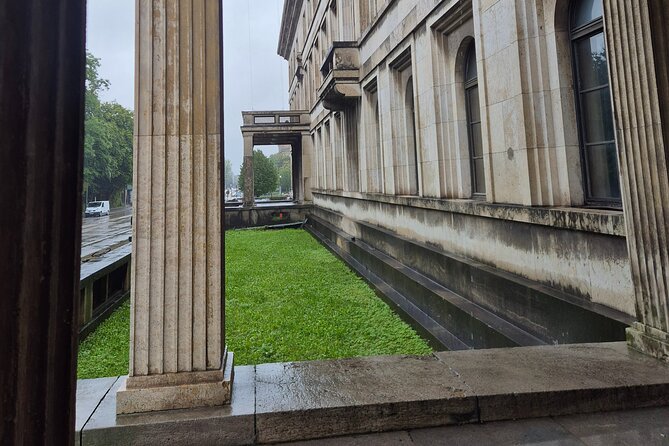
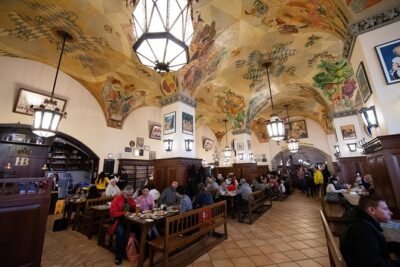
Then you head to the Staatliches Hofbräuhaus for around 25 minutes. This is one of Munich’s most famous beer halls, and the tour connects it directly to early Nazi Party meetings, where Adolf Hitler held early discussions that later drew larger crowds as the movement gained steam.
The value here is not just that this is a famous address. It is that your guide ties the location to propaganda efforts, meaning you learn to spot how public venues can be turned into messaging machines.
This is also where I think the tour works best if you ask questions. Your guide’s job is to explain why the same building can be entertainment one day and political theater the next, and that only lands if you engage.
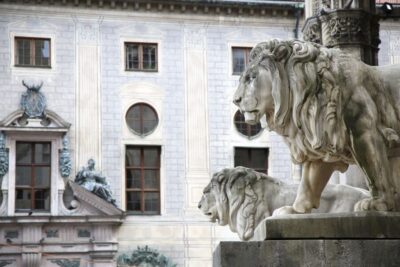
Feldherrnhalle: the failed Beer Hall Putsch, 1923
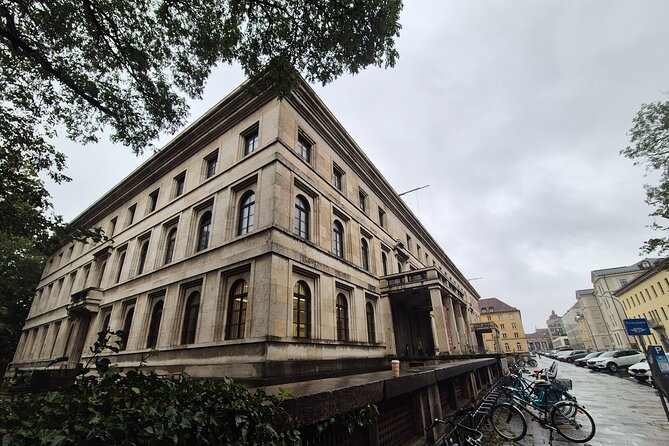
After Hofbräuhaus, you visit the Feldherrnhalle, about 25 minutes. Here, the tour centers on the failed Beer Hall Putsch in 1923, when Hitler and his followers attempted to seize power.
The guide also frames the site as a symbol of Nazi martyrdom after the clash between Nazi supporters and Bavarian police. That part is important because it shows how movements can reinterpret violence, turning defeat into a message that fuels recruitment and loyalty.
This is a stop where you may want to slow down mentally. The locations are fixed, but the meaning can hit harder when your guide explains how a single event can reshape a political path.
The memorial pause at Platz der Opfer des Nationalsozialismus
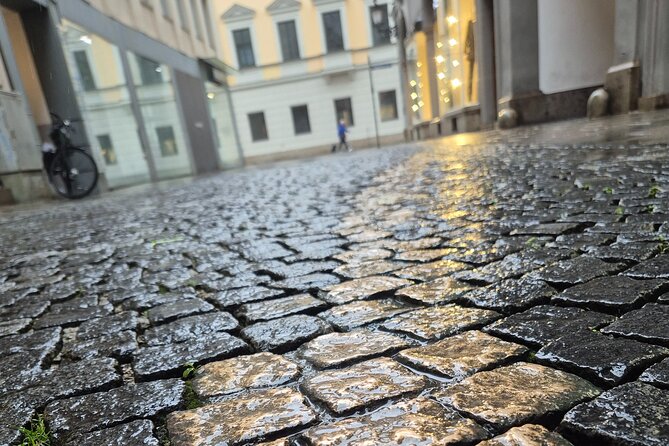
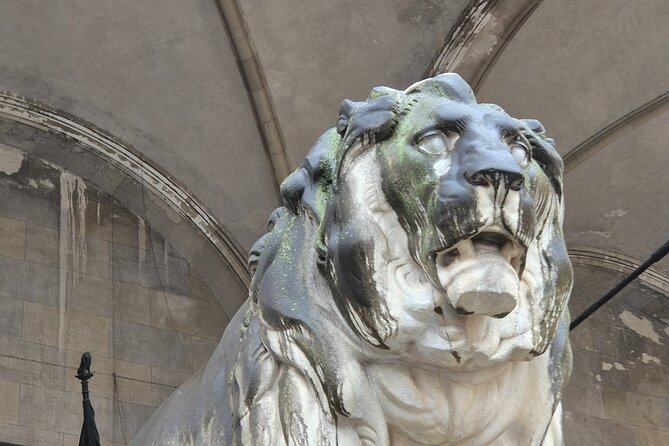
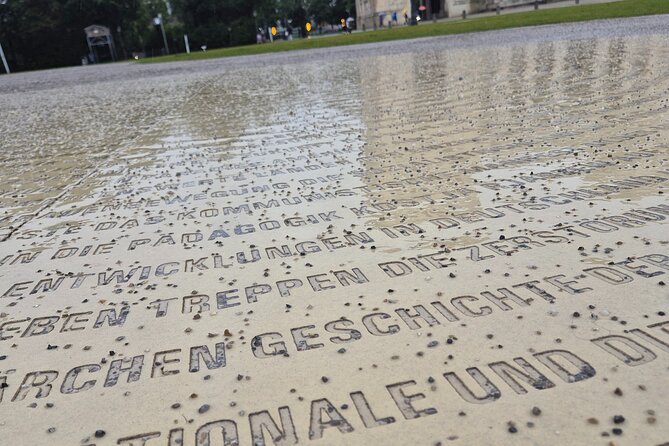
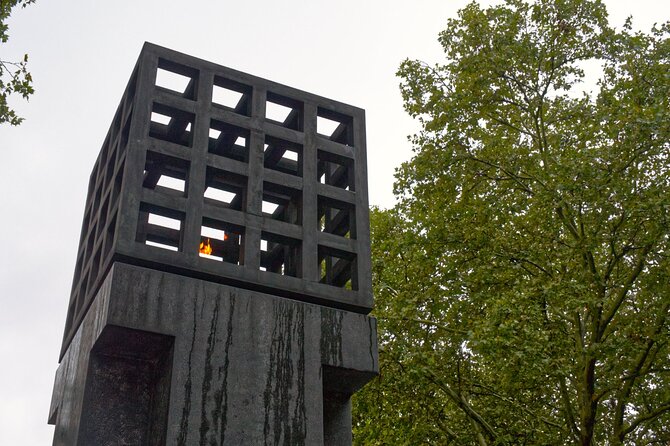
At about 20 minutes, you move to the Platz der Opfer des Nationalsozialismus, the Square for the Victims of National Socialism. This stop is the emotional counterweight to the political sites around it, and it is built into the itinerary for a reason.
You are there to pay tribute at a memorial with an eternal flame, dedicated to those persecuted by the Nazi regime. I appreciate this balance because it keeps the tour from becoming only about the machinery of power.
If you are traveling with kids or you are sensitive to difficult historical material, this stop may be the moment where you decide how to pace your attention. No one needs to rush through it.
Führerbau and Königsplatz: offices, mass rallies, and propaganda
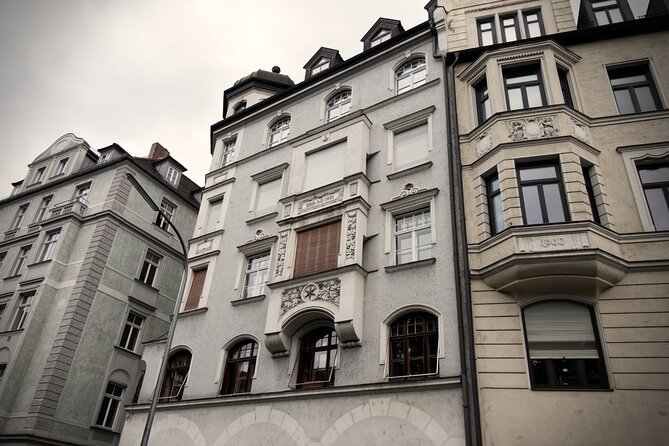
Two of the biggest “why this location mattered” stops happen near each other: the Führerbau and Königsplatz.
Other Munich bookings for the same trip
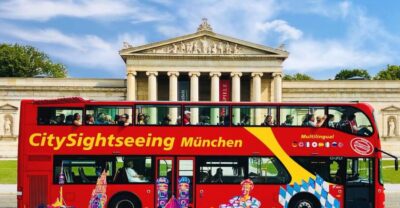
Führerbau: Hitler’s Munich offices
The tour visits the Fuhrer Building (also described as the Führerbau) for about 20 minutes. The focus is Hitler’s official offices in Munich, where he met with high-ranking officials and orchestrated key decisions.
This is also connected to the Munich Agreement in 1938, which gives you a clear historical anchor date. After a beer hall and a failed coup attempt, it is striking to see how the story shifts into administration and decision-making.
Königsplatz: architecture turned into a stage
Next is Konigsplatz for about 20 minutes. The tour explains how the Nazis transformed this grand square into a stage for mass rallies and military parades, with architecture that reflected ideals of power and control.
You also learn how the regime used propaganda at public ceremonies and even through book-burnings. That combination of space and messaging is one of the tour’s strongest themes, because it shows the city as part of the political system, not just a backdrop.
When the tour ends at Königsplatz, you are in a place that makes the history feel visible. It is also a smart finish point for practical reasons, since it connects easily to the rest of Munich.
Price and value: what $34.73 really buys you
The price is $34.73 per person for an experience lasting about 2 hours 30 minutes. On paper, that can look like a “history walk” rate, but the value comes from what is built into that time.
First, there are multiple key stops, not just one or two photo moments. Second, the route includes expert commentary tied to the locations, so you are paying for interpretation, pacing, and context. Third, each stop is listed as free entry, which means the cost is not inflated by ticketing.
So you should think of this as paying for a guided timeline that walks you through specific places tied to the rise of the Nazi movement, then back-anchors it with a memorial.
If you are trying to do history in Munich on a budget, this is one of those tours where you are not juggling lots of separate tickets.
Guide quality: where the experience really clicks
The tour’s standout strength is the guiding. In the feedback I looked at, guides including Kaevan and Jamie Buckley were praised for being on point and fast with answers.
You can feel the difference when a guide has more than a script. People want clarity, and they want to ask follow-ups, and the tour is structured so you can do that without derailing the walk. That is a big deal when the topic is complex.
I also like the way the pacing is described as encouraging you to see what is included, while still allowing you to take in additional context along the way. In a city like Munich, that matters because the streets and architecture are part of the story.
Timing and what a 2.5-hour pace feels like
The total duration is about 2 hours 30 minutes. With 7 stops spread at roughly 5 to 25 minutes each, the remaining time is the walking between points and a bit of adjustment at locations.
This is a good pace for most visitors because it is long enough to build a narrative, but not so long that you lose the thread. If you prefer slower, museum-style learning, this is still manageable because you get a guide to keep the story organized.
A practical tip: wear comfortable shoes. You will be on your feet across central streets and plazas, and that is the real “ticket” for getting the full value of the walk.
Getting back after the tour ends at Königsplatz
Finishing at Königsplatz is convenient. The tour notes that you can take the U2 U-Bahn from Königsplatz Station to Central Station, listed as one stop and about one minute.
You can also use nearby buses and trams, or simply walk back to Munich Old City in less than 15 minutes. That makes this a good choice if you do not want a long, complicated end to your day.
If you are planning dinner, this is where you can pivot quickly. You are placed near transit, so you can keep moving without a travel hassle.
Who should book, and who should pause first
This tour is a great fit if you:
- enjoy learning through walking and real-world locations
- want a guided timeline rather than reading a self-guided script
- like asking questions and getting straight answers
It may not be the best match if you:
- are not ready for a direct look at Nazi-era sites and memorials
- prefer lighter, entertainment-first sightseeing
- need a tour that focuses only on architecture without historical responsibility
The memorial stop and the Nazi-era political sites are both included, so you should go in knowing the emotional tone is intentional.
What to bring for a thoughtful, city-based history walk
This is not a “wear a costume and have fun” type of tour. It is a guided walk where the locations carry meaning.
Bring a little extra mental space. If you like to process details later, take a quick note right after each major stop so the timeline stays clear.
Also, keep your expectations practical. You are walking through Munich streets and plazas, so good shoes help, and dressing for the weather matters. The tour itself is structured, but your comfort still affects your attention.
Should you book the Third Reich Tour Munich?
Yes, I think you should book this tour if you want a focused, guided route through specific Nazi-era Munich locations, with a clear narrative and space for questions. The combination of expert-guided commentary, a small group size (up to 20), and free entry at the stops makes it strong value for the time.
Skip it or postpone it only if you know this topic will be too much for your mood that day. Otherwise, this is the kind of city history tour where the streets finally make sense, and you leave understanding more than you expected.
FAQ
How long is the Third Reich Tour Munich?
It runs for about 2 hours 30 minutes.
How much does the tour cost?
The price is $34.73 per person.
Where do I meet for the tour?
You meet at Isar Gate, Tal 50, 80331 München, Germany.
Where does the tour end?
The tour ends at Königsplatz 1, 80333 München, Germany.
How many stops are included?
There are 7 stops: Isartor, Sterneckerbräu, Staatliches Hofbrauhaus, Feldherrnhalle, Platz der Opfer des Nationalsozialismus, Fuhrer Building, and Konigsplatz.
Is a mobile ticket used?
Yes, the tour uses a mobile ticket.
How large is the group?
The tour has a maximum of 20 travelers.
Is admission required at the stops?
Each listed stop shows admission ticket free.
Are service animals allowed, and is it near public transportation?
Service animals are allowed, and the tour is near public transportation.
Can I cancel for a refund?
Yes. You can cancel up to 24 hours in advance for a full refund.
More Tours in Munich
More Tour Reviews in Munich
The Same Years, Other Routes

Newest Munich and Bavaria reviews
- Scenic Adventure Private Day Tour to The Konigssee Salzburg★ 4.5 · 3 reviews
- Jewish Museum & Jewish Quarter Guided Tour with Tickets★ 4.0 · 3 reviews
- Private Linderhof Castle, Entry-Ticket – optional Toboggan Run★ 5.0 · 3 reviews
- Private Transfer from Munich to Salzburg, English-speaking driver★ 3.5 · 3 reviews
- Private tour from Munich to Rothenburg and Harburg★ 5.0 · 3 reviews
- Arrival Transfer Munich Train Station to Munich by Luxury Van★ 5.0 · 3 reviews
Munich Third Reich and WWII History Tours, compared.
 ★ 4.6Third Reich & WWII Walking TourFrom $316,181 reviews
 ★ 4.5Third Reich Walking Tour MunichFrom $454,291 reviews
 ★ 4.6Birthplace of the Third Reich Guided Walking TourFrom $29771 reviews
 ★ 4.5Munich World War II Sites Including Dachau Concentration CampFrom $105570 reviews
 ★ 5.0Munich City Walking Tour, includes Third Reich & ViktualienmarktFrom $31458 reviews
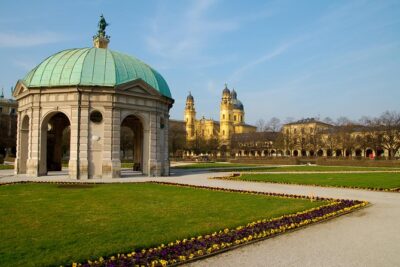 ★ 4.5Third Reich & WWII Walking TourFrom $35417 reviews
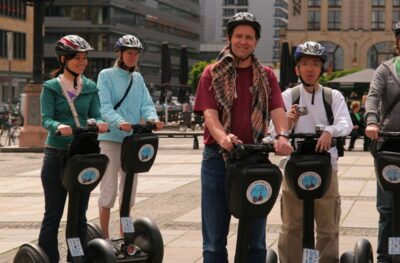 ★ 4.9Munich 3-Hour Segway Tour: Nazi Munich & Royal ArchitectureFrom $91194 reviews
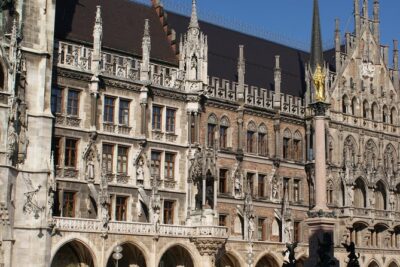 ★ 5.0Dachau Concentration Camp Memorial Site And Third Reich Day Tour From MunichFrom $145185 reviews
Listed under