REVIEW · CYCLING TOURS
Best of Munich Electric Bike Tour
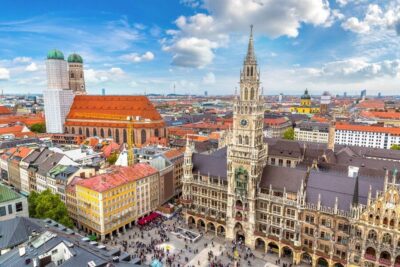
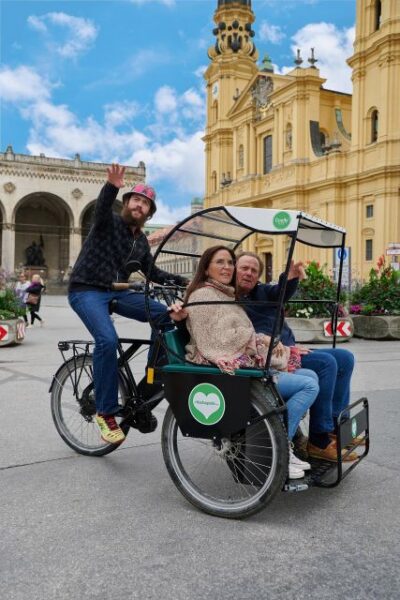
Munich snaps into focus on an electric bike. In about 4 hours, this guided ride strings together grand squares, museum landmarks, riverside scenery, and a classic beer-garden break, so you get a lot of context without the usual slog.
I really like two things here: the electric assist that keeps your legs fresh, and the stop-by-stop explanations led by guides praised by name, including Rob, Canaan, Susanna, Karl, Mark, and Dan. I also like that the pacing is built around short pauses, so you are constantly getting a new angle instead of repeating the same streets.
One consideration: the group can be up to 20 people and may mix e-bike riders with non-e-bike riders, so in the densest center streets you will want to stay alert and follow your guide’s rhythm closely.
Key highlights worth aiming for
- Electric-bike help on a mostly flat route so you can see more with less fatigue
- Königsplatz and the Kunstareal museum quarter in quick, digestible stops
- A thoughtful sweep from hard chapters to peace symbols, including the Führerbau, Siegestor, and Odeonsplatz area
- English Garden time plus the Chinese Tower beer garden pause, a proper Munich reset
- Eisbachwelle, the famous standing wave, with you watching surfers rather than hunting them
- Guides who keep safety and pacing tight, with frequent praise for clear explanations and control of the group
4 hours of Munich highlights, not a marathon

This is a classic Munich hit list, paced for real people. The route is designed to move you through central sights quickly, then slow down just enough at each stop that you can actually understand what you are looking at. The big win is the bike plus electric assist, because you do not feel like you need to train for hills to enjoy Munich’s main neighborhoods.
You also get a live guide and a helmet included, and the tour runs in English. That matters more than it sounds, because Munich’s architecture can look similar from the street. A good guide helps you tell neo-classical from modern, and power from propaganda, without turning the whole day into a classroom.
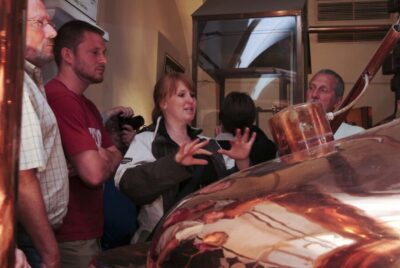
The tour price is $71.90 per person for a half-day. Food and drinks are not included, and there is an optional traditional beer sampling at a legendary beer hall for extra cost. So plan your budget to include at least a drink and probably a snack if you want the full Munich feeling.
Two wheels along the Isar
- Munich 3-Hour Guided Bike Tour
★ 4.5 · 1,731 reviews - Classic Mike’s Bike Tour daily @ 11.30 incl Beer Garden & Surfers
★ 5.0 · 1,246 reviews - Neuschwanstein Castle by Bus Incl. Bike Ride or Hohenschwangau
★ 5.0 · 607 reviews - Munich: Classic Guided City Tour by Bike (English Tour Only)
★ 4.7 · 534 reviews
Karlsplatz start, helmet on, and how the ride really feels
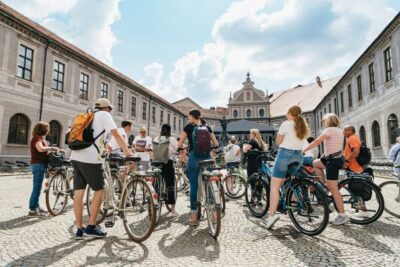
You meet at Karlsplatz 4, 80335 München. From there, you ride out into Munich’s historic core and adjacent districts, with stops timed to keep the group together and moving. The operator provides an electric bike and a helmet, so you are not wasting time tracking down rentals or figuring out fit. You also get a mobile ticket, which is convenient once you are standing in the right place and waiting.
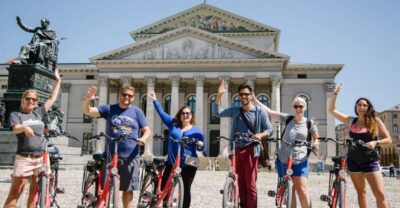
Group size is capped at 20. That is big enough to share the road comfortably, but small enough that your guide can still manage the flow and stop so everyone regroup. One review note that came up in the feedback: when groups are on the larger side, tight streets can feel like you are navigating with more bikes than you want. If you are sensitive to crowding, arrive ready to ride with patience.
Munich’s center is fairly flat, and multiple people noted that the e-bike feels helpful even if you technically could manage without it. I see the e-bike as a value move, not just a luxury. It gives you more energy for photo stops, museum-watching pauses, and a calm beer-garden break, instead of arriving worn out and thinking you should have stayed in your hotel.
Tip to enjoy the ride more: dress for weather changes. Reviews mention cold weather and rain, and the tour still works as long as you bring layers and a plan for wet conditions. Helmet coverage and slower, careful riding help when it is slick.
Wittelsbacherbrunnen and the Maxvorstadt squares that set the tone

The day begins with a monumental fountain moment at Wittelsbacherbrunnen, right at the northwestern edge of Munich’s city center. Built between 1893 and 1895 and designed by sculptor Adolf von Hildebrand in a neo-classical style, the fountain is more than decoration. It is an allegory for the primal forces of water, so you get symbolism wrapped in stone and flow.
Next comes Karolinenplatz in the Maxvorstadt district. This square is tied to the Strahlenplatz motif and represents the early 19th century relationship between Bavaria and France. It is also named for Queen Caroline of Bavaria. That kind of detail is exactly what you want on a guided ride. Without context, squares can blur together. With context, you start reading Munich like a map made of stories.
Then you reach Königsplatz, a key neo-classical set piece. It features the Propyläen Gate, with the Glyptothek and the Staatliche Antikensammlungen across the way, and it sits in what locals call the Kunstareal museum quarter. This is where Munich’s artistic identity shows up in architecture, not just inside museums.
A quick note on how to enjoy these stops: treat them like “look and learn” moments. You do not need to plan museum-level time at each building. Instead, use the brief pauses to spot the visual language your guide talks about, so when you later visit on your own, you know what to pay attention to.
Führerbau, Siegestor, and Odeonsplatz: Munich’s memory, in stone

This part of the route asks you to pay attention, not just look. The Führerbau, built between 1933 and 1937, is historically linked to Adolf Hitler. Unlike many Nazi-era sites that were demolished or erased, this one still stands today and currently houses the University of Music and Performing Arts Munich. That contrast alone gives the stop weight, and a good guide will help you hold two ideas at once: painful history and the fact that people still use spaces like this for education and work.
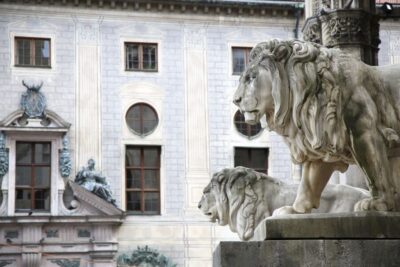
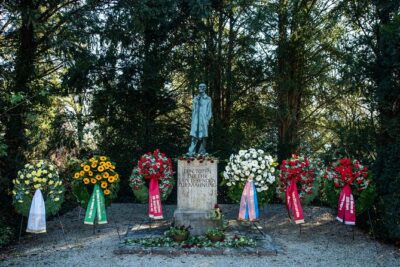
Then you move to Siegestor, the Victory Gate. It is a three-arched memorial crowned with a statue of Bavaria with a lion-quadriga. The original dedication was tied to the glory of the Bavarian army. After World War II, it was restored to serve as a reminder of peace. Again, Munich does not separate celebration from consequences. It layers them.
Odeonsplatz comes next, a large central square developed in the early 19th century by Leo von Klenze. This square connects to the Residenz area and the Theatine Church parvis. It also carries a dark event marker: it was the scene of a fatal gun battle tied to the 1923 Beer Hall Putsch. Standing here after hearing the story, you start noticing how quickly the same architecture can be used for very different messages.
Practical advice: if you prefer light sightseeing, this segment might feel heavier than expected. I think it still works because the tour is balanced with beauty and breaks, and the peace-centered monuments help you move forward with perspective instead of staying stuck in gloom.
Residenz, Hofgarten, and the elegant pause between palaces

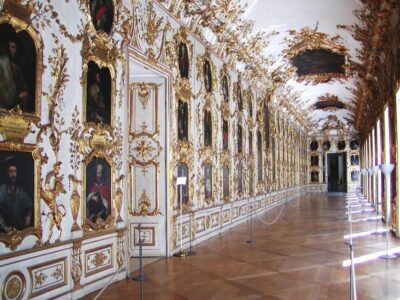
After the squares and memorials, the ride brings you into the Residenz orbit. The Residenz in Munich is the former royal palace of the Wittelsbach monarchs of Bavaria and is described as the largest city palace in Germany. Even if you only take in what you see from outside during the short stop, it helps to know you are looking at a power center that shaped the city’s identity for generations.
Right next door is the Hofgarten, the Court Garden built between 1613 and 1617. It is laid out in an Italian Renaissance style, with a pavilion for the goddess Diana built in 1615. This is the kind of stop that quietly resets you. You switch from intense stone symbolism to a calmer visual rhythm, which helps on a half-day tour where you are moving constantly.
The ride also passes Bayerische Staatskanzlei, a building erected from 1989 to 1993 around the central dome of a former Bavarian Army Museum. That older museum building was built in 1905, then demolished in World War II. It is a reminder that Munich reuses and re-shapes the city’s footprint even when the original purpose disappears.
This zone is where the guided format shines. If you were biking on your own without explanation, you might see palace walls and garden paths. With a guide, you get why these spaces matter, and that turns a quick photo stop into a real understanding moment.
English Garden, Chinese Tower beer garden, and Eisbachwelle

The biggest mood change comes when you reach the Englischer Garten. This park is enormous, about 3.7 km2, and it is one of the world’s largest urban public parks. The name refers to an English-style garden layout from the mid-18th century, so you are looking at a deliberate design tradition, not random greenery.
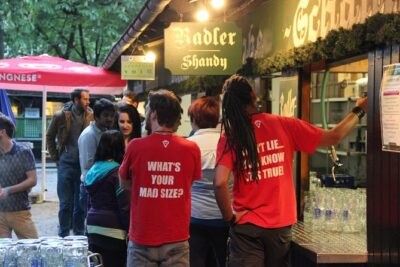
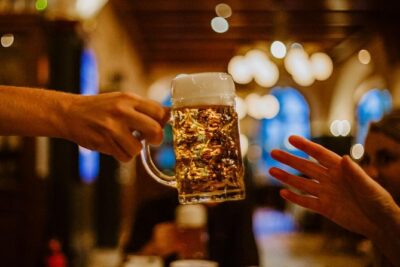
Then comes one of the most Munich segments: Biergarten am Chinesischen Turm. This is an outdoor beer garden in the tradition Bavaria made famous, with shared seating under trees. This stop is timed for a longer break, about 40 minutes. There is a beer garden run by Antje Schneider since 1974, with 7,000 seating places, and it is noted as the second largest beer garden in Munich after Hirschgarten. It sells Hofbräu beer, so you can order a classic without hunting down the right place.
What I like about this pause: it is not a rushed “one drink then go.” You get enough time to actually rest, eat if you want, and chat with your group before rolling back into the city.
After the beer garden area, you reach Eisbachwelle. This is a standing wave on the river near the Haus der Kunst art museum, about one meter high, and it is a popular river surfing spot. The water is cold and shallow, sometimes as little as 40 cm, so it is only suitable for experienced surfers. Even if you never see a surfer, the spectacle of water doing its own thing is still worth a stop.
How to make this stop work for you: if you care about photography, arrive ready with quick settings for moving water. If you care about the vibe, prioritize sitting down at the beer garden and let the parade of Munich life happen around you.
A few more Munich tours worth a look
Friedensengel and Maximilianeum: a civic view from Maximilian Park

Next you ride toward Friedensengel, the Angel of Peace. It sits in Maximilian Park and is part of a point de vue line of sight forming Prinzregentenstrasse. There is also an open space with a fountain next to the Isar, including a dolphin waterspout surrounded by four smaller waterspouts, plus stair access leading to an observation deck.
The centerpiece is a column about 38 meters high in the Corinthian style, topped with a six-meter statue of the Angel of Peace. It is a replica of the Nike of Paeonius. This is one of those places where you can feel the difference between Munich as entertainment and Munich as identity. The architecture is not only decorative, it is a statement about what the city wants to remember.
From there you reach Maximilianeum, a palatial building built as the home of a gifted students foundation, and since 1949 it has housed the Bavarian State Parliament. That shift is interesting for travelers: you see the same grand visual language used for education and governance, not just royal display.
This section works well if you like understanding the city’s power structures, but it is also a good breather. The pace remains controlled, and you are not stuck in a long indoor museum queue.
Deutsches Museum and Viktualienmarkt: science meets snack culture

The route then includes Deutsches Museum, the German Museum of Masterpieces of Science and Technology. It is described as the world’s largest museum of science and technology, with about 125,000 exhibited objects across 50 fields, and roughly 1.5 million visitors per year.
You will likely not tour the entire museum during a bike stop, but the value here is orientation. You get a sense of scale. If you ever wonder why Munich is a magnet for curious visitors, this museum is one reason.
Then you roll into Viktualienmarkt, a market that grew from a farmers market into a gourmet magnet. It sits across an area with 140 stalls and shops offering flowers, exotic fruit, game, poultry, spices, cheese, fish, and juices. This stop is where you can switch gears from buildings to smells.
If you want a practical souvenir that is not another magnet, this is the place to browse for items that travel well. If you want to eat, plan for the reality that market food can add up quickly. Since food and drinks are not included, treat this as your optional budget moment.
Ohel Jakob Synagogue: a modern landmark for a respectful ending
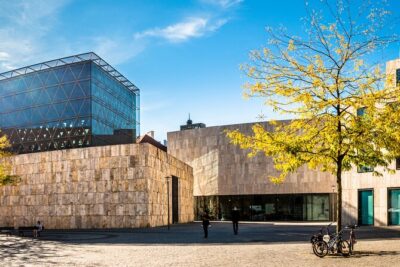
The ride finishes with Ohel Jakob Synagogue, a Jewish congregation and synagogue located at Sankt-Jakobs-Platz. The synagogue was built between 2004 and 2006 as the new main synagogue for Munich’s Jewish community. It was inaugurated on 9 November 2006, noted as the 68th anniversary of Kristallnacht.
This stop lands well as a reflective close. After seeing everything from royal power to memorials to park landscapes and markets, you end with a reminder that Munich is still living, still changing, and still building new structures for community life.
Then you head back toward the meeting point area, completing the loop.
Price and value: is $71.90 worth it?
At $71.90 per person for about 4 hours, the math looks good when you compare what is included. You get a live guide, an electric bike, and a helmet. That is the core value, because it saves you time and effort. You are not just riding, you are getting context while you ride.
Also, many of the listed stops are marked as admission ticket free during the short viewing time. That means you are not paying entry fees repeatedly just to see the exterior or quick viewing area. If you already plan to spend your own money on food, a drink, and maybe a later museum visit, this tour becomes a low-stress way to decide what is worth your deeper time.
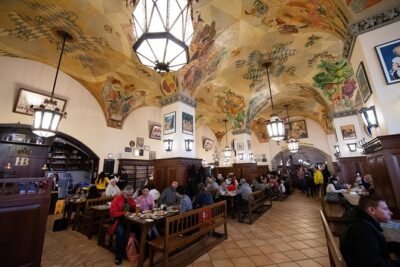
What is not included: food and drinks. And there is an optional traditional beer sampling at a legendary beer hall for extra expense. I suggest you plan one paid moment, not five. A smart approach is to treat the 40-minute Chinese Tower beer garden pause as your main included-feeling break and then only add the beer hall stop if the timing and your appetite line up.
Finally, timing matters. The tour is often booked about 61 days in advance on average. If you want a specific day, book ahead, especially in shoulder seasons when schedules can fill faster than you expect.
Should you book this Best of Munich Electric Bike Tour?
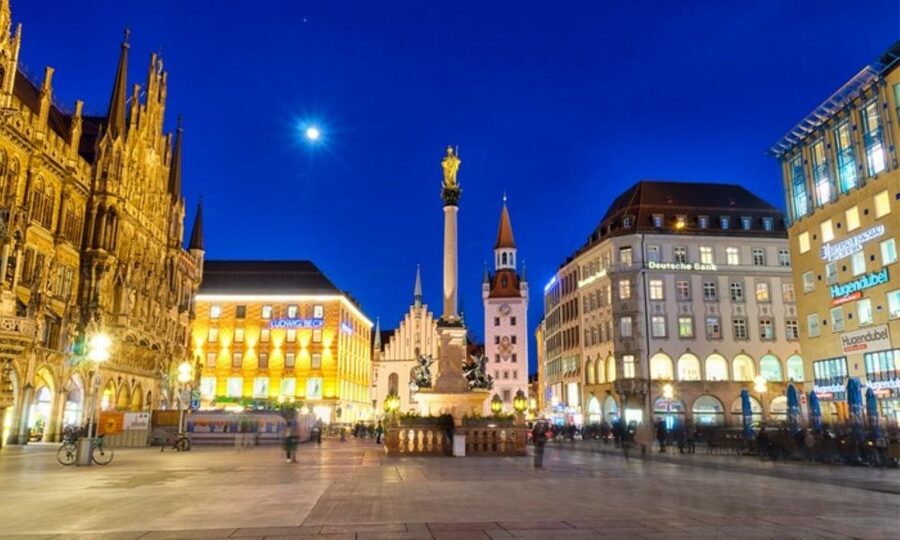
Book it if you want a fast, guided way to connect Munich’s big pieces: palace power at the Residenz, museum architecture around the Kunstareal, major squares like Königsplatz and Odeonsplatz, then breathing time at the Englischer Garten and Chinese Tower beer garden. The electric bike is a key part of the value. It keeps you comfortable enough to actually enjoy the stops.
Skip or reconsider if you dislike shared-road riding or get anxious in larger groups. With up to 20 riders, mixed with non-e-bike riders, you should expect some crowding in the tightest stretches.
If your goal is to get oriented quickly and leave with a short list of what to return to, this tour is built for that. And if you land with one of the guides people keep naming in the feedback, like Rob, Canaan, Susanna, Karl, Mark, or Dan, you will probably get more than a route map. You will get Munich’s reasoning behind the scenery.
FAQ
How long is the Munich electric bike tour?
It runs about 4 hours.
What is the price per person?
The price is $71.90 per person.
What is included with the tour?
You get a live guide, plus an electric bike and a helmet.
Is food or beer included?
No. Food and drinks are not included. There is also an optional traditional German beer sampling at a legendary beer hall for an extra expense.
Where do I meet for the tour?
The meeting point is Karlsplatz 4, 80335 München, Germany.
What language is the tour offered in?
The tour is offered in English.
How big are the groups?
The tour has a maximum of 20 travelers, and the group may include non-e-bike riders.
Are museum or attraction entry fees included at the stops?
The route includes stops marked as admission ticket free for the time you are there.
What is the cancellation policy?
Free cancellation is available. You can cancel up to 24 hours in advance for a full refund. If you cancel less than 24 hours before the start time, you will not receive a refund.
Can the tour be canceled if there are not enough travelers?
Yes. If the minimum number of travelers is not met, the tour may be canceled and you will be offered a different date or a full refund.
More Rides Along the Isar
More Tours in Munich
More Tour Reviews in Munich
Newest Munich and Bavaria reviews
- Private Munich Beer Hall Tour with 3-Course Meal & Beer Tastings★ 5.0 · 17 reviews
- The Perfect Start: Munich PRIVATE Tour with Bavarian Breakfast★ 5.0 · 17 reviews
- Munich City Pass: Admission to 45 activities and Public Transport★ 4.5 · 17 reviews
- Private Departure Transfer: Munich Airport★ 3.0 · 17 reviews
- Private One-way Airport Transfer Munich Airport To Munich★ 4.0 · 18 reviews
- Medieval city tour with night watchman in Munich in German★ 5.0 · 18 reviews
Cycling Tours, compared.
★ 4.5Munich 3-Hour Guided Bike TourFrom $401,731 reviews
★ 5.0Classic Mike’s Bike Tour daily @ 11.30 incl Beer Garden & SurfersFrom $421,246 reviews
★ 5.0Neuschwanstein Castle by Bus Incl. Bike Ride or HohenschwangauFrom $78607 reviews
★ 4.7Classic Guided City Tour by Bike (English Tour Only)From $49534 reviews
★ 4.5Munich Small-Group Bike TourFrom $54510 reviews
★ 4.9Bike Tour with Beer Garden BreakFrom $47391 reviews
★ 5.0Munich City Bike Tour + Beer Garden Lunch StopFrom $48283 reviews
★ 5.0Mini Classic Bike Tour @ 4pm incl. Beer Garden & Surfers 2,5 hrsFrom $45251 reviews
Listed under