
REVIEW · SELF-GUIDED TOURS
Ghosts of Munich: The Haunted Apprentice Exploration Game
Munich can feel huge, until you play a game.
I like how Ghosts of Munich turns real landmarks into checkpoints, so you walk with purpose instead of just wandering. You get an offline adventure format with English audio stories, plus puzzles that make you look twice at places you might otherwise skim.
Two things I especially appreciate are the pace control and the low stress of doing this solo. You can start anytime and pause for breaks, so it works well if you’re with kids, you need a coffee stop, or you just want to slow down at a church or square.
One drawback to keep in mind is that this is phone-based (a mobile ticket and audio game). If your app access is glitchy on your device, you may need quick tech help, so I suggest checking your ticket and audio before you set out.
Quick hits before you play
- Offline-friendly haunted game so you can manage phone data costs while you explore
- English audio stories at each checkpoint, so you are not stuck reading
- Start when you want and pause any time, which makes Munich logistics easier
- Private self-guided format for your group, which helps you avoid the biggest crowd moments
- A mix of squares and churches, with free stops plus a few places where admission costs are not included
- Family-tested puzzle energy, especially for teens who like teamwork and spotting details
A self-guided haunted game that fits how you actually travel
This is not a guided tour where you follow a person in front and hope the timing lines up. Instead, you play a self-guided exploration game built around some of Munich’s most recognizable sights. That changes the whole feel of the day. You still visit major stops, but you decide where to linger, where to take photos, and when to move on.
The haunted angle is the hook, but the practical design is what makes it work. You get short challenges at each location, which turns sightseeing into a series of mini missions. That format keeps the walk from feeling like a long lecture, and it helps you stay engaged even if the weather changes.
Also, this is offered in English with audio stories. So if you want the stories without scanning text while walking, you can do that. If you prefer the opposite, you can still use the audio as your guide and focus your eyes on the details around you.
A few more Munich tours worth a look
- Munich: Scavenger Hunt Self-Guided Tour for Children
★ 4.5 · 101 reviews - 800 Years of History: A Munich GPS Audio Tour
★ 4.5 · 12 reviews - Munich Scavenger Hunt and Sights Self-Guided Tour
★ 4.5 · 8 reviews - Munich: Self-guided sightseeing scavenger hunt for families
★ 4.2 · 6 reviews
Price and time value: what $7.21 buys you
At $7.21 per person, this is one of those deals that feels almost too simple. The key is that you’re not just paying for “content.” You’re paying for a structured walking route that covers multiple central landmarks, plus the game format that encourages you to spend time at each one.
Duration is about 1 to 2 hours, which is an ideal window for a low-cost activity that still feels meaningful. You can fit it between longer museum plans or wrap it up before dinner. And because you can start at any hour (the schedule runs all day), you can choose the time that matches your energy.
The private self-guided setup is another value point. You don’t have to coordinate with a big group. If you’re traveling as a couple or with a family, you stay together at your own tempo. If you’ve got a larger group, there’s a practical note built in: if your group is larger than 15, you can make multiple bookings.
Offline, audio, and phone reality: how to make it smooth
The standout practical feature here is that the game can be accessed offline. That matters in Munich because you may spend time on underground rides, quick outdoor hops, and places where your signal is spotty. With offline access, you can save your data plan for things that truly need a connection.
That said, offline is only helpful if your phone has everything it needs before you start. Do a quick check right at the start point: confirm your mobile ticket is loaded and the English audio begins as expected. Since you can pause and resume, you do not have to sprint through checkpoints, but you do want the game to be functioning early.
Also remember: there is no physical tour guide. That is part of the appeal, but it also means there is no live person to clarify questions in the moment. The audio stories carry you through, and the puzzle prompts tell you what to look for. If you like self-direction, you’re set.
Walking route overview: from Odeonsplatz to Rindermarkt
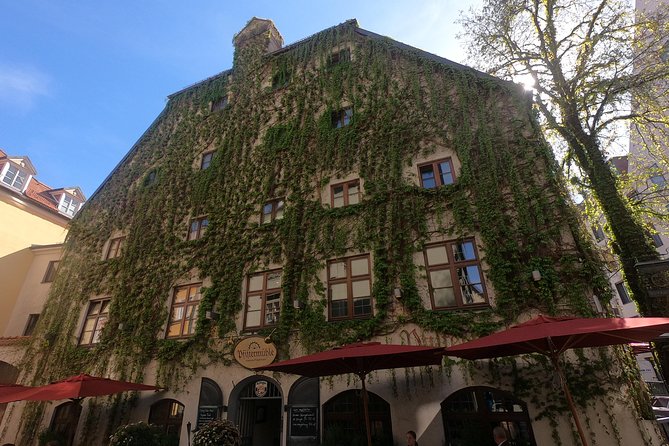
You start at Odeonsplatz and finish at Rindermarkt 17 (both in Munich’s central area). This is a classic “easy walking, big-sight density” route. You’re moving through high-impact architecture and major squares, which means even a shorter trip can still feel satisfying.
Most checkpoints are quick, around 10 minutes each, with one longer stop for views. That helps you keep the total time within the typical 1 to 2 hour range without feeling rushed.
Stop-by-stop: what you’ll see and why it works
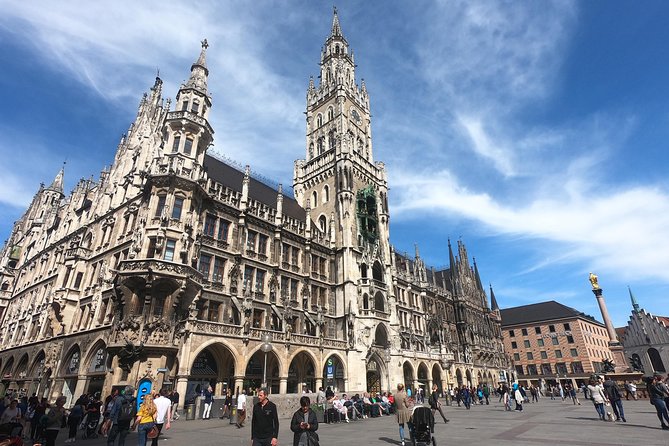
Stop 1: Odeonsplatz, where a 1921 power grab turns into a puzzle
Your game begins at Odeonsplatz, a central square designed in the early 19th century by Leo von Klenze in an Italian-like style. Even if you’ve seen the place on postcards, the game angle gives you a new reason to look around.
The story cue here is a 1921 attempt by an obscure leader to seize control of Bavaria. The authorities were waiting with machine guns, and some people were killed in the fire, but the leader escaped. Your challenge asks you to figure out who this controversial character was by solving the prompt.
Why it’s a good start: you get stakes immediately, and it sets a tone for the rest of the walk. It also helps you “wake up” your attention, because the next locations build on that habit of noticing details.
Practical note: this is a square. Expect normal city foot traffic, not a quiet museum lane.
Other Munich bookings for the same trip



Stop 2: Hofgarten, the calming pause that still feels eerie
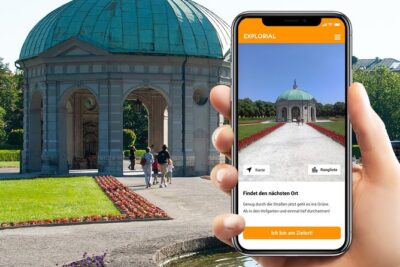
From Odeonsplatz you move into Hofgarten, a small park near Munich’s old town edge. It was designed in the 17th century by Elector Maximilian I, with an Italian Renaissance garden as the muse.
This stop does two jobs. First, it gives you a break from the street hustle. If you need a reset moment, Hofgarten is the kind of place where sitting for a few minutes feels natural. Second, the game treats that calm as a contrast, hinting that quiet spaces can carry dark secrets.
Why it works: the route has a rhythm. After a heavier historical moment, this green space helps you slow down. You’ll be better able to notice details at the church stops that follow.
Stop 3: Theatinerkirche St. Kajetan, admire the church then answer the call
Next is Theatinerkirche St. Kajetan, a Catholic church built by Elector Ferdinand Maria and his wife Henriette Adelaide in the mid 17th century. The game framing connects the building to the birth of a long-awaited heir to the Bavarian throne.
The visual contrast is a major selling point: the interior is white and ornate, which contrasts with the yellow facade that became a well-known symbol for the city. The important detail for your planning: the admission for this stop is listed as not included, so you should expect possible entry cost if you want to go inside and participate fully.
What to do: if you’re the type who likes to understand a church through both exterior and interior, this one will feel rewarding. If you’re trying to keep costs fully predictable, you might choose to keep this stop exterior-focused and continue, depending on how the game prompt works on your device.
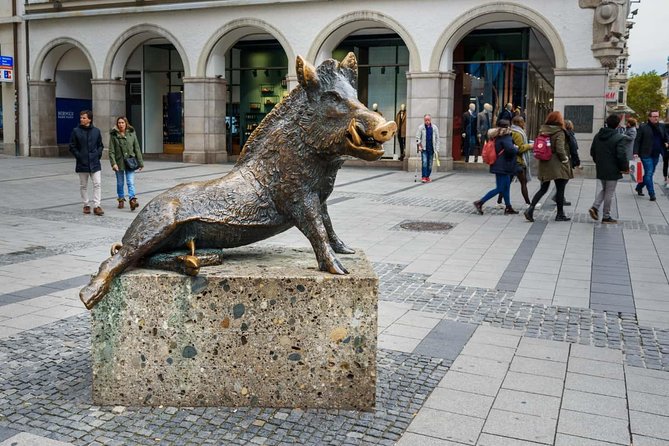
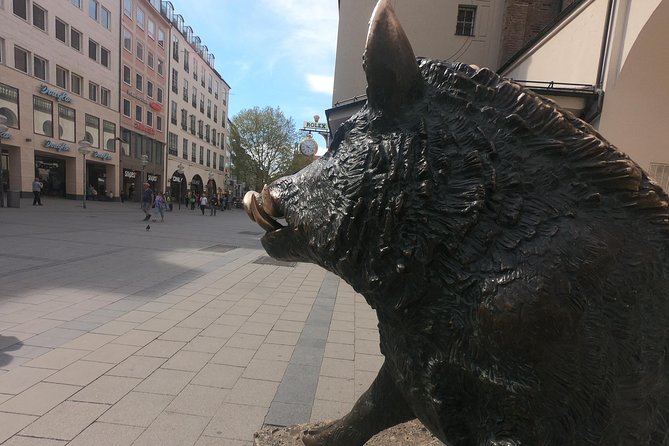
Stop 4: Sitzender Keiler, the Sitting Boar and the luck ritual
Now you reach Sitzender Keiler, the Sitting Boar, which guards the entrance to the Hunting and Fishing Museum. This is where the game turns playful.
The famous detail is literal: you’re encouraged to rub the boar’s nose for luck as part of uncovering the mystery. That kind of hands-on cue is great for families and for anyone who finds “look-only” tourism a little boring.
Why it’s worth your time: it’s quick, it’s quirky, and it makes the walk feel like a scavenger hunt rather than a checklist.
Stop 5: Frauenkirche, twin towers and the Devil’s footprint
No Munich walking route feels complete without Frauenkirche. The church has two twin towers, each about 100 meters, making them a strong visual anchor as you travel through the center.
The game adds a spooky legend: at the entrance there’s said to be the Devil’s footprint. The story claims the builder bet the Devil that the church would have no windows. When the Devil realized he’d been tricked, he left his mark.
Another key planning detail: this stop notes admission ticket not included. So if the challenge expects you to enter, keep that in mind. If you prefer to budget carefully, decide in advance whether you’ll pay for church entry as part of the “full experience.”
Why I like this stop: it’s one of the few places where local legend and architecture meet in a way that feels understandable and fun. You are not just looking at a big church facade, you are searching for a specific story detail.
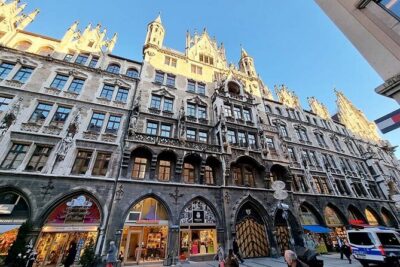
Stop 6: Marienplatz, the city’s center where anything can happen
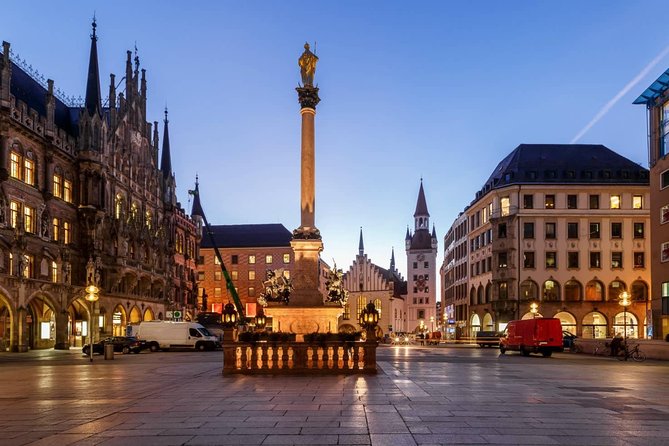
You reach Munich Marienplatz, the central square where major city events happen, from Christmas markets to celebrations connected with FC Bayern. It’s also historically important: the square has been central since Munich was founded by Henry the Lion in the 12th century, and it’s where key streets meet.
The game uses Marienplatz for a question-based challenge. Since it’s a public square, it’s also a good moment to observe how people move, how the architecture frames the space, and where sightlines pull your eyes.
Why it’s useful mid-route: you’re in the busiest kind of area, so the game helps you decide where to focus instead of feeling overwhelmed. Also, Marienplatz is a natural pause point for a snack or a quick restroom break before the remaining stops.
Stop 7: St. Peter’s Church, 299 steps and a mix of styles
Now you hit St. Peter’s Church, Munich’s oldest Catholic church. It survived tragic fires and wars over roughly 800 years, and because of frequent reconstructions, you see a mix of architectural styles, including Gothic, Baroque, and Rococo.
The big “value for effort” moment here is the view. The game highlights climbing 299 steps to the tower for a bird’s-eye perspective over Munich’s center.
Admission is listed as not included for this stop, so plan for possible entry costs. If you’re choosing between inside viewing and the climb, the tower viewpoint is explicitly part of why this stop matters.
Who will enjoy this: anyone who likes a reward after effort, or anyone who wants the practical Munich orientation that a tower view gives.
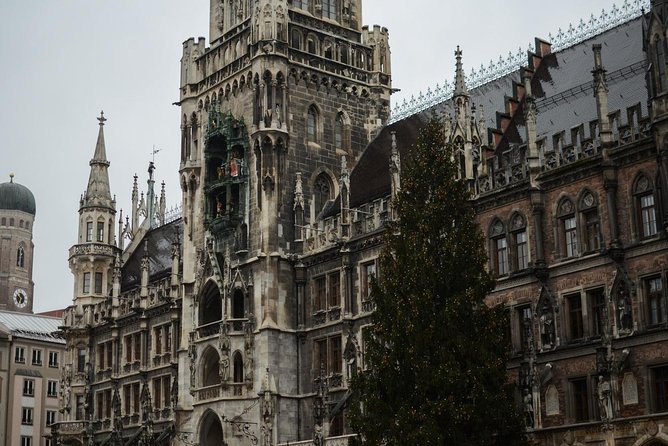
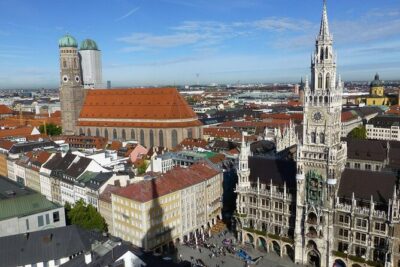
Stop 8: New Town Hall (Neues Rathaus), Glockenspiel and a plague-era story
Your final destination is the New Town Hall (Neus Rathaus), a political hub where city council meetings happen. It’s also known as FC Bayern’s favorite balcony for championship moments.
Even if you’re not into soccer, the building has a famous feature: the Glockenspiel in the tower. The game ends with a story element linked to a plague epidemic, where barrel makers were among the first to risk stepping back out and dancing for the public’s amusement after fear took over.
This is another stop with admission ticket not included, so decide what you want to do before you arrive. If you want the full indoor story arc, you may need to pay entry. If you want the exterior route to stay budget-friendly, you can still enjoy the setting and skyline impact, then focus on the “final clue” portion of the game as it works on your device.
Why ending here is smart: you finish at a landmark that feels like a “reward.” The route started with an epic historical moment, and it ends with civic identity and a legend people can share.
Best-fit for different groups (and who might skip it)

This experience is a strong match if you want a central Munich walk that feels structured but not rigid.
It’s especially good for:
- Families with teens, because puzzle play and observation challenges tend to create teamwork quickly
- Couples who want something different than a museum line, but still want real sights
- Solo walkers who like having a route and prompts, not a crowd choreography
- People on a time crunch who want a 1 to 2 hour activity with lots of landmarks
You might want to choose something else if:
- You dislike phone-based experiences, since there is no physical guide
- You hate any chance of added entry costs, because several major stops list admission as not included
- You rely on your phone for absolutely everything and cannot troubleshoot access quickly
Practical tips to get the most from the haunted game
Here are a few ways to make it feel smoother and more fun:
- Treat it like a “spotting game.” The prompts work best when you slow down for small details at each checkpoint. Look up, look at entrances, and notice the architectural contrasts the audio talks about.
- Use pause as a travel tool. If your group needs a bathroom stop or a coffee break, pause instead of rushing. The structure is meant to fit real travel breaks.
- Budget a little extra for not-included admission stops. The game includes several churches and viewpoints where admission is not included. Even if you plan to skip one, it helps to know which places could cost extra.
- Wear good walking shoes. You’re covering central Munich with multiple stops, and the final tower climb at St. Peter’s is optional only in the sense that you choose what to do at that moment, not because the game ignores it.
Should you book Ghosts of Munich: The Haunted Apprentice Exploration Game?
I think you should book it if you want a low-cost, self-guided haunted walking experience that keeps you moving, teaches you by storytelling, and helps you see Munich with fresh eyes. At around $7.21 per person and a typical 1 to 2 hours, it’s an efficient way to add a playful layer to a day of sightseeing.
I would not book it if you strongly prefer a live guide, or if you know you will be frustrated by phone-based access. Also, if you want every stop to be fully free, you should note that several key locations list admission as not included.
If you’re the kind of traveler who likes stories, puzzles, and walking with purpose, this is one of the smarter bets in Munich for a short, memorable outing.
More Self-Guided Tours in Munich





More Tour Reviews in Munich



Newest Munich and Bavaria reviews
- Scenic Adventure Private Day Tour to The Konigssee Salzburg★ 4.5 · 3 reviews
- Jewish Museum & Jewish Quarter Guided Tour with Tickets★ 4.0 · 3 reviews
- Private Linderhof Castle, Entry-Ticket – optional Toboggan Run★ 5.0 · 3 reviews
- Private Transfer from Munich to Salzburg, English-speaking driver★ 3.5 · 3 reviews
- Private tour from Munich to Rothenburg and Harburg★ 5.0 · 3 reviews
- Arrival Transfer Munich Train Station to Munich by Luxury Van★ 5.0 · 3 reviews
Self-Guided Tours, compared.
 ★ 3.7Füssen: Neuschwanstein Castle Entry Ticket and Audio GuideFrom $51524 reviews
 ★ 3.5Neuschwanstein Castle Ticket With Audio Guided TourFrom $54473 reviews
 ★ 4.5Scavenger Hunt Self-Guided Tour for ChildrenFrom $47101 reviews
 ★ 4.5800 Years of History: A Munich GPS Audio TourFrom $912 reviews
 ★ 4.5Munich Scavenger Hunt and Sights Self-Guided TourFrom $138 reviews
 ★ 4.2Self-guided sightseeing scavenger hunt for familiesFrom $476 reviews
 ★ 5.0Self-guided Beer-Tour of Munich: Main Sights, Beer & BreweriesFrom $374 reviews
 ★ 4.0Private audio book city rally in Munich city centreFrom $464 reviews
Listed under