
REVIEW · MUNICH NIGHT WATCHMAN TOURS
Medieval city tour with night watchman in Munich in German
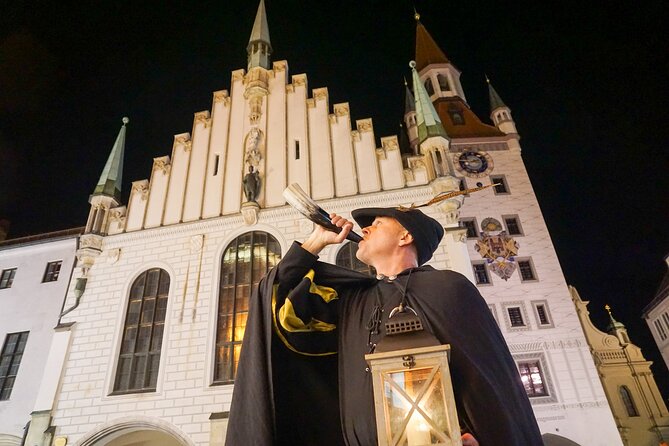
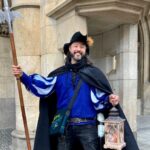
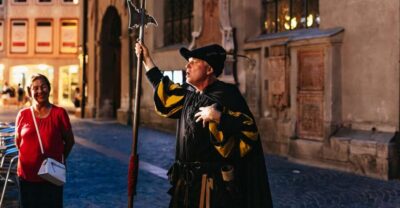
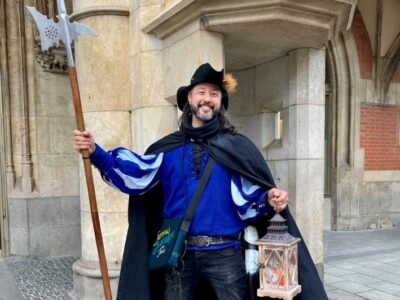
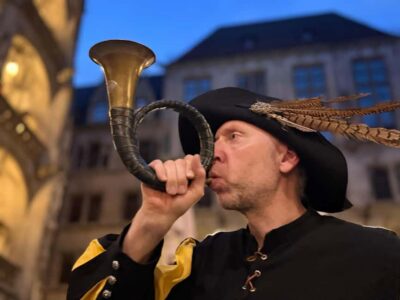
At night, Munich tells its darker story. This German medieval city tour follows Wolfram, Munich’s original night watchman, carrying a lantern, a halberd, and a horn as he explains what his job meant in the Middle Ages. You’ll move through key old-town corners and learn how daily life, punishment, and even local landmarks fit together.
Two things I really like: Wolfram’s storytelling with humor keeps the mood from getting too heavy, and the tour mixes dramatic themes with specific local stops you can actually see. You also get hands-on details in the performance, like a look at medieval silver pennies and the tally stick used to track debt. One thing to think about first, the tour includes execution and torture as part of the Middle Ages theme, so if you prefer light sightseeing only, this might be more intense than you want.
Key highlights at a glance
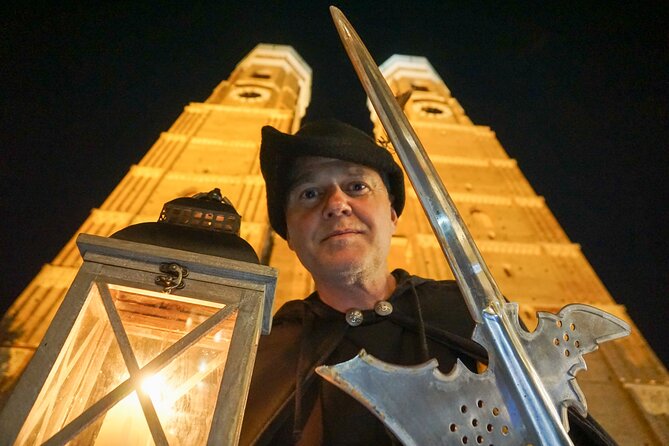
- Wolfram in full character, with period-style tools like lantern, halberd, and horn
- Medieval justice and punishment stories tied to real Munich locations
- Gates and city walls, explained as Wolfram closes them during the walk
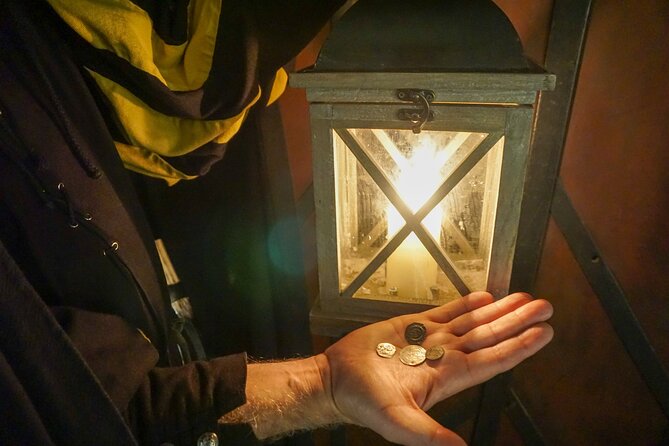
- Medieval money and debt, including a purse of silver pennies and the tally stick
- Big-ticket landmarks at night, from Frauenkirche to the final stop near the Beautiful Tower
Night watchman Wolfram: what makes this tour work
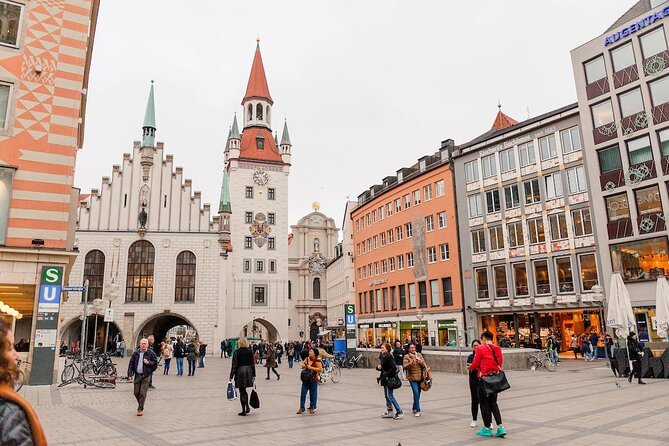
Wolfram the night watchman is the star, and the format is simple: he leads you through old Munich while explaining his role and what people faced after dark. It’s not just facts on a sign. He turns the streets into a timeline.
I like that the experience stays grounded in place. You’re not stuck in one church or one museum room. Instead, Wolfram points out medieval traces and landmark details as you go, so the walk feels like learning how the city functioned, not just when it was built.
It’s also a great length. At about 1 hour 30 minutes, you get a full theme arc without a long slog. That matters in Munich, especially at 8:30 pm when evenings can feel cold fast.
Other lantern-lit rounds
- Munich: Night Watchman Walking Tour
★ 4.7 · 2,092 reviews - Munich: Middle Ages Tour with Night Watchman
★ 4.9 · 652 reviews - München: Der Nachtwächter für Kinder – Führung auf Deutsch
★ 5.0 · 322 reviews - On the road with the night watchman
★ 5.0 · 142 reviews
Price and value: is €16-ish really enough?
This tour costs $16.13 per person and runs about 1 hour 30 minutes. For Munich, that’s a reasonable price for a guided experience with a small group and a very character-driven host.
The value comes from how the tour is built. Instead of one highlight, you get a chain of themed stops: night watch duties, punishment, cemeteries, city walls, money, and debt. Plus, the tour’s style leans into active storytelling with props like coins, a bell reference, and the tally stick, which helps the time feel purposeful.
Also, you’re not dealing with a lineup of separate paid attractions. Each stop is listed as admission ticket free, so you can keep your spend under control while still covering a lot of ground.
Timing, meeting point, and how to arrive without stress
The tour starts at 8:30 pm. Your meeting point is Rathaus Apotheke, Marienplatz 8, 80331 München, and it ends at Hirmer, Kaufingerstraße 28, 80331 München.
Because it’s a night walk, I suggest you arrive a bit early and get oriented around Marienplatz. You’ll be starting right in the heart of the historic center, so it’s easy to find once you’re there, but it’s still smart to give yourself a few minutes.
It’s also limited to a maximum of 10 travelers, so late arrivals can disrupt the group flow. Early arrival keeps things smooth for everyone.
Stop-by-stop: the medieval story from Marienplatz onward
Marienplatz: Wolfram’s welcome and night watch duties
You begin at Munich Marienplatz, where Wolfram introduces himself and the core job description of the night watchman in the Middle Ages. This is your foundation. You learn what the role was meant to protect, how watch duties shaped the city after dark, and why a lantern and horn mattered.
What I like here is that it sets expectations. When later stops get darker, you understand the logic behind the stories instead of feeling thrown into shock.
St. Peter’s Church and the poor sinner bell
Next comes St. Peter’s Church, where Wolfram focuses on the poor sinner bell. The tour also includes a demonstration related to the execution of Marco Bragadino.
This is where the night watchman theme connects directly to medieval punishments. It’s not random horror. The point is to show how justice and public signaling worked in a city where people were expected to follow rules.
If you’re sensitive to execution themes, treat this stop as the “strongest content” part. It’s still part of the overall narrative.
Other ways round the city centre


Petersplatz cemetery: why burial near the altar mattered
At Petersplatz, you visit the medieval cemetery and learn why many people wanted to be buried close to the altar. That detail changes how you see cemeteries, because it’s about belief, status, and hope, not just death.
I like that this stop adds human scale. After darker topics, this feels more reflective, and it ties medieval priorities to a place you can actually stand in.
Viktualienmarkt and the first city wall line
At Viktualienmarkt, Wolfram explains where the first city wall of Munich stood. This stop is short, but it helps you visualize the city’s earlier boundaries. When the guide starts talking about gates and walls later, you’ll already have a mental map.
It’s also a smart pacing choice. You get history without a long detour, and the walk keeps moving.
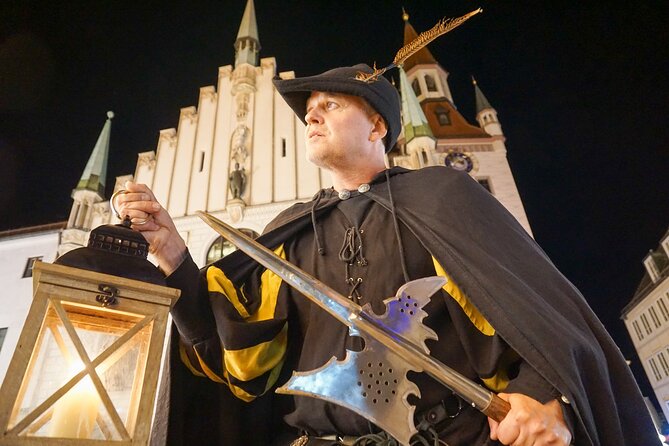
Old Town Hall and Talburg gate moments
Near the Old Town Hall, Wolfram closes the Talburg gate and shows you a medieval halberd. This is one of the more “in-character” moments, because the guide physically acts out the gate closure while pointing out the associated medieval idea.
I like that you see tools, not just hear about them. The halberd detail makes the job feel real, even if you’re just hearing stories in the modern street.
Burgstraße: the medieval prison and what punishments looked like
On Burgstraße, the tour turns to Munich’s medieval prison. You hear about the dungeon and torture, and you get an explanation of punishments used in the Middle Ages.
This stop is intense by design, but it’s also useful if you want a full picture. A medieval city wasn’t only churches and markets. It was also control, fear, and consequences.
If the topic makes you uncomfortable, you can still handle it by mentally switching modes. Think geography and systems: where a city held prisoners, and how authority showed itself.
Münzstraße: Wolfram’s purse and medieval silver pennies
At Münzstraße, you get a look into Wolfram’s purse and see original silver pennies from the Middle Ages. This is a great “lighter” counterweight to darker justice stories.
Even if you’re not a coin person, it helps you understand the economy behind the scenes. Money, metal, and value were part of everyday life, and the tour keeps bringing you back to tangible items.
Alter Hof: Wittelsbach origins and Duke Ludwig the strict one
At Alter Hof, you experience the first castle built by the Wittelsbach family in Munich. The guide also connects this to Duke Ludwig, including his nickname as the strict one.
This part works well because it turns a political detail into a sense of who shaped the city and how rulers wanted order. If you’re curious why Munich looks the way it does, this stop points you toward the power that started shaping it.
Dienerstraße and Weinstraße: Schwabinger Tor and old addressing
In Dienerstraße, Wolfram closes the Vorderes Schwabinger Tor and explains what still remains that remind you of the first city wall. Then at Weinstraße, he closes the Rear Schwabing Gate and explains how addresses used to work.
I like these stops because they teach you how a city organizes itself. Walls and gates are more than boundaries. They shape navigation, identity, and even how people located homes.
It’s the kind of info that makes you notice street patterns later while you wander on your own.
Schäfflerstraße: debt and the tally stick
At Schäfflerstraße, Wolfram explains how medieval debt could pile up using the tally stick. This is one of the most practical-feeling topics on the route, because it’s about record-keeping and risk.
It also pairs well with the earlier coin stop. You see both sides: what money was made of, and how people tracked what they owed.
Frauenkirche and the 20-year build story
At Frauenkirche, the tour focuses on the size of the church and explains how it was possible to build it in just 20 years. It’s a powerful way to shift gears from streets and punishment to a landmark that signals ambition and collective effort.
Even if you only know Frauenkirche as a silhouette in Munich postcards, this stop gives you the story behind the scale.
Frauenplatz and Kaufingerstraße: what’s left today, then goodbye
At Frauenplatz, Wolfram helps you spot which medieval traces still show up in the old town today. Then at Kaufingerstraße, he completes the route with the Beautiful Tower and says goodbye.
The ending feels like closure, with the tour framed around gates and city structure. It leaves you looking at the center differently, like you’re seeing layers of Munich in the same space.
The best parts: what earns the near-perfect rating
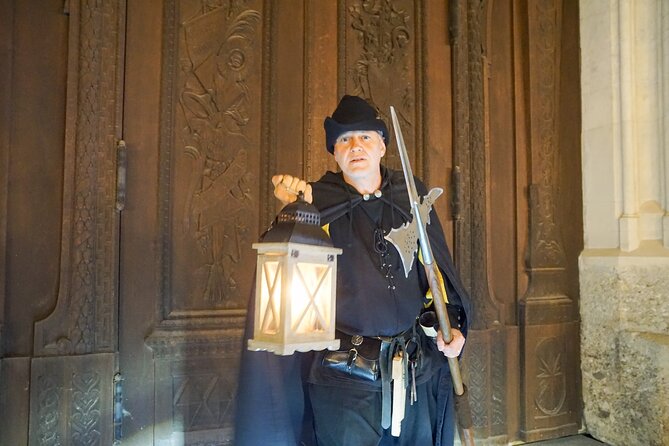
Wolfram’s performance is the reason this tour scores 4.9 on a very strong set of reviews. The big theme is how well he blends competence with humor. He’s not just reading stories, he’s acting them out.
One standout detail from the experience is that Wolfram gives a role to another character, naming Friedrich as Fritz den Laternenverantwortlichen. It adds a playful “medieval town team” feel, and it also shows how active the guiding style is.
You’ll also feel the route is designed for energy. People often worry that night tours drag, but the structure here keeps moving: lots of short stops, each with a specific theme. Even at close to two hours, the pacing tends to feel just right.
And since there’s a cap of 10 travelers, the vibe stays friendly rather than like a big bus lecture.
What to pack and how to enjoy it in winter-ish Munich
This tour needs good weather. When conditions aren’t ideal, the experience is either rescheduled or refunded, depending on the situation. So bring a plan for rain or cold.
For comfort, dress for the evening. One review mentioned staying engaged even during bitter cold, which tells you you should bring warm layers and something windproof. You’ll be outside for the whole route.
Finally, have your mobile ticket ready. The tour uses a mobile ticket, so you don’t want to waste time hunting for your phone app at the meeting point.
Who should book this night watchman tour, and who might skip it
This tour suits you best if you like guided walks where the guide makes you look at a city differently. If you enjoy dark historical themes but still want them explained clearly and with humor, you’ll probably love the balance here.
It’s also a good choice if you want medieval Munich in a compact time window. You get gates, walls, coins, debt, cemeteries, and the big church landmark all in one evening.
You might skip this one if you only want upbeat sightseeing. The tour includes stories connected to execution and torture, and that is the core medieval reality the guide leans into.
If you go with a group of mixed ages, it also helps that the tour says most travelers can participate, and there are service animals allowed.
Should you book this tour?
Yes, if you want a small-group evening walk that feels like a story with real street context. For $16.13 and about 1 hour 30 minutes, it’s strong value, especially because stops are listed as admission ticket free and the route covers a lot of key old-town areas.
Book it if you enjoy themed guides, props, and the feeling of walking through how a city operated after dark. That’s the point here: Munich as it functioned, not just Munich as it looks.
Skip or reconsider if you know you cannot handle execution or torture topics. The tour makes those parts part of the narrative, not a passing mention.
FAQ
How long is the medieval city tour with the night watchman?
It runs about 1 hour 30 minutes (approximately).
What time does the tour start, and where do we meet?
The start time is 8:30 pm. You meet at Rathaus Apotheke, Marienplatz 8, 80331 München, Germany.
Is the tour in German?
Yes, this experience is offered in German.
How large is the group?
The tour has a maximum of 10 travelers.
Do I need extra admission tickets for the stops?
The tour lists each stop as admission ticket free.
How do I get my ticket?
You’ll receive a mobile ticket.
What happens if the weather is bad?
This experience requires good weather. If it’s canceled due to poor weather, you’ll be offered a different date or a full refund.
Is free cancellation available?
Yes. You can cancel up to 24 hours in advance for a full refund. If you cancel less than 24 hours before the start time, you won’t get a refund.
More Tours in Munich




More Tour Reviews in Munich

More Lantern Rounds of the Old Town

Newest Munich and Bavaria reviews
- Scenic Adventure Private Day Tour to The Konigssee Salzburg★ 4.5 · 3 reviews
- Jewish Museum & Jewish Quarter Guided Tour with Tickets★ 4.0 · 3 reviews
- Private Linderhof Castle, Entry-Ticket – optional Toboggan Run★ 5.0 · 3 reviews
- Private Transfer from Munich to Salzburg, English-speaking driver★ 3.5 · 3 reviews
- Private tour from Munich to Rothenburg and Harburg★ 5.0 · 3 reviews
- Arrival Transfer Munich Train Station to Munich by Luxury Van★ 5.0 · 3 reviews
Munich Night Watchman Tours, compared.
 ★ 4.7Night Watchman Walking TourFrom $5302,092 reviews
 ★ 4.8Night Watchman Torch Tour in GermanFrom $221,280 reviews
 ★ 4.9Middle Ages Tour with Night WatchmanFrom $21652 reviews
 ★ 5.0Der Nachtwächter für Kinder – Führung auf DeutschFrom $17322 reviews
 ★ 5.0On the road with the night watchmanFrom $17142 reviews
 ★ 4.9Night Watchman Tour for Kids (6 – 12 years) – 75 minFrom $16140 reviews
 ★ 4.2Night Watchman Tour in EnglishFrom $22108 reviews
 ★ 4.33-Hour Culinary Nightwatch TourFrom $8887 reviews