
REVIEW · TOURS
Munich – Illuminati & other Secret Societies, Tour in German
Secret symbols in Munich? This tour reads the city.
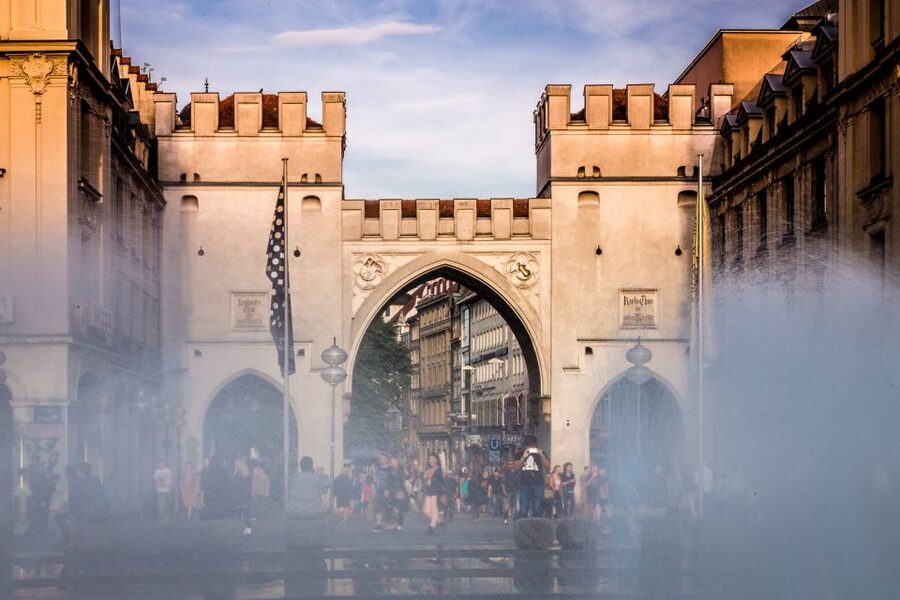
It starts right under the Karlstor archway at Karlsplatz, then turns the center into a clue map about Illuminati, Freemasons, and other groups that allegedly shaped power in Bavaria. I like how the guide points out details most people walk past.
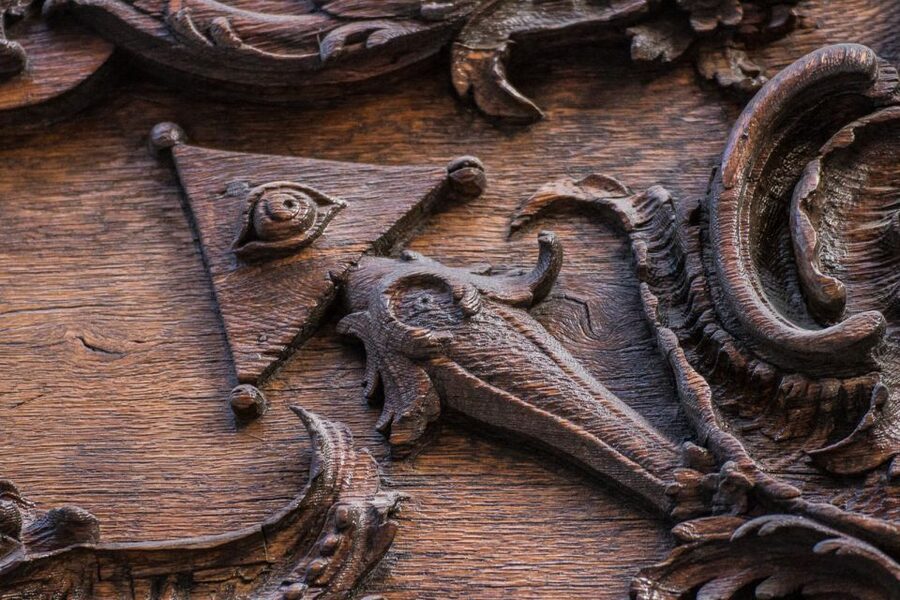
I love two things most: the way the story ties conspiracies to real-sounding Bavarian authority, including what a Bavarian Elector is said to have done to shut down the Illuminati and Freemasons. I also like the hands-on symbol work, especially when you spot the Order of the Golden Fleece insignia and connect it back to the wider legend.
One possible drawback: while you’ll visit several famous Munich landmarks, some of the themes can feel broader than strictly Munich-only, so it’s best if you enjoy theory, symbols, and interpretation as much as you like local facts.
Key points before you go
- Starts under the Karlstor archway, then moves through central Munich with a clue-style route.
- Illuminati and Freemasons explained with a Bavarian power angle, including the Bavarian Elector storyline.
- Symbol spotting is the main skill, from Golden Fleece insignia to other emblems you’ll notice afterward.
- Freemasons connect back to medieval dombau huts, linking myth to medieval building lore.
- You stop at several big landmarks, including Michael’s Church, Frauenkirche, and Promenade square.
- Q&A energy can be a highlight, and the guide name Albert comes up in strong feedback for handling questions well.
From Karlstor archway to a walking clue map
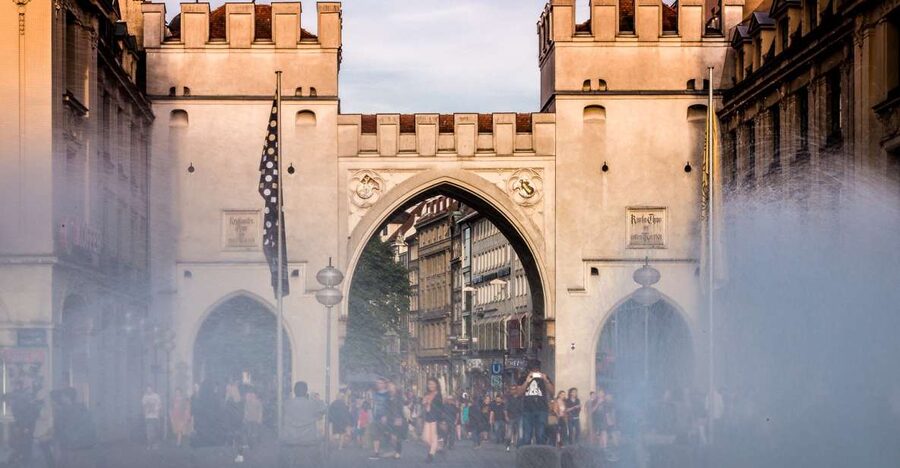
This tour has a simple premise that works: Munich is full of buildings with markings that look decorative until you learn to read them. You meet directly under the archway of Karlstor at Neuhauser Str. 47, 80331, and the start point is perfect because it puts you in the middle of the old-city street flow right away.
The first payoff is your orientation. Instead of treating the walk like a generic “major sights” loop, you get trained eyes. Your guide nudges you to look at symbols, patterns, and insignia that most passersby ignore. That changes how you move through the city even after the tour ends, because you start noticing repeating motifs.
You’ll also want to know the tour language up front. It is in German, and English is only available for a private tour. If you only speak English, you can still enjoy the sites, but you would miss the real value: the explanations that tie the clues together at each stop. For German speakers, this is where the experience becomes fun rather than just spooky.
Also worth a look nearby: other Munich tours travellers keep rating highly.
- From Munich: Neuschwanstein & Linderhof Castle Full-Day Trip
★ 4.5 · 12,494 reviews - Neuschwanstein & Linderhof Castle-Fairytale Day Tour from Munich
★ 4.5 · 7,275 reviews - Munich: Third Reich & WWII Walking Tour
★ 4.6 · 6,181 reviews - Dachau Concentration Camp Memorial Site Tour from Munich by Train
★ 4.5 · 5,637 reviews
Illuminati, Freemasons, and the Bavarian Elector twist
The heart of the theme is secret societies and their alleged influence. The guide sets it up with a split that stays in your mind: some groups are framed as trying to improve the world, while others are portrayed as manipulating political and social events through hidden reach. That contrast matters because it keeps the stories from sounding like one-note conspiracy talk.
One of the tour’s most distinctive storylines is the role of a Bavarian Elector in ending the Illuminati and Freemasons conspiracy. You’re not asked to take everything literally. Instead, you’re guided through the idea that Bavaria, and the people with power inside Bavaria, have a history of reacting to secretive networks.
That storyline also gives the tour structure. You start seeing secret societies less like faceless world control and more like a topic that connects to institutions, authority, and real buildings. It’s a good shift for your own expectations. If you come in hoping for a straight lecture, you might be surprised. The tour is less about dates and more about connections, symbols, and meaning.
Spotting secret symbols on the Munich route
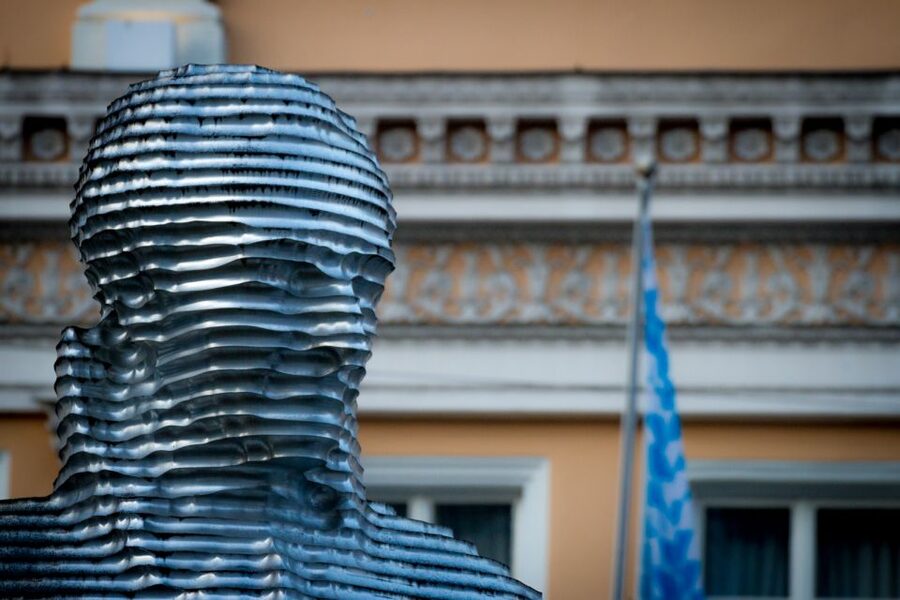
This is not a “stand here, take a photo” kind of walk. The guide spends time on interpretation, and that is the reason the experience can feel genuinely different from other urban tours.
As you move through the center, you’ll be shown things that are easy to miss. The emphasis is on decoding symbols, not just identifying them. That matters because Munich’s street-level details can look like random decorative choices until someone explains what to look for.
The tour also threads through multiple groups. You’ll hear about the Knights Templar, the Freemasons, and the Illuminati, but the focus is on how each has left marks in the city, at least through stories, insignia, and architectural symbolism. The guide covers the idea that some groups may no longer exist officially, yet their aura and iconography remain.
A practical tip for getting more out of this section: listen for when the guide says a symbol has a specific lineage or meaning. When you catch that, you’ll start recognizing patterns on your own while you’re still walking.
Old Academy and Michael’s Church: where masonry lore meets landmarks
The tour’s stop sequence keeps your momentum and gives the story places to land. After your initial introduction near the Karlstor area, you’ll move to the Old Academy, then onward to Michael’s Church.
Here’s what makes these stops work for your understanding. The guide uses churches and academic-looking buildings as symbol boards. Even if you’re not the type who loves conspiracy theories, these places give you concrete anchor points for the guide’s theme: groups that were connected to building, influence, and symbolism.
At Michael’s Church, the tour leans into the idea that masonry-related stories and symbols are not just modern legends. The guide connects Freemason origin talk back to older building culture, setting up the medieval part of the narrative later.
If you’re the kind of person who likes atmosphere, you’ll probably feel the “storytelling” layer most at the churches. If you’re not, you can still get value from the guide’s practical approach to reading symbols at street level. Either way, this is where the tour starts to feel like more than a list of names.
Frauenkirche and Promenade square: the Golden Fleece thread
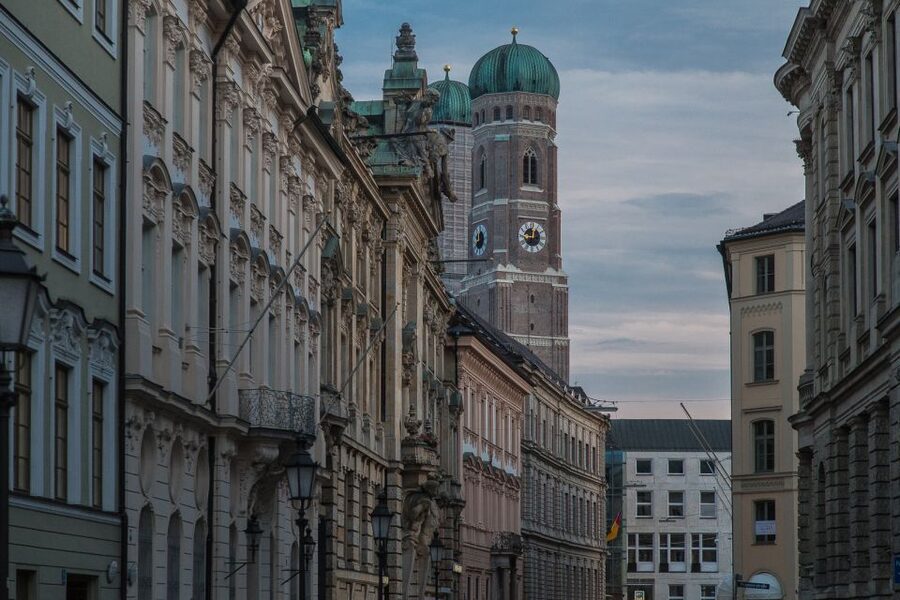
Next comes Frauenkirche, then the route finishes at Promenade square. Those are big landmarks, which is exactly why the guide uses them for meaning. Large famous buildings make it easier to remember what you saw, and big public squares make the symbolism feel more social, less secret.
This is where the Order of the Golden Fleece becomes especially important. The tour highlights that you encounter its insignia repeatedly around Munich. That gives you a neat takeaway: even after you exit the group, you can try to spot the emblem in the city on your own.
The Golden Fleece thread also helps the tour avoid being purely spooky. You’re learning how authority and status symbols get embedded into a city. That is a very real way influence shows up over time, even if you strip away the more dramatic conspiracy claims.
At Promenade square, the guide shifts toward bigger questions. You’ll get guided toward the core debate the tour keeps circling: were these groups just radical Enlighteners in disguise, or is there a lingering influence that keeps showing up in symbols and narratives long after formal existence?
Medieval dombau huts and the Freemasons in Bavaria
One of the tour’s most distinctive educational claims is about the origins of the Freemasons in the medieval dombau huts. Instead of treating the Freemasons only as a modern secret society, the guide frames them as connected to a medieval building world, where craft, structure, and symbolic identity mattered.
Then the story moves again, this time to the role the Masons played in founding the Kingdom of Bavaria. Even if you treat this as legend or interpretive history, it’s still a valuable concept for you as a visitor. It explains why you might see certain symbols and references tied to Bavarian identity rather than just generic secret-society iconography.
This is also where the tour’s balance becomes clear. It acknowledges multiple groups and competing narratives. Some people tell the story one way, others tell it another way, and the guide keeps you in the middle by focusing on what symbols and institutions suggest, rather than trying to force a single conclusion.
If you like tours that treat myths as cultural artifacts, this section will probably be your favorite. If you need hard proof for every claim, you may find yourself separating “story” from “history” in your own head.
Other Munich bookings for the same trip
The lingering mysteries: who are the Guglmen
A good walking tour ends with questions, not just answers. Here, the guide leaves you with names and clues tied to the same theme of hidden groups and lingering symbols, including the Guglmen.
The value of ending on this kind of topic is that it gives you permission to keep looking after the tour. You’re not just watching the city, you’re learning how to question what you see. When you walk away with the mental habit of asking what a symbol might connect to, you get more from Munich than just the buildings on the route.
The tour also circles back to the present-day debate. Are these societies truly part of the past, or does their legend keep shaping political and social stories? The guide doesn’t just toss the question at you. It gives you context and connects it back to the specific symbols you saw along the way.
Price, value, and who this German tour fits best
At $29 per person for 2 hours, this is a budget-friendly way to spend a focused evening in central Munich. The value is not only that it hits major landmarks like Frauenkirche. The real value is the symbol interpretation and the story framework that ties Illuminati, Freemasons, Knights Templar, Golden Fleece, and Bavarian power narratives into a single walking experience.
This also explains why the language matters. Since it’s live guide German, you’ll get the most out of it if you can follow the explanations. If you want English, you’ll need a private tour option, which changes the cost-benefit math. Still, if you’re a German speaker, you get a lot of content density for the time.
Wheelchair access is listed, which is a real plus if you need mobility-friendly planning. I can’t promise the exact paving conditions, but the provider does state wheelchair accessible, so it is worth considering.
Who will love it most:
- You enjoy symbol hunting and architectural details
- You like stories about secret societies, but want them tied to places
- You want an active guide who points out what you would otherwise miss
Who might consider another option:
- You want a strict, factual city history that stays strictly Munich-only
- You do not enjoy conspiracy-style interpretation, even when presented as legend and symbolism
There’s also a practical expectation to set: this is not presented as a direct, purely factual city tour. It is themed. If you’re comfortable with that, the experience can be a lot of fun.
Should you book this Munich Illuminati and Secret Societies tour?
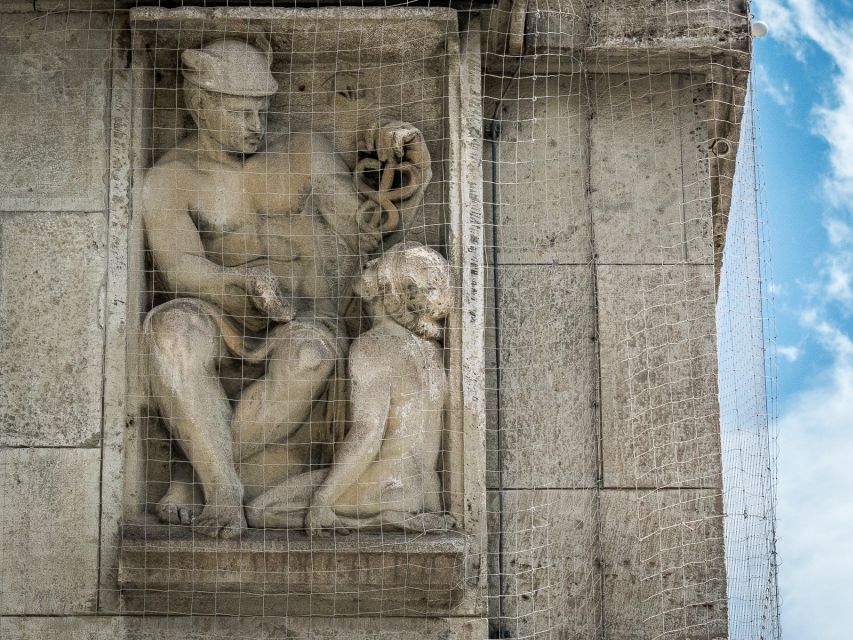
I’d book it if you want something different from the usual Munich sightseeing loop. The strongest reason is the guide-led symbol work that turns well-known landmarks into clue points, and the narrative thread that connects secret societies to Bavaria’s identity, including the Bavarian Elector storyline, Freemason medieval dombau huts origins, and references to the Kingdom of Bavaria.
I would hesitate if your number one goal is a straightforward Munich city history lesson with minimal speculation. There’s enough interpretation here that you should go in ready to enjoy the ideas, not just memorize dates.
If you do book, here’s my simple advice for maximum enjoyment: keep your eyes open on every façade and insignia, and ask questions when something clicks. The quality of the Q&A seems to be a standout element, and the guide name Albert shows up in strong feedback as someone who handles follow-ups well.
FAQ
Is this tour in English?
This tour is in German. English is only available for a private tour.
Where is the meeting point?
You meet directly under the archway of Karlstor, Neuhauser Str. 47, 80331.
How long is the tour?
The tour lasts 2 hours.
What’s included with the ticket?
A small gift is included.
Is the tour wheelchair accessible?
Yes, the activity is listed as wheelchair accessible.
What is the cancellation policy?
Free cancellation is available up to 24 hours in advance for a full refund.
Is the price per person?
Yes, it is listed as $29 per person.
More Tours in Munich
More Tour Reviews in Munich
Newest Munich and Bavaria reviews
- Scenic Adventure Private Day Tour to The Konigssee Salzburg★ 4.5 · 3 reviews
- Jewish Museum & Jewish Quarter Guided Tour with Tickets★ 4.0 · 3 reviews
- Private Linderhof Castle, Entry-Ticket – optional Toboggan Run★ 5.0 · 3 reviews
- Private Transfer from Munich to Salzburg, English-speaking driver★ 3.5 · 3 reviews
- Private tour from Munich to Rothenburg and Harburg★ 5.0 · 3 reviews
- Arrival Transfer Munich Train Station to Munich by Luxury Van★ 5.0 · 3 reviews
Tours, compared.
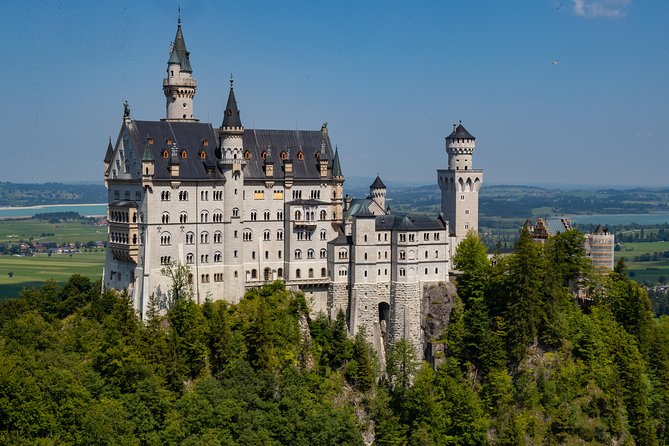 ★ 4.5Neuschwanstein & Linderhof Castle-Fairytale Day Tour from MunichFrom $957,275 reviews
 ★ 4.6Third Reich & WWII Walking TourFrom $316,181 reviews
 ★ 4.5Dachau Concentration Camp Memorial Site Tour from Munich by TrainFrom $645,637 reviews
 ★ 4.5Neuschwanstein Castle Tour from MunichFrom $955,117 reviews
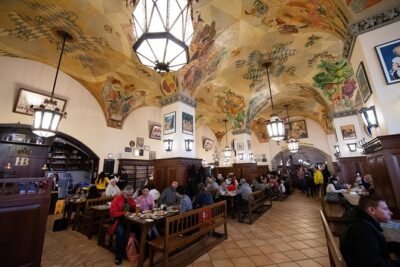 ★ 4.5Third Reich Walking Tour MunichFrom $454,291 reviews
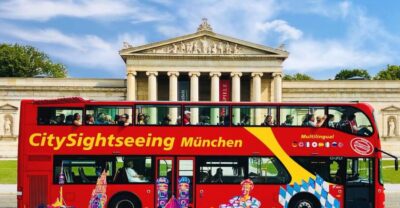 ★ 4.3Munich Hop-On Hop-Off Tour: 1-Day or 2-Day TicketFrom $274,161 reviews
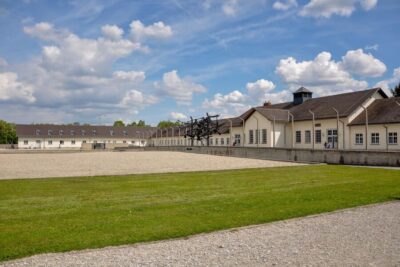 ★ 4.8From Munich: Dachau Memorial Site Day TourFrom $492,723 reviews
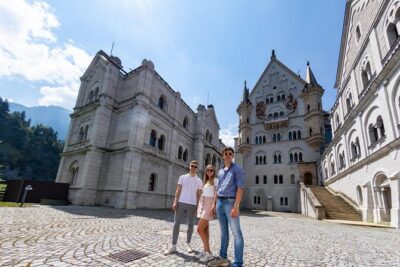 ★ 5.0Premium Neuschwanstein Castle and Linderhof VIP Tour from MunichFrom $2272,480 reviews