
REVIEW · WALKING TOURS
Fall in Love with Munich in a Private Old Town Walking Tour
Munich feels like a city of stories, not just sights. This private walk through the Old Town connects medieval fortifications, beer culture, and big historical turning points in a route you can actually follow.
Two things I like a lot are the personal pacing of a private group, and the fact that entrance costs are handled for you as you go. The guide, Victoria, also uses visuals on an iPad and answers questions on the spot, which makes the walk easier to digest.
One consideration: the itinerary includes stops tied to Adolf Hitler and the Nazi Party, so you should be comfortable discussing Germany’s 20th-century history alongside the beer halls and churches.
Key highlights you should care about
- Private group of up to 6 means you can move at a pace that fits your family or your travel style
- Entrance fees included along the route, so you are not scrambling for tickets mid-walk
- English-language guide, Victoria with iPad visuals and clear explanations
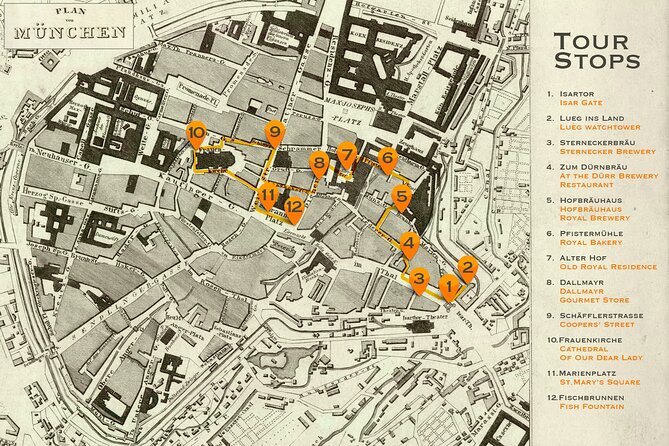
- Stops from medieval walls to Marienplatz’s Glockenspiel, so you get a full Old Town orientation
- Ends at Marienplatz, handy for continuing on your own with the guide’s food and sight tips
Entering the Old Town at Isar Gate, where Munich’s story starts
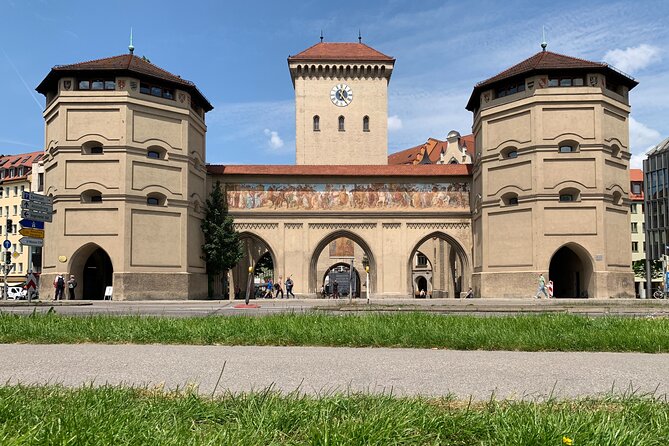
Your tour begins at the Isar Gate (Isartor), at Tal 50, right where the central arch marks the medieval edge of town. This is a smart place to start, because the gate instantly gives you a framework for everything you will see later: Munich grew up behind fortifications, and that defensive layout still shapes how the Old Town feels when you walk it today.
What I like here is that the tour does not treat this as a random photo spot. You get the story of Munich’s medieval fortifications, you see disguised remains of the main city wall, and you hear how a single trade could help a settlement grow into something far bigger. Then the guide layers in legends and pop culture style stories, including the legend of city foundation and a nod to Bavaria’s playful time oddity.
Practical note: the tour is about 2 hours, and the pace is described as comfortable. Still, you will be on your feet through several distinct stop locations, so this is a good plan if you want a structured orientation without feeling rushed.
More of the Altstadt on foot
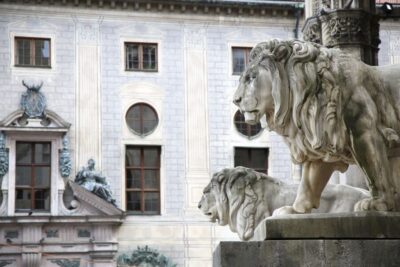
- Munich: Third Reich & WWII Walking Tour
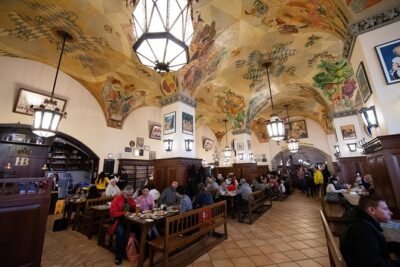
★ 4.6 · 6,181 reviews - Third Reich Walking Tour Munich
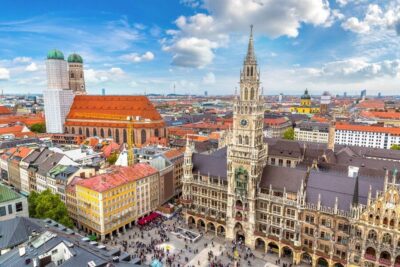
★ 4.5 · 4,291 reviews - Munich: Old Town & Viktualienmarkt City Walk in German
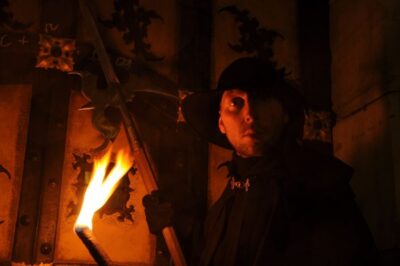
★ 4.7 · 2,304 reviews - Munich: Night Watchman Walking Tour
★ 4.7 · 2,092 reviews
Sterneckerbräu and the first public speech, history that is harder to ignore
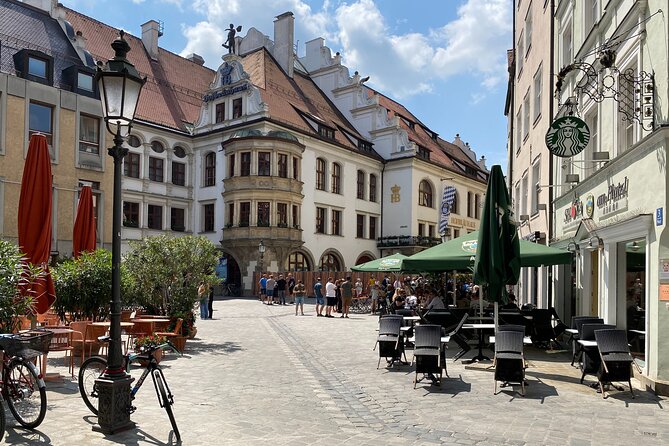
Next comes Sterneckerbräu, where you stop to talk about Adolf Hitler’s first public speech and how that led to his joining the German Workers’ Party. The guide also connects the building’s later role, explaining how it developed into a key location for the Nazi Party.
This is the part of the walk that can surprise people who booked expecting mostly beer and folklore. If you want Munich with context, this stop delivers. If you prefer your tours lighter, it might feel intense. Either way, it is worth knowing you are not just getting city myths here. You are getting the real historical timeline, right inside the fabric of the Old Town.
One small benefit of doing this on a walking tour: these stories land better when you are standing near the places that shaped them. You are not seeing history in a textbook, you are seeing it in street-level space.
Dürnbräugasse, the Old Town tavern that refuses to quit
At Dürnbräugasse, you pass by the oldest tavern in town. The point of this stop is resilience: you hear how this place preserved its status for more than half a millennium.
Even if you do not plan to stop for a drink, this is a great contrast to the heavy WWII conversation a moment earlier. It gives you the other side of the city’s continuity, the kind that runs through everyday life. The street itself is part of the museum, in a practical sense. You start to see how Munich’s “old” is not only buildings, but also routines, businesses, and local traditions that keep going.
Hofbräuhaus München, beer hall power and the details most people miss
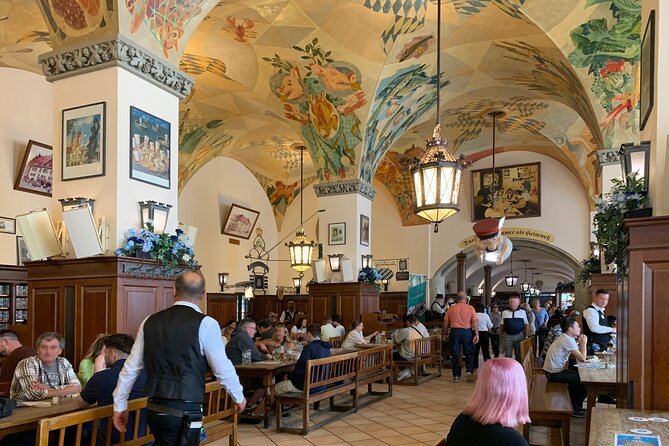
Then you reach Hofbräuhaus München, the former royal brewery and one of the world’s best-known beer halls. This is a high-impact stop, because you do not just hear the legends. You go inside the main hall and look around.
Here are the kinds of details you should expect:
- the centuries-old story behind the hall and how it became famous
- the beer angel, an iconic piece of Hofbräuhaus lore
- interior features, including the regular tables people are known for
- beer mugs of regular guests stored in special cells
- how the beer purity law fits into Bavarian brewing tradition
- how Oktoberfest links to the broader beer culture
- secrets of Munich beer gardens and what makes them work
What makes this valuable for your trip is the way beer gets explained as culture, not just an order at a bar. You end up understanding why Munich celebrates brewing with rules, rituals, and a sense of identity.
Practical consideration: Hofbräuhaus is popular, so plan for crowds and a lively atmosphere. If you are traveling with kids, or if you are easily overwhelmed, you may want to use the time to focus on what the guide tells you to look for, then let the building do the rest.
Pfistermühle and the pretzel legend that ties food to identity
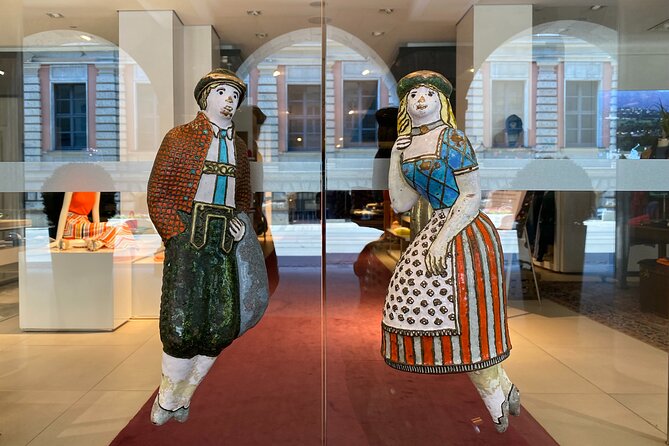
At Restaurant Pfistermühle, you sight the former royal bakery. This stop works best if you enjoy food history and how myths become symbols. The guide tells the legend of the pretzel and connects it to Munich’s identity.
Even if pretzels feel like a generic snack to you, this stop gives you a reason to notice them. It turns a common food shape into a local marker, the kind of thing that makes Munich feel like it has personality instead of just a checklist.
This is also a low-pressure stop in the route. The time is short, and it is more about story than logistics.
Alter Hof courtyard, Wittelsbach roots and Emperor Louis IV
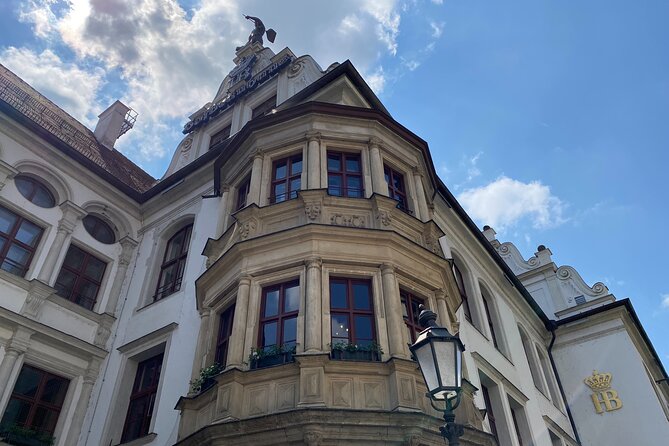
Next is Alter Hof, where you visit the inner courtyard linked to the Wittelsbach royal family’s first residence in Munich. This stop is one part palace, one part legend.
The guide brings up:
- the legend of the Royal Zoo
- how that zoo story unexpectedly connects to the life of the Holy Roman Emperor Louis IV
- and how Munich’s flag got its colors
What I like about Alter Hof is that it teaches you how royal power and everyday symbols stay connected. The flag colors might sound like trivia until you realize the city uses them as identity signals. Then the courtyard setting makes the stories feel grounded.
If you like “who ruled what and why it matters,” this is the kind of stop that pays off later when you see other buildings and coats of arms around town.
Private guides in Munich

Dallmayr Delikatessenhaus, royal tradition translated into today’s coffee and food
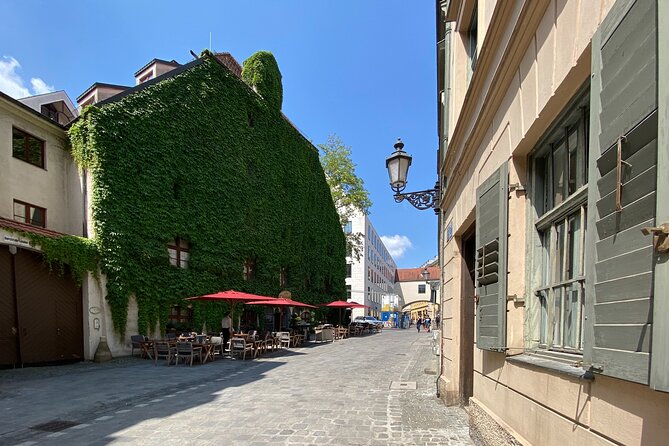
At Dallmayr Delikatessenhaus, you walk past a historical gourmet store with longstanding royal tradition. Today it is described as one of the largest delicatessen companies in Europe.
This stop is not just a sightseeing pause. It is also where the guide’s practical side shows up. You get insider tips for food lovers and coffee addicts, which can save you time later when you are trying to choose where to eat or what to bring home.
If you are the type of traveler who enjoys one solid purchase, one memorable coffee, and a few dependable treats, this is a good moment in the walk. It is also an easy stop to enjoy even if you are not into the more political or architectural segments.
Schäfflerstraße and the coopers’ dance tied to pest containment
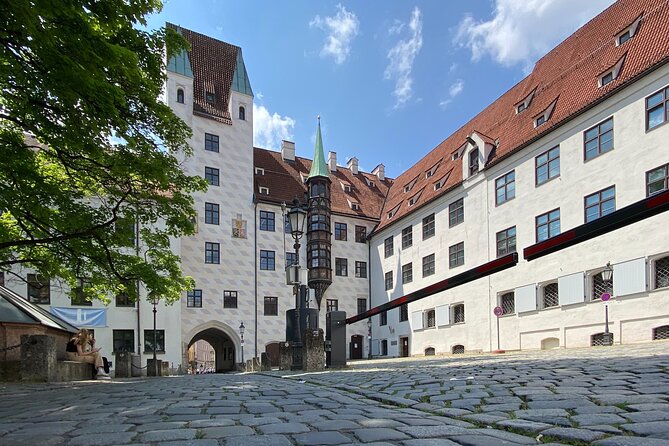
Schäfflerstraße is where you cross Coopers’ Street and hear a local legend tied to 16th-century pest containment. The guide also describes a traditional dance that commemorates it and is still performed in the Bavarian capital.
This is the sweet spot for travelers who like culture without needing a museum ticket. It shows how towns remember emergencies and turn them into rituals. When a story includes a tradition still seen today, it feels less like distant history and more like living memory.
Short stop, strong payoff.
Frauenkirche and Marienplatz, from devil prints to the Glockenspiel
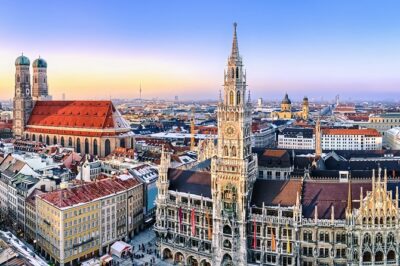
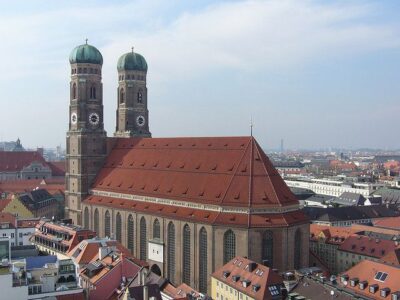
The tour reaches Frauenkirche, Munich’s cathedral. Here you learn about the legend of its construction and how the interiors connect to that story. You also hear about the Devil’s footprint and a “secret of the wind” surrounding the cathedral all year, regardless of season.
This is a good stop for two reasons:
1) it gives you a way to read the cathedral with curiosity, not just as a landmark
2) it explains myths as something people pay attention to, not as something to dismiss
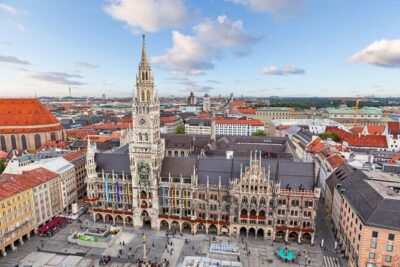
Then you finish at Munich Marienplatz, where the heart of the Old Town gathers. You admire the Fischbrunnen (Fish Fountain), learn local traditions connected to it like Wallet Washing and Butchers’ Jump, and hear the story about the Munich white sausage invention. You also cover St. Mary’s Square, the New and Old Town Halls it flanks, and the Glockenspiel, the mechanical clock that reenacts two momentous scenes to tunes of a carillon.
Ending at Marienplatz is practical. Once you step out of the tour, you are already in the center of activity. You can keep exploring nearby on your own, using the guide’s recommendations for where to eat, shop, or relax with a coffee or beer.
Price and value for a private 2-hour Old Town walk
The price is $157.28 per group for up to 6 people, for about 2 hours. That structure matters. If you have a group of four or six, your per-person cost drops quickly, and you get a guide who can tailor the pace and answer questions.
You also get more value because entrance fees are included as you go. Even if each stop feels short, you are not paying out of pocket multiple times during the walk.
Add to that: a mobile ticket, a digital map of the itinerary, and English narration. When a tour includes enough history and enough practical tips to reduce guesswork, it is often worth paying for the structure instead of building your own route from scratch.
What this tour feels like with a family, teens, or mixed ages
Based on the guide style and the way the tour is described, this works well for mixed groups. The route hits major landmarks and also includes flexible storytelling, so older kids and teens have something to react to besides just being dragged from one building to another.
If you have grandparents in your group, this is also a calmer way to see the center. Instead of doing everything as separate attractions, you get a connected walk that gives context fast, so the Old Town stops feel meaningful instead of random.
And if you are traveling with a baby, the private format helps. You can slow down, pause, and move in a way that would be harder in a large group tour.
Before you go: how to get the most out of the walk
Here is how to make this tour pay off for you:
- Arrive ready to look at details. The guide points out specific features like city-wall remains at Isar Gate, interior elements at Hofbräuhaus, and story anchors at the cathedral and squares.
- Ask questions while you are standing in place. The tour includes insider tips, and you will get more from asking what to do next than from saving all questions for later.
- Decide your comfort level on topics. You will cover WWII-related history, including Hitler and the Nazi Party. If that subject is hard for you, plan how you want to emotionally pace yourself.
Should you book this Munich Old Town tour with Victoria?
Book it if you want a structured Old Town orientation in about two hours, with a guide named Victoria who brings the sights to life through story, humor, and visuals on an iPad. It is especially worth it if you care about understanding how Munich became Munich, not only where the main landmarks are.
Skip it only if you are determined to avoid heavy historical topics, or if you prefer a totally self-guided walk with no organized stops. Otherwise, ending at Marienplatz with a built-in set of food and sightseeing suggestions is exactly the kind of trip-start that helps the rest of your Munich days go smoother.
FAQ
How long is the Munich Old Town walking tour?
The tour lasts about 2 hours.
Is this a private tour?
Yes. It is private, and only your group participates.
How many people are in a group?
The price is per group for up to 6 people.
What language is the tour offered in?
The tour is offered in English.
Does the tour include entrance fees?
Yes. Entrance fees are included.
What does the tour cost?
It costs $157.28 per group (up to 6).
Where do you meet, and where does the tour end?
You meet under the central arch of Isar Gate, Tal 50, 80331 München. The tour ends at Marienplatz, 80331 München.
Are food and drinks included?
No. Food and drinks are not included.
Is the tour suitable for most travelers?
The tour states that most travelers can participate.
Are there any cancellation options?
There is free cancellation. You can cancel up to 24 hours in advance for a full refund.
Three More Munich Walks


More Tours in Munich


More Tour Reviews in Munich

Newest Munich and Bavaria reviews
- Scenic Adventure Private Day Tour to The Konigssee Salzburg★ 4.5 · 3 reviews
- Jewish Museum & Jewish Quarter Guided Tour with Tickets★ 4.0 · 3 reviews
- Private Linderhof Castle, Entry-Ticket – optional Toboggan Run★ 5.0 · 3 reviews
- Private Transfer from Munich to Salzburg, English-speaking driver★ 3.5 · 3 reviews
- Private tour from Munich to Rothenburg and Harburg★ 5.0 · 3 reviews
- Arrival Transfer Munich Train Station to Munich by Luxury Van★ 5.0 · 3 reviews
Walking Tours, compared.
 ★ 4.6Third Reich & WWII Walking TourFrom $316,181 reviews
 ★ 4.5Third Reich Walking Tour MunichFrom $454,291 reviews
 ★ 4.7Old Town & Viktualienmarkt City Walk in GermanFrom $232,304 reviews
 ★ 4.7Night Watchman Walking TourFrom $5302,092 reviews
 ★ 5.0Munich Ghosts and Spirits Evening Walking TourFrom $601,900 reviews
 ★ 4.5Munich Old Town Walking TourFrom $271,287 reviews
 ★ 4.7Walking Tour Old Town and ViktualienmarktFrom $282839 reviews
 ★ 4.6Birthplace of the Third Reich Guided Walking TourFrom $29771 reviews
Listed under