
REVIEW · MUNICH THIRD REICH AND WWII HISTORY TOURS
Munich: Third Reich Guided City Walking Tour
Munich turns political history into a street walk. This 2.5-hour guided experience takes you past real locations tied to the Nazi rise, from Marienplatz to Führerbau, so the story feels grounded instead of abstract.
I especially like how the tour keeps the focus on the political path, not random facts. I also love the way the route is paced, with plenty of information that stays organized.
One drawback to plan around: this is a Spanish-only tour, and it is not open to people who do not speak Spanish.
Key things I’d underline before you go
- Marienplatz to Königsplatz gives you a clear walking storyline across central Munich
- Hofbräuhaus is used to frame the Beer Hall Putsch and the party origins
- Haus der Kunst connects Nazi power with propaganda, including the banning of degenerate art
- German Resistance is not ignored, with references to Georg Elser and the White Rose
- Führerbau ties the walk to the Munich Agreement signed in 1938
What makes this Munich walking tour different from a museum day
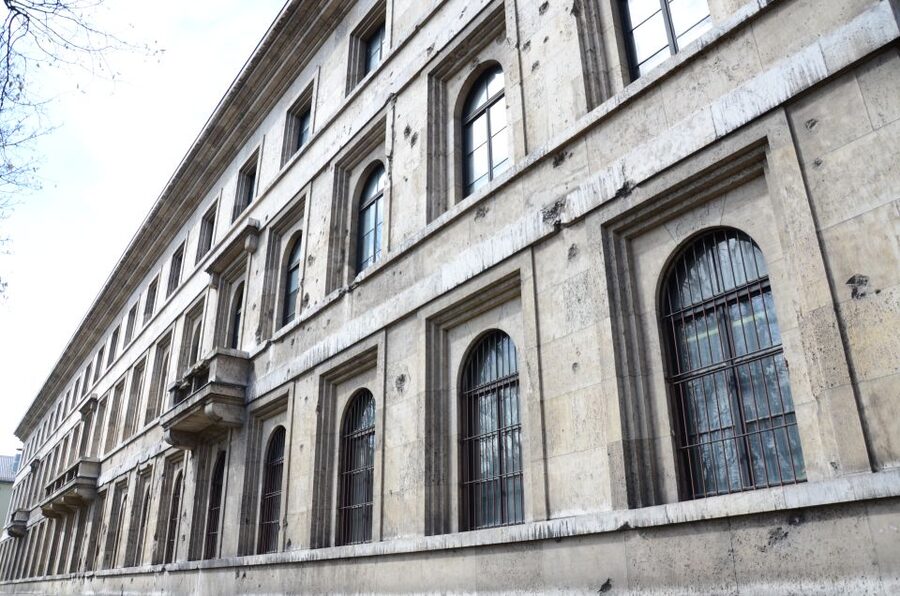
This is history you can see with your feet. Instead of sitting in one place, you move from site to site in central Munich and use landmarks like Haus der Kunst and Führerbau to understand how the Nazi movement tried to shape public life.
The best part for me is the way the tour focuses on beginnings and turning points: the political origins of Adolf Hitler, the early National Socialist German Workers’ Party, and the Beer Hall Putsch. Those are big ideas, but the guide’s job is to keep them tied to specific places on the map.
Another smart element is that it includes the German Resistance. You hear about protagonists such as Georg Elser and the White Rose, so the walk covers more than just how the regime grew.
The tour is also short enough to fit into a normal sightseeing day. At 2.5 hours, you get a lot of context without turning your afternoon into a slog.
Starting at Marienplatz: where the route takes shape
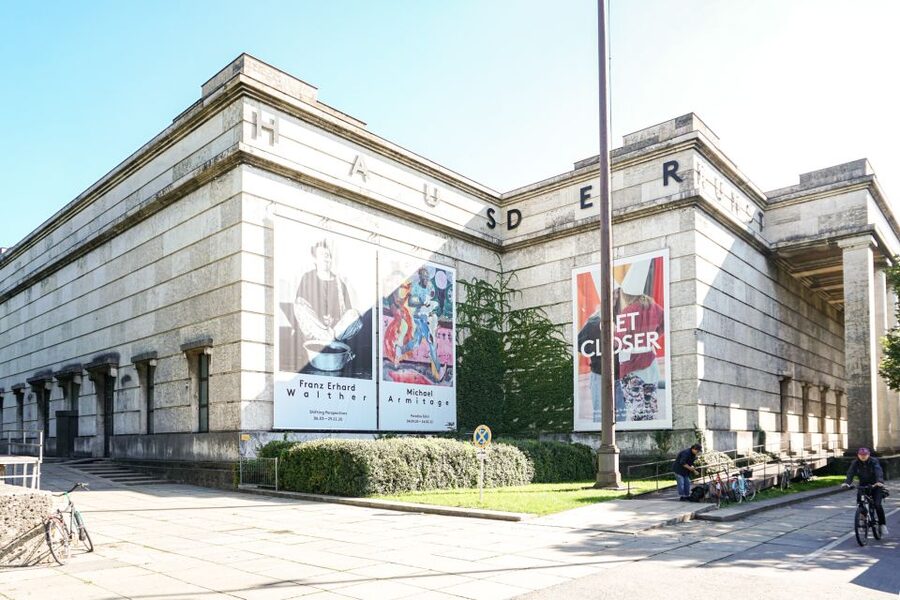
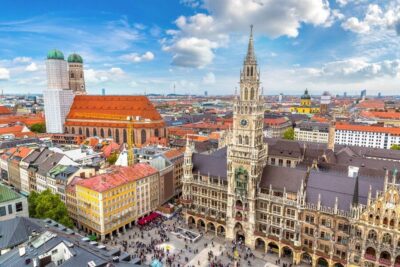
You meet your guide at the Tourist Information Office in Marienplatz. That matters because Marienplatz is a natural hub, so you can arrive easily and get your bearings fast.
From the start, the tour is designed as a sequence. You walk through key stops connected with the political events of the Third Reich, and the guide uses each location to explain what happened there and why it mattered.
This also helps if you are the type who likes history, but only when it’s organized. The route gives you a spine. You are not just collecting facts, you are following a path.
Because it is a walking tour, you will want comfortable shoes. You are on your feet for the full experience, and the tour is meant to be done as a continuous city walk rather than a series of quick photo breaks.
Other walks through the same years
- Munich: Third Reich & WWII Walking Tour
★ 4.6 · 6,181 reviews - Third Reich Walking Tour Munich
★ 4.5 · 4,291 reviews - Munich: Birthplace of the Third Reich Guided Walking Tour
★ 4.6 · 771 reviews - Munich World War II Sites Including Dachau Concentration Camp
★ 4.5 · 570 reviews
Odeonsplatz and Hofbräuhaus: connecting the Beer Hall Putsch to real streets
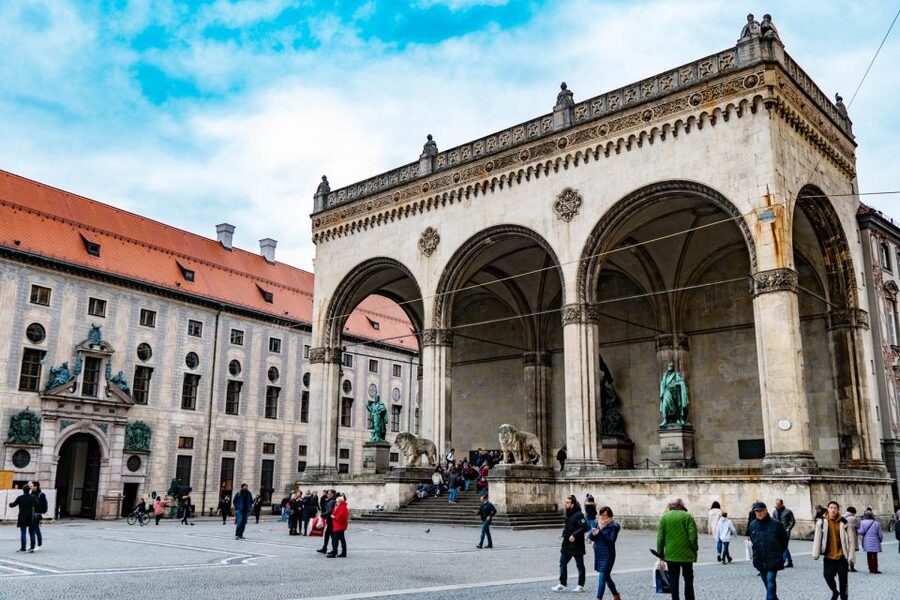
After beginning in Marienplatz, the tour moves toward Odeonsplatz, then focuses on Hofbräuhaus. This is where you shift into the story of Hitler’s putsch, often discussed in relation to the Beer Hall Putsch, and you also hear about the origins of the National Socialist German Workers’ Party.
Why this stop works: it uses a well-known Munich place to anchor political events. Instead of hearing a lecture, you are in the city setting where people would have gathered and moved around. That is where these kinds of stories stop feeling like distant textbook chapters.
Expect your guide to connect the dots between the events and the political momentum behind them. The tour highlights the significance of these moments in Munich, so the city becomes part of the explanation, not just a backdrop for photos.
This is one of the stops where you will likely feel the tour’s pacing in a good way. The information is structured, and the focus is kept on what you need to understand the bigger plot.
Haus der Kunst: propaganda, art control, and what Nazi power looked like
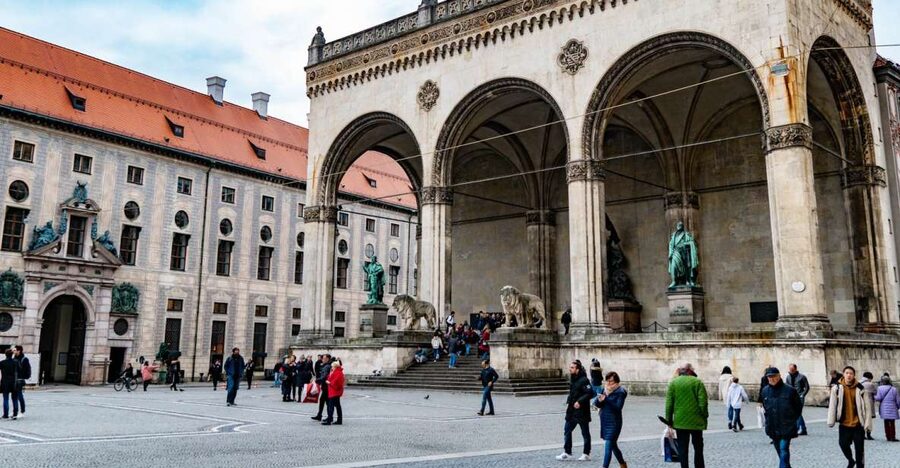
Next comes the front of Haus der Kunst, which the tour describes as the first propaganda building in Nazi Germany. Even if you have seen plenty of historic architecture in Europe, this is different because the building is framed directly as part of how the regime tried to shape culture.
A key theme here is art control. Your guide tells the story of the regime’s influence on art and the banning of degenerate art. That detail is important because it shows how power worked through institutions and public messaging, not only through laws and violence.
What I like about placing this lesson at Haus der Kunst: it gives you a physical reference point. When you hear the words propaganda building and censorship, you can also look around and take in the setting, so the idea lands faster.
Just note what is implied by the wording: you visit from the front. That means you should not count on a long interior visit unless it is mentioned to you in the moment. Plan your time around the exterior stop and the guide’s narration.
German Resistance at the route’s key moments: Georg Elser and the White Rose
A major plus of this tour is that it doesn’t end with the regime. You reach the material on the German Resistance movement and hear about figures such as Georg Elser and the White Rose.
This part changes the emotional tone in a necessary way. You go from tracing political origins and major events associated with Nazi momentum to looking at people who pushed back. It helps you understand that opposition existed and that the story did not play out as a single straight line.
Because the tour is still a city walk, the guide likely ties these names to the bigger context of Munich during that period. You are not just learning who they were, you are seeing how resistance fits into the same urban space and historical timeline.
In terms of value, this is a key reason I would pick this over a purely pro-regime-focused walk. It keeps the history balanced enough that you leave with a clearer picture, not a one-sided narrative.
If you are sensitive to heavy historical topics, this is exactly the kind of tour where it can help to prepare mentally. The content is about a brutal regime and the people who resisted it.
Führerbau and the Munich Agreement in 1938, then onward to Königsplatz
The tour reaches the Führerbau, described as the place where the Munich Agreement was signed in 1938. This is one of the stops that ties the street-level walk to a well-known diplomatic moment.
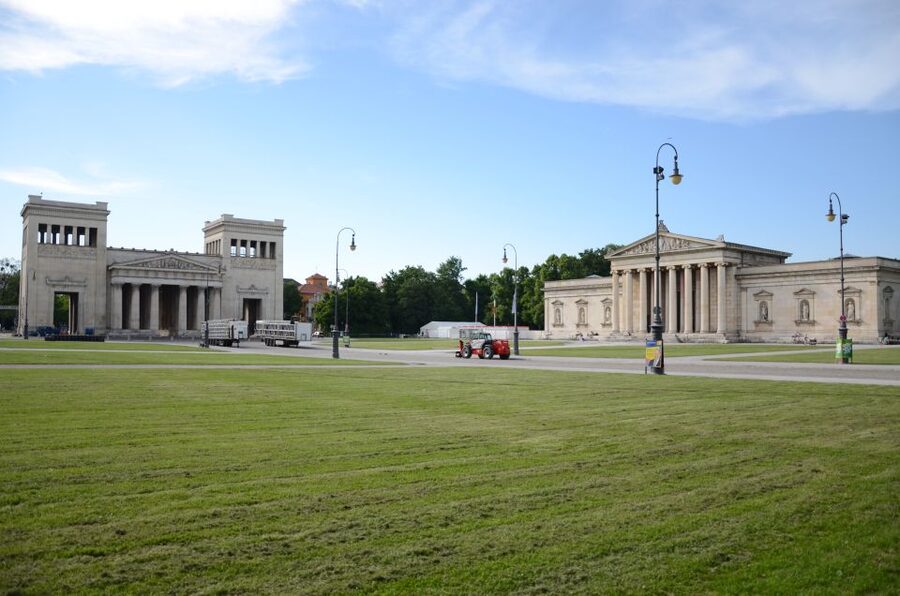
From there, the route continues to Königsplatz, where the tour concludes. The tour details also state that it ends back at the meeting point, so in practice you should expect the group wrap-up to return you near where you started.
This section is where the walking tour earns its “city history” label. Munich is not a distant stage set. The diplomatic and political decisions connect to locations you can actually stand on.
I like that this ending spot doesn’t just repeat the earlier storyline. It lands on a concrete event, linked to a specific building, and then finishes the walk.
So if you like your history with dates and named places, this is the payoff portion of the route.
Pacing, duration, and what to expect on the ground
The tour runs about 2.5 hours. That’s a helpful length because it lets the guide explain multiple locations while still giving you time to keep sightseeing after.
The tour also requires a minimum of four participants to operate. That matters because it affects whether you get the scheduled walk or an alternative plan if the group doesn’t meet the threshold.
Language is another practical reality. It is a live guided tour in Spanish only, so you should be comfortable following Spanish narration for the full duration. If your Spanish is rusty, you might still catch names and landmarks, but the tour is designed for fluency.
From what the experience quality suggests, the pacing is a strong point. The structure is meant to keep the information organized, so you do not feel overwhelmed by random stops or rushed talking.
More of the Altstadt on foot
Price and value: is $23 worth 2.5 hours?
At $23 per person, this is priced like an active history add-on, not a premium museum ticket. For the money, you get a live guide and a coordinated walking route through multiple major sites.
The value case is simple: you are paying for someone to connect the landmarks into a coherent storyline, including key themes like the Beer Hall Putsch, propaganda through Haus der Kunst, the resistance movement, and the Munich Agreement at Führerbau.
Food is not included, so you should plan for a snack or a meal separately. The good news is that the tour duration is short enough that you can easily schedule dinner afterward without stress.
If you want a one-time introduction to the Third Reich in Munich, this hits the sweet spot. You get named places, guided explanation, and a walk that does not require an entire day.
Practical tips for a smooth day in central Munich
Start with the basics: comfortable shoes are a must. You are walking, and the tour is built around moving between stops rather than long breaks.
Dress for weather. The details don’t specify indoor time, so assume you will be outside more than you might expect.
Bring your curiosity, and also your questions. If there is something you miss because of language, the guide will be the person who can bring it back into focus during the walk.
One more practical note: the tour is not suitable for children under 13. If you are traveling as a family, double-check ages before booking.
Finally, if you are sensitive to heavy history, it helps to mentally frame the day as an educational walk. This is not meant to be light entertainment, it is a guided explanation of a dark chapter and the people tied to it.
Who this tour is perfect for
This tour fits best if you:
- want a structured walk through central Munich with major Nazi-era landmarks
- prefer a guide-led explanation instead of reading on your own
- speak Spanish well enough to follow the narration for 2.5 hours
- want the history to include both the rise and the German Resistance, with references to Georg Elser and the White Rose
It might not fit if you need a child-friendly option, or if you do not speak Spanish. It also may not match your style if you prefer museum-only learning with minimal walking.
If you are short on time but still want meaningful context, this is an efficient way to pack a lot of named sites into one outing.
Should you book the Munich Third Reich guided city walking tour?
Book it if you want an organized, street-level history of Munich’s role in the Nazi movement, with stops at Hofbräuhaus, Haus der Kunst, and Führerbau. The best reason is the guided flow, it is built to keep the information clear and tied to where you are standing.
Skip it if you do not speak Spanish, or if you need something with food included or lots of indoor time. Also skip if walking 2.5 hours in central Munich is not your thing.
If you do book, wear comfortable shoes, plan a meal afterward, and treat it as an educational walk through real places where decisions were made.
FAQ
How long is the Munich Third Reich guided city walking tour?
The tour lasts 2.5 hours.
Where do I meet the guide?
Meet your guide in front of the Tourist Information Office at Marienplatz.
Where does the tour end?
The activity ends back at the meeting point.
How much does the tour cost?
The price is $23 per person.
Is food and drinks included?
No. Food and drinks are not included.
What language is the tour guide?
The live tour guide speaks Spanish.
Is the tour open to travelers who do not speak Spanish?
No. This tour is not open to travelers who do not speak Spanish.
Are children allowed?
Children under the age of 13 are not allowed to participate.
How many participants are needed for the tour to operate?
The tour requires a minimum of four participants to operate.
What is the cancellation policy?
You can cancel up to 24 hours in advance for a full refund.
More Tours in Munich
More Tour Reviews in Munich
The Same Years, Other Routes

Newest Munich and Bavaria reviews
- Scenic Adventure Private Day Tour to The Konigssee Salzburg★ 4.5 · 3 reviews
- Jewish Museum & Jewish Quarter Guided Tour with Tickets★ 4.0 · 3 reviews
- Private Linderhof Castle, Entry-Ticket – optional Toboggan Run★ 5.0 · 3 reviews
- Private Transfer from Munich to Salzburg, English-speaking driver★ 3.5 · 3 reviews
- Private tour from Munich to Rothenburg and Harburg★ 5.0 · 3 reviews
- Arrival Transfer Munich Train Station to Munich by Luxury Van★ 5.0 · 3 reviews
Munich Third Reich and WWII History Tours, compared.
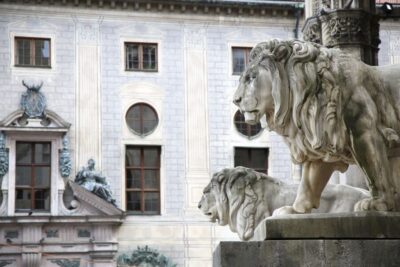 ★ 4.6Third Reich & WWII Walking TourFrom $316,181 reviews
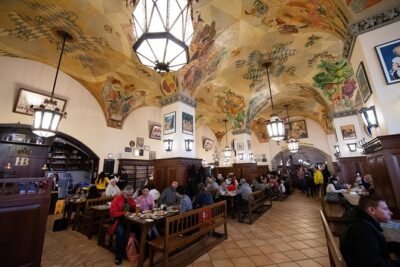 ★ 4.5Third Reich Walking Tour MunichFrom $454,291 reviews
 ★ 4.6Birthplace of the Third Reich Guided Walking TourFrom $29771 reviews
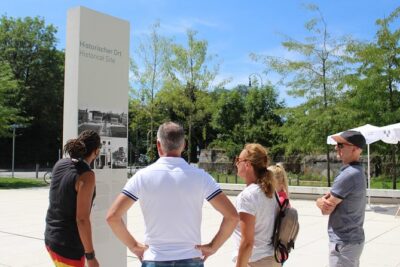 ★ 4.5Munich World War II Sites Including Dachau Concentration CampFrom $105570 reviews
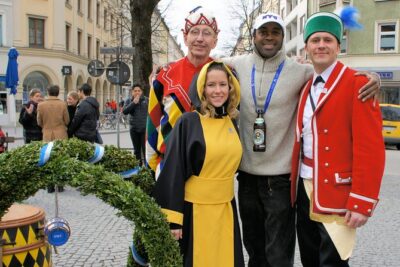 ★ 5.0Munich City Walking Tour, includes Third Reich & ViktualienmarktFrom $31458 reviews
 ★ 4.5Third Reich & WWII Walking TourFrom $35417 reviews
 ★ 4.9Munich 3-Hour Segway Tour: Nazi Munich & Royal ArchitectureFrom $91194 reviews
 ★ 5.0Dachau Concentration Camp Memorial Site And Third Reich Day Tour From MunichFrom $145185 reviews