
REVIEW · GUIDED
Munich’s 500 Years of Architecture Guided Tour
500 years of Munich in one guided walk.
This is the kind of tour that turns big names and big buildings into small stories you can actually follow, starting in the Gothic era and moving forward through Renaissance, Baroque, Neo-Classicism, Historicism, and finishing with modern contrasts and Jugendstil-style details. I especially like how the route is built around clear time periods, so you get a real sense of how Munich changed, not just a list of stops. You also get Philipp’s animated storytelling, including royal tales, legends, and a few darker chapters that add human weight to what you see.
Two things I like a lot: the chance to visit multiple iconic landmarks and the guided mix of old town scenes plus the calmer Isar River area. As a bonus, the tour works in a tram break and Christmas market time, so the experience feels varied within a compact 2 hours. The main drawback to keep in mind is that it is not for everyone: the tour is not suitable for wheelchair users or people with mobility impairments, and it is built for winter walking.
If you can handle a brisk stroll in warm layers, this is a very efficient way to see why Munich’s architecture looks the way it does, and why it still feels alive today.
Key things I’d circle before you go
- 500-year timeline on foot: from late 15th-century Gothic to modern museum stops.
- Inside access, up to three buildings: you are not limited to exterior views only.
- Tram to the Isar River: a contrast from Old Town energy to riverside calm.
- Christmas markets included: including a medieval-style Christmas market in a special setting.
- Alte Utting connection: you see the riverside moment that The New York Times praised.
- Strong guide presence: Philipp’s storytelling is friendly, memorable, and keeps the pace fun.
Where the tour starts: Frauenkirche at Frauenplatz
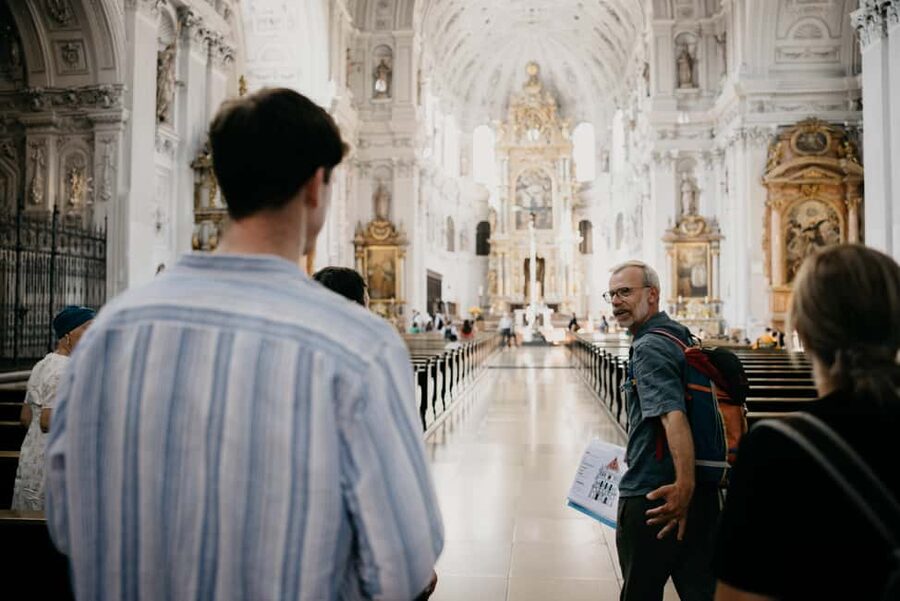
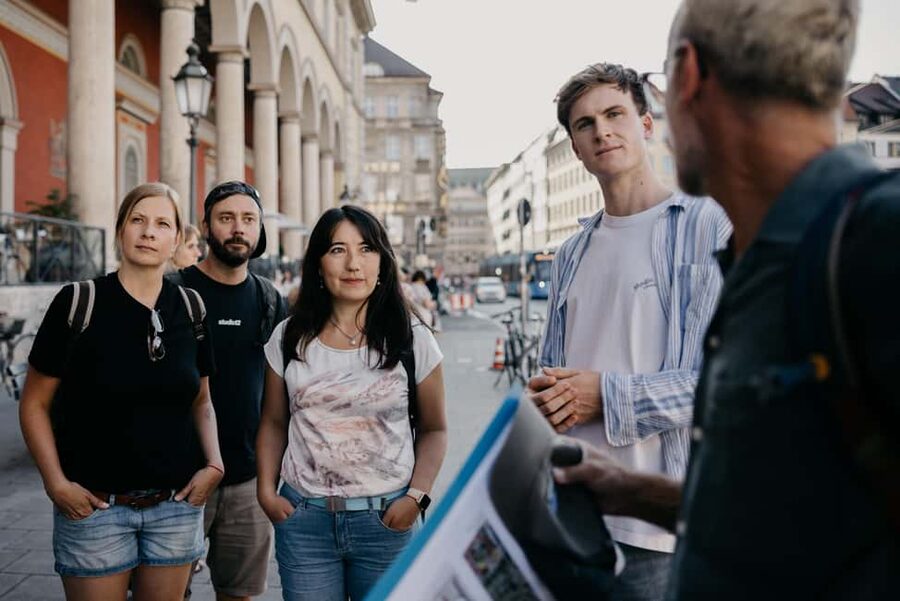
The first moment sets the tone. You meet at Frauenplatz 1, outside the main entrance to Frauenkirche, Munich’s Cathedral of Our Lady. Look for Philipp with his yellow winter hat, yellow backpack, and a blue presentation folder. This is helpful because the meeting spot is a busy square, and you do not want to wander around while everyone else lines up.
Getting there is straightforward. If you come by transit, get off at Marienplatz on the U3/6 line and walk about 5 minutes. From München Hauptbahnhof, it is roughly a 15-minute walk. I like routes like this because you can plan around multiple arrival styles, not just one train line.
Once you’re together, the tour’s big promise becomes practical: you are not stuck reading plaques later. You get a guided path that makes it easier to remember what you saw, where it fits in time, and why people cared about it.
Guides worth having in Munich
- Munich 3-Hour Guided Bike Tour
★ 4.5 · 1,731 reviews - Munich’s Beer Halls and Breweries: 3-Hour Guided Tour
★ 4.6 · 928 reviews - Guided Dachau Concentration Camp Memorial Site Tour with Train from Munich
★ 5.0 · 920 reviews - Munich: Birthplace of the Third Reich Guided Walking Tour
★ 4.6 · 771 reviews
Frauenkirche and the first era lesson in Gothic Munich
The tour begins with Frauenkirche, a perfect anchor point because it represents that late 15th-century shift into a strong Gothic identity. As you look at the exterior and talk through what defines the Gothic look, you start to understand why later styles kept responding to earlier ones.
What I like here is the way the guide uses the building as a timeline starting point. You are not just checking a landmark box. You are building a mental framework: the cathedral is your baseline for what “Gothic” meant in Munich, and it helps every later stop land with context.
If you are the type who likes architecture details, you’ll have a chance to use your camera early. The square setting also helps you orient fast, so the rest of the walk feels like an organized journey rather than a random string of sights.
St. Michael’s Church: Renaissance meets a world-record claim
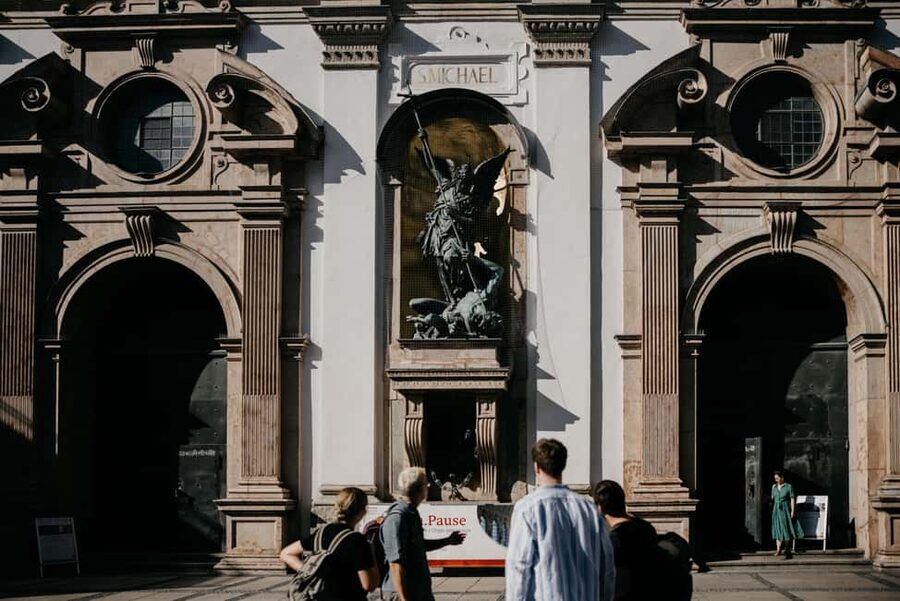
From the cathedral, you move forward chronologically to St. Michael’s Church. The tour description calls it a world-record-holding masterpiece. Even without getting lost in the exact claim, that phrasing signals what you should expect: this is meant to feel like a standout Renaissance moment.
This stop matters because Renaissance architecture is not just a “new look.” It signals a change in values, proportions, and how buildings were meant to impress. When you see that shift right after Gothic, you can feel the visual language change in a way that feels immediate.
This is also one of the spots where you might get inside access, since the tour includes the chance to visit up to three buildings from inside. If you want more than exterior photos, that inside time is one of the best reasons to book.
Trinity Church and Theatine Church: Baroque form and drama
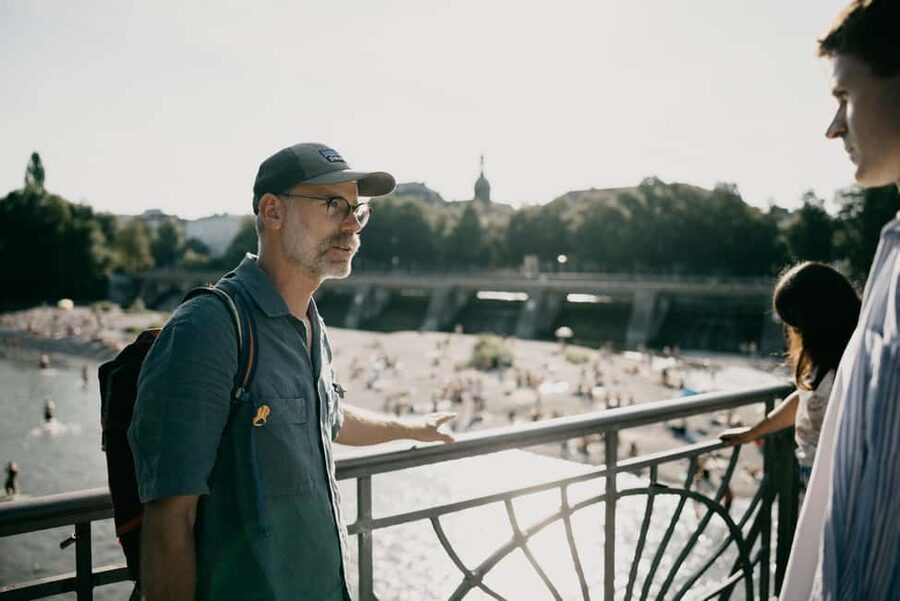
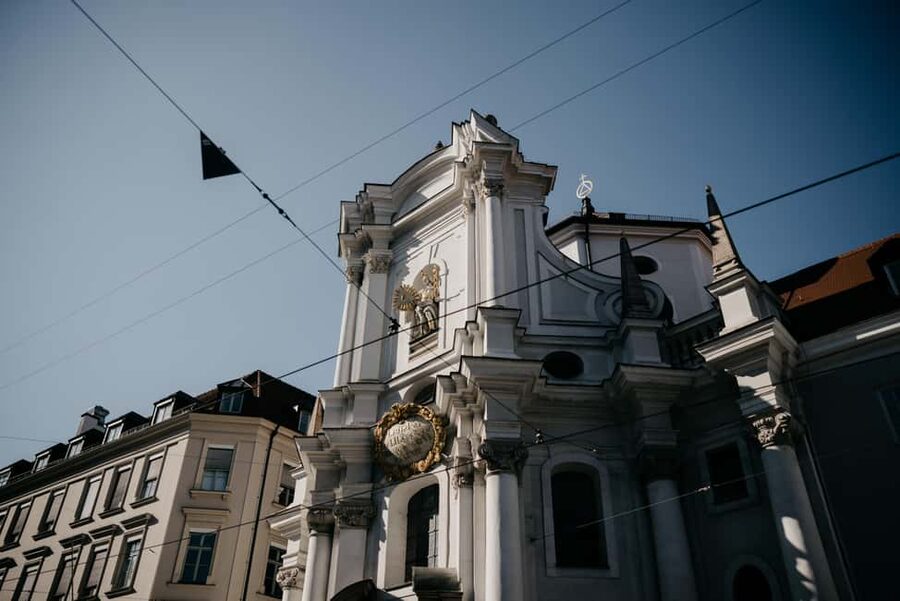
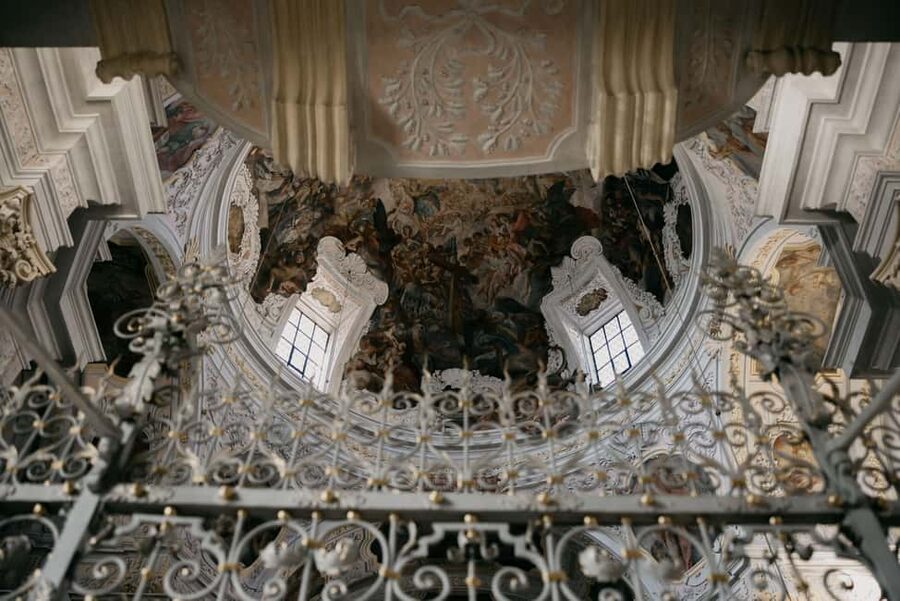
Next come Trinity Church and the Theatine Church. Together, these stops work as a bridge into the opulence phase. Baroque style is usually easy to recognize when you see it, but it becomes even clearer when you hear the stories behind it.
Here’s what makes this portion valuable: the guide ties the buildings to human moments, such as royal family connections and the legends people attached to places. That is how a city turns from “buildings I saw” into “places I understand.”
The main practical thing? Stay patient with the walking pace. Churches and squares can feel similar until the guide gives you a way to compare them. Once you’ve got that comparison, you start to notice details you would have missed on your own.
Bavarian State Opera and Maximilianstraße: grandeur in a straight line
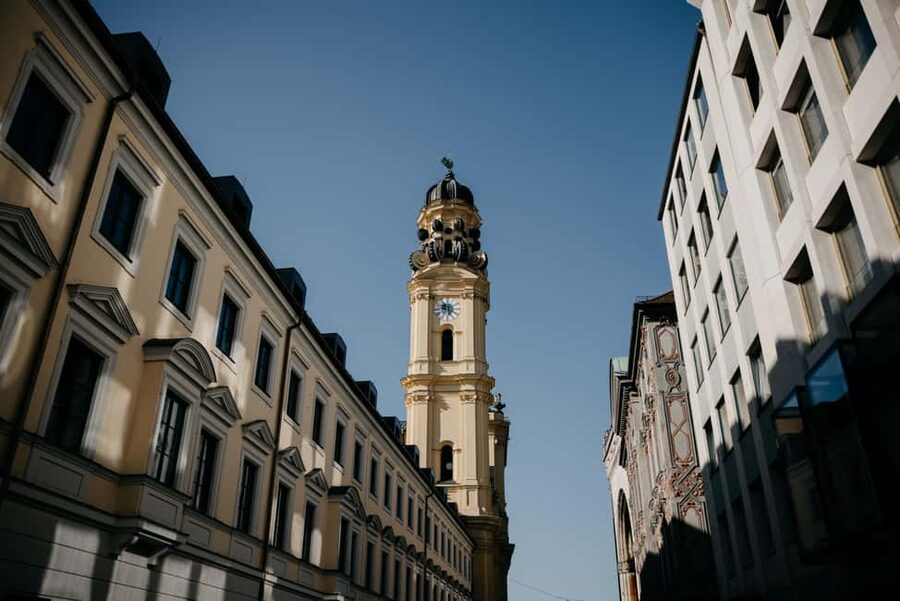
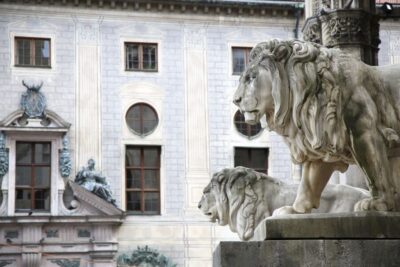
You then reach Bavarian State Opera, followed by a guided walk along Maximilianstraße. This section feels like Munich showing off in a very intentional way. The opera building gives you a sense of ceremonial scale, and Maximilianstraße is the corridor where that formality continues as you move.
Even if opera is not your thing, this stop is useful. It helps you see how architecture supports culture, power, and public identity. And it gives you a break from the earlier medieval and church-centered vibe without jumping ahead too abruptly.
Maximilianstraße also helps with pacing. You get a guided path through an area that feels orderly and designed, which makes the tour feel like a real route rather than a collection of quick photo stops.
Isar River reset: tram to a greener pace and world-record stories
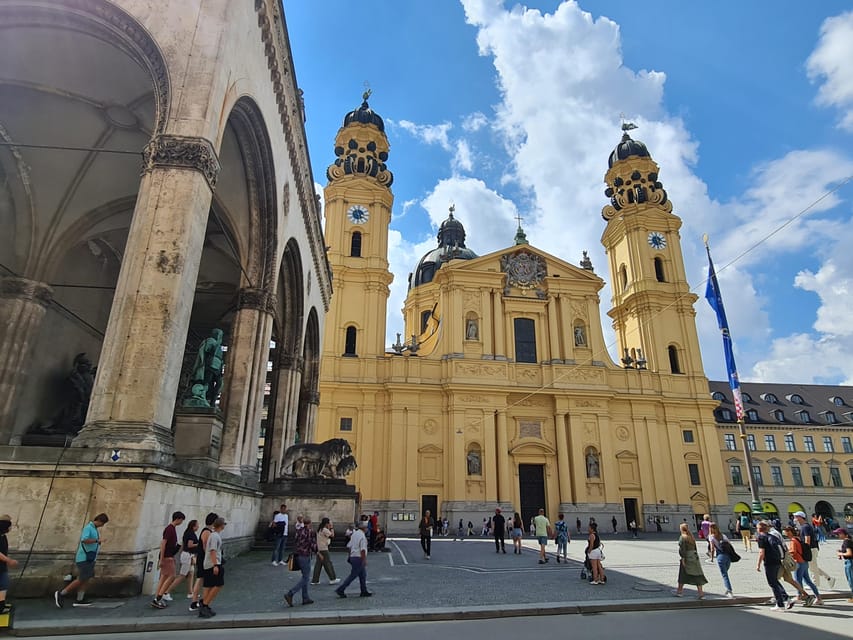
After Old Town focus, the tour takes a tram to the Isar River area. This change of scenery is one of the best parts of the whole experience. Old Town can be loud, crowded, and full of distractions. The river side shift gives you breathing room and a different architectural mood.
The description mentions “another two world records” connected to this part of the tour, plus surprising stories. You also get to experience the iconic Alte Utting, praised by The New York Times. Even if you come for the architecture, it is often the riverside details that make the tour feel memorable later, because they look and feel different than the city center.
This is also where the tour’s Christmas market content can feel more magical. You are mixing shopping atmosphere with the comfort of an open-air setting, which makes the seasonal element feel natural rather than forced.
One tip from my perspective: bring your camera, but also put it away sometimes. The Isar stretch is better enjoyed with your eyes for a minute at a time, because you’ll start to notice how Munich’s modern and historic layers sit side by side.
Other Munich bookings for the same trip
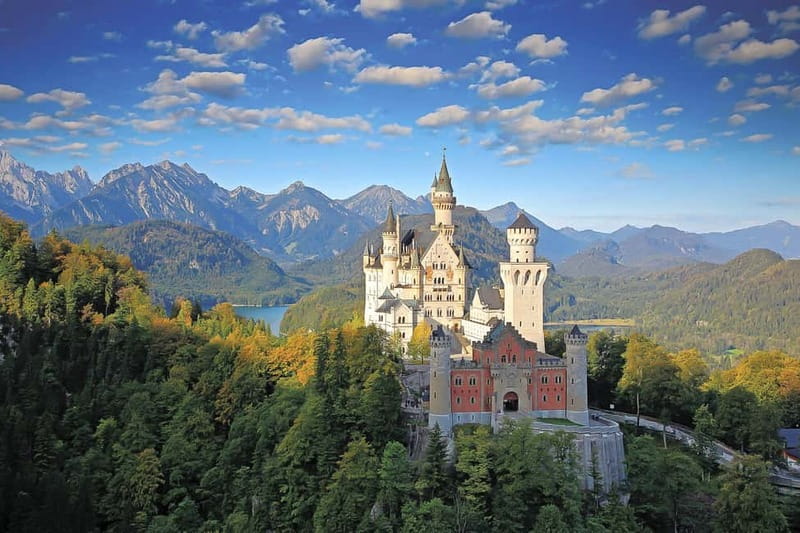
Jugendstil, graffiti, and a modern finish at Sudetendeutsches Museum
The last phase leans into Jugendstil (Art Nouveau), with street art and a strong modern finish at Sudetendeutsches Museum. This is a smart choice for a tour themed around 500 years, because it proves that “history” does not stop with the oldest stones.
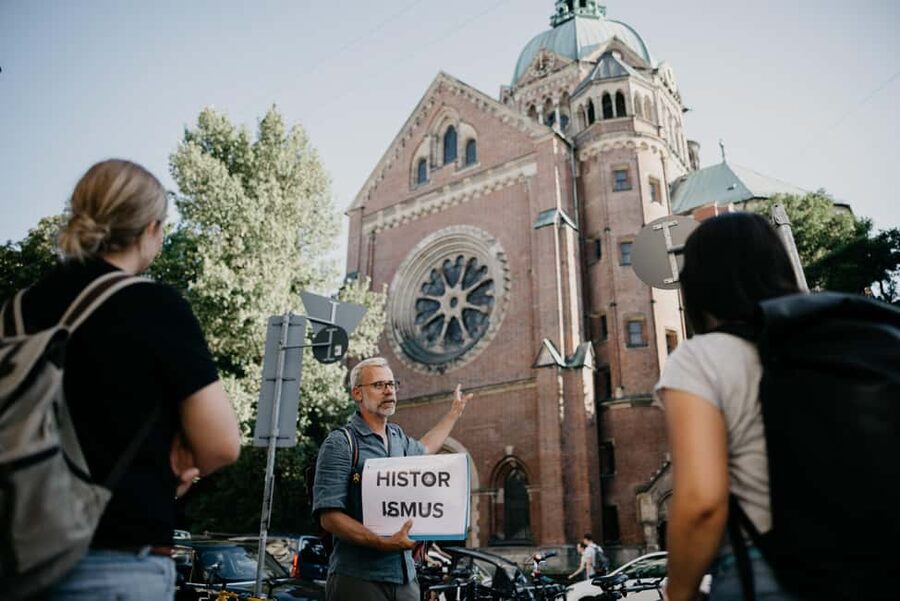
The stop list also includes St. Lukas, Müllersche Volksbad, and then the museum. These are the kinds of places that often get ignored by people doing only the classic postcard route. In a short tour like this, it is a relief to see stops that broaden your idea of what counts as Munich architecture.
One of the most praised parts of this experience is the ending contrast. You go from time-period architecture into playful modern visuals, and the museum finale helps you land the whole story with something that feels present-day.
If you like ending your sightseeing with a location you can slow down in, this final museum stop is likely to be the right note. It makes the 2 hours feel complete, not abruptly cut off.
Christmas markets inside a tight 2-hour plan
Yes, there are Christmas markets built into this tour, including a unique medieval Christmas market in a magical setting. The key is timing and variety: you get market atmosphere without the long stand-in-line and “where do we eat?” problem that can break a half-day plan.
The practical reality is that this is still an architecture tour. You will be walking and observing, and the markets are part of that context. That makes it a strong option if you want seasonal fun but do not want to trade away seeing buildings.
If you are visiting in winter, this is also a good way to stay warm longer. You get periodic stops where you can pause, look around, and reset.
What’s included, and what you should budget for
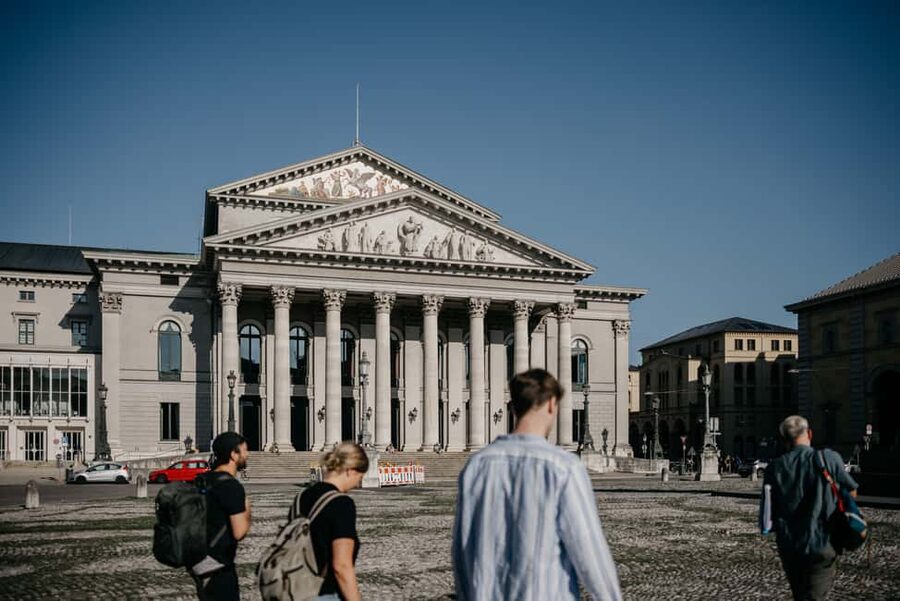
The tour includes a guided tour of historic Old Town and the Isar River, plus visits to multiple Christmas markets. It also includes the chance to visit up to three buildings from inside, which is a big value boost versus a pure exterior walking tour.
Not included: food and drinks, and transportation to and from the meeting point. Also, the route includes a tram hop to the river area. The tour description does not say that transit cost is covered, so I’d plan to have a ticket or payment method for public transport during the ride.
Price-wise, it is $36 per person for about 2 hours. That pricing makes sense when you factor in three things: live guiding, the market stops, and inside access to select buildings. If you try to do the same route solo, the “time saved” part is hard to replicate, especially in winter when waiting and getting oriented eats up daylight.
Who should book this Munich 500 Years tour
You’ll probably love this if:
- You want a fast, structured Munich architecture overview with a clear timeline.
- You enjoy stories, legends, and royal connections tied directly to what you see.
- You are visiting in winter and want Christmas market time without losing the architecture focus.
- You like a tour that ends with a modern museum and not just another church façade.
You should think twice if:
- You need wheelchair access or have mobility limits, since the tour is not suitable for wheelchair users.
- Long winter walks are hard for you, because comfortable shoes and warm clothing matter here.
- You want a food-centered tour, since no food or drinks are included.
Should you book? My quick call
I think this is a strong pick for first-time Munich visitors or anyone who wants an organized way to connect styles across centuries. The biggest strengths are the guide-led storytelling and the route logic, Old Town to Isar, then art-inspired modern contrast at the end. At $36 for a 2-hour, guided, market-and-inside-buildings format, you get good value if you’re there to walk, look, and learn.
If you want a laid-back photo stroll only, you might find the pace a bit purposeful. But if you like the idea of being walked through Munich’s changing design language, this is one of the more satisfying ways to spend a winter afternoon.
FAQ
How long is the Munich 500 Years of Architecture guided tour?
It lasts about 2 hours. Starting times vary, so you should check availability for the specific times offered.
Where do I meet the guide?
You meet outside the main entrance at Frauenkirche, Frauenplatz 1. Philipp is easy to spot with a yellow winter hat, a yellow backpack, and a blue presentation folder.
How do I get there from Marienplatz and from Hauptbahnhof?
For Marienplatz, get off at the U3/6 station Marienplatz and walk about 5 minutes. From Hauptbahnhof München, it is about a 15-minute walk.
What language is the tour offered in?
The live tour guide speaks English and German.
Does the tour include Christmas markets?
Yes. You will visit multiple Christmas markets, including a unique medieval Christmas market setting.
Is food included?
No. Food and drinks are not included.
Can I visit buildings from the inside?
Yes, the tour includes the chance to visit up to three buildings from the inside.
Is the tour wheelchair accessible?
No. The tour is not suitable for wheelchair users and not suitable for people with mobility impairments.
What should I bring and wear?
Wear comfortable shoes and warm clothing. The tour recommends bringing a camera as well, and smoking is not allowed.
More Guided Days in Munich


More Tours in Munich

More Tour Reviews in Munich
Newest Munich and Bavaria reviews
- Scenic Adventure Private Day Tour to The Konigssee Salzburg★ 4.5 · 3 reviews
- Jewish Museum & Jewish Quarter Guided Tour with Tickets★ 4.0 · 3 reviews
- Private Linderhof Castle, Entry-Ticket – optional Toboggan Run★ 5.0 · 3 reviews
- Private Transfer from Munich to Salzburg, English-speaking driver★ 3.5 · 3 reviews
- Private tour from Munich to Rothenburg and Harburg★ 5.0 · 3 reviews
- Arrival Transfer Munich Train Station to Munich by Luxury Van★ 5.0 · 3 reviews
Guided, compared.
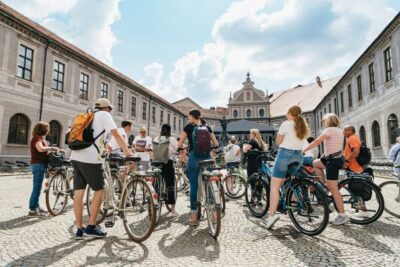 ★ 4.5Munich 3-Hour Guided Bike TourFrom $401,731 reviews
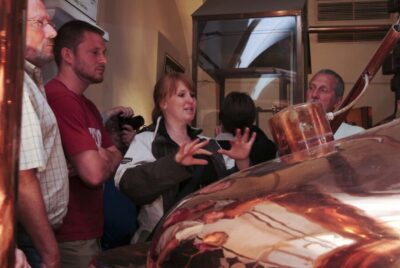 ★ 4.6Munich’s Beer Halls and Breweries: 3-Hour Guided TourFrom $50928 reviews
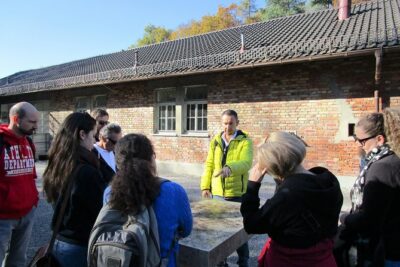 ★ 5.0Guided Dachau Concentration Camp Memorial Site Tour with Train from MunichFrom $90920 reviews
 ★ 4.6Birthplace of the Third Reich Guided Walking TourFrom $29771 reviews
 ★ 4.5Nuremberg Guided Day Trip from Munich by TrainFrom $95546 reviews
 ★ 4.7Classic Guided City Tour by Bike (English Tour Only)From $49534 reviews
 ★ 3.7Füssen: Neuschwanstein Castle Entry Ticket and Audio GuideFrom $51524 reviews
 ★ 4.6Old Town Guided Walking TourFrom $23479 reviews