
REVIEW · GUIDED
Munich’s Hidden Architecture Guided Tour
Munich has a cool side, down south. This guided architecture and street-art winter walk pairs three alternative Christmas markets with the iconic Alte Utting boat on the bridge, plus 700+ years of history you do not get in the usual city-center loop. One thing to consider up front, it is not suitable for wheelchair users or people with mobility impairments, since you are walking throughout in winter.
Philipp, a professional architect and a great speaker, leads in English or German and keeps the pace friendly while answering lots of questions. The tour runs about 2 hours, starting at Piazza Zenetti and ending near the same area, so it is a smart way to see another Munich “layer” without burning a whole evening figuring out routes.
Key things I’d circle before booking
- Philipp’s architecture-first storytelling makes even familiar streets feel new
- Alte Utting and MS Utting give you a standout photo moment over the Isar
- Giesing on the far side of the river is where the local character comes through
- Three alternative Christmas markets keep the festive vibe from turning into a single big crowd
- Night views along the Isar and bridges are a big part of the payoff
Why Munich’s hidden south feels different in winter
Most Munich sightseeing swings toward the center, but this tour shifts the spotlight to the city’s southern neighborhoods. I like that the theme is practical, you walk, you look closely, and you get a guided reason for why each place matters. The winter setting helps too, because light on the Isar and festive market lighting can make the whole area feel more intimate.
You are also not doing just one kind of stop. You get a mix of theater and architectural landmarks, street art, and water views, then the tour ends with more seasonal atmosphere. The promise is 700+ years of history in districts south of the city center, and the route is designed to show how old and new sit side by side.
The vibe is alternative without being chaotic. It feels like a local winter evening with a plan, not a random wander where you guess what you are seeing.
Guides worth having in Munich
- Munich 3-Hour Guided Bike Tour
★ 4.5 · 1,731 reviews - Munich’s Beer Halls and Breweries: 3-Hour Guided Tour
★ 4.6 · 928 reviews - Guided Dachau Concentration Camp Memorial Site Tour with Train from Munich
★ 5.0 · 920 reviews - Munich: Birthplace of the Third Reich Guided Walking Tour
★ 4.6 · 771 reviews
The 2-hour flow: a route built around streets, bridges, and markets
This is a short tour, so the pacing matters. It lasts about 2 hours, and it is structured as a sequence of guided stops that build a story: art and architecture early, then the water and neighborhoods, and finally Christmas markets.
It is also a night-view style walk, with the tour including the chance to see the city and the Isar river by night. That matters because a lot of architecture looks flat in daylight, but at night you notice proportions, textures, and how lighting shapes a building or a bridge.
What I like most is that the route is not just “look at this, then look at that.” It is more like a guided walk that teaches you how to read a neighborhood. You start noticing details in facades, street art placements, and the way cultural spaces show up in everyday places.
Meeting Piazza Zenetti: the easiest way to spot your guide
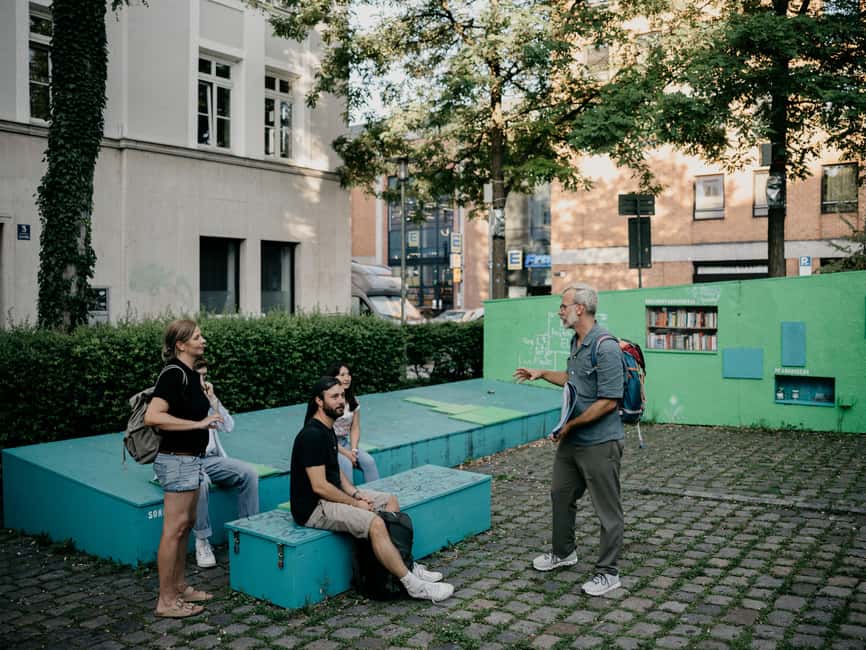
You meet at Piazza Zenetti, right at the intersection of Tumblingerstrasse and Zenettistrasse. The meetup is visually easy to find if you know what to look for: there are turquoise and green outdoor furniture pieces, and small trees in boxes.
Your guide, Philipp, will be wearing a colorful backpack and holding a blue folder. That sounds like a small detail, but in winter it saves you from standing around guessing who’s with the group.
If you are coming by subway, the best stop is U3/U6 Goetheplatz. From there, plan about a 10-minute walk to Zenettiplatz. In cold weather, that last mile matters, so bundle up before you leave the station.
Stop-by-stop: what each part of the walk is really for
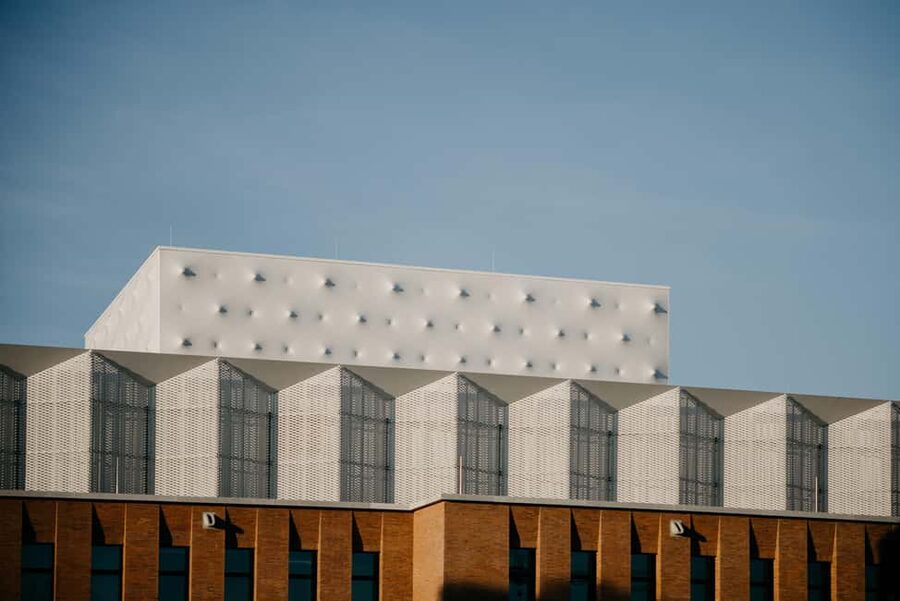
Below is the route as you experience it, with what you should pay attention to at each guided moment.
Stop 1: Piazza Zenetti, where the walk starts
This is your orientation point. You begin with the area itself, with those box trees and outdoor seating that make the plaza feel like a small social room. Use these first minutes to get your bearings and adjust your layers before the walking ramps up.
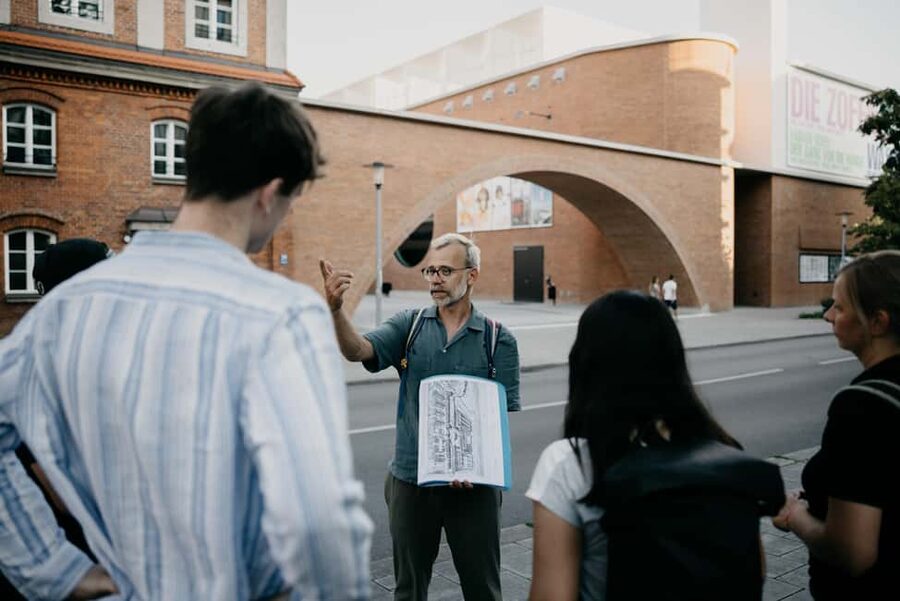
Stop 2: Münchner Volkstheater, Munich’s arts engine
The tour includes a guided look at Münchner Volkstheater. Even if you have seen the building from the outside before, a guide can help you notice why it belongs in a city story about culture, public life, and design. This is also a good early stop because it sets the tone, you are not just chasing photos, you are learning what the architecture signals.
Other Munich bookings for the same trip

Stop 3: Bahnwärter Thiel, a quieter landmark worth your time
Next comes Bahnwärter Thiel, another guided stop. I like this kind of stop because it breaks the usual pattern of only going to the famous addresses. Here, the guide focuses your attention on the details that make smaller landmarks memorable, especially when you start looking at the whole street context rather than one front door.
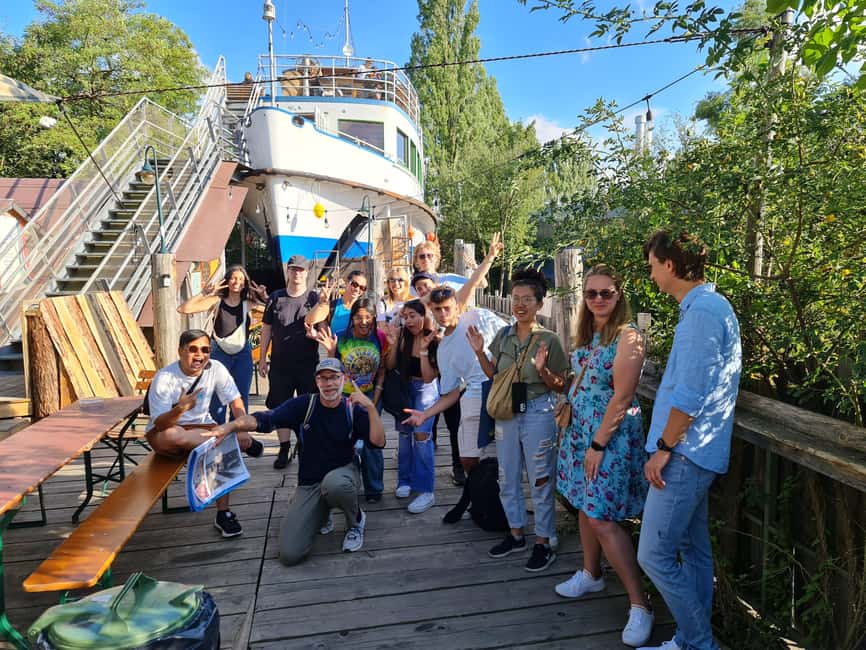
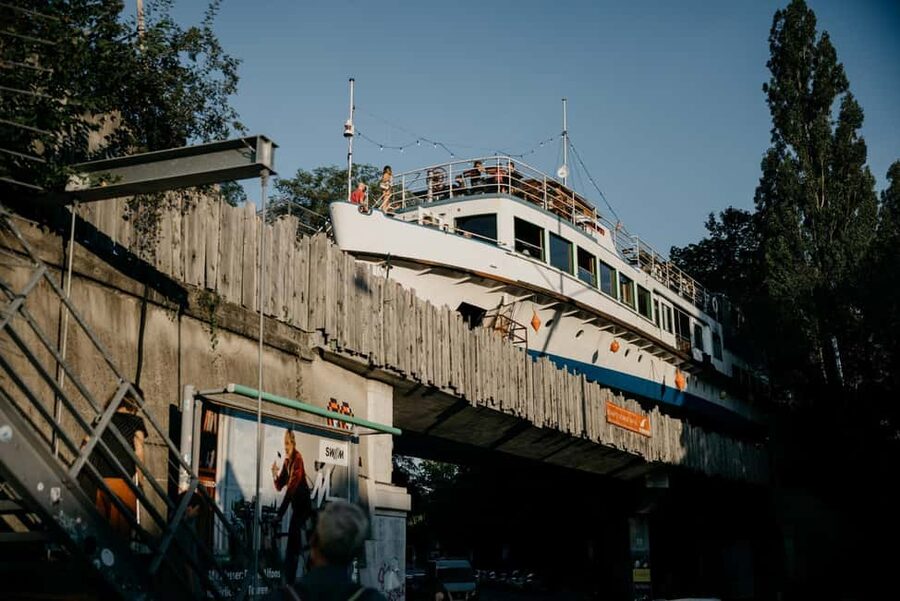
Stop 4: MS Utting on the bridge at Lagerhausstrasse, the Alte Utting moment
This is one of the most talked-about parts for a reason. You will see MS Utting on the bridge at Lagerhausstrasse, connected to the iconic Alte Utting. The New York Times pointed readers to look for the boat on the bridge, and on this tour you actually get the vantage point at the right time.
When you arrive, pause and look at the line between the bridge, the boat, and the river. It’s the kind of scene that is easy to photograph but hard to appreciate fully without someone telling you what to notice.
Stop 5: Dreimühlenstraße, street-level history in motion
Dreimühlenstraße is another guided section. This is where you start feeling the neighborhood transition. The guide helps you connect the architecture to the way people use the street, including how the area evolved over time in the districts south of the center.
If you like walking photography, this is a good stretch to keep your camera ready, but keep your eyes on street details too. The “hidden architecture” theme is as much about how a street is put together as it is about individual buildings.
Stop 6: Wittelsbacherbrücke, where the Isar views click
Wittelsbacherbrücke is a key bridge stop. This is a natural moment to look over and around the river, and to notice how bridges change the feel of a city. If it is winter-dark out, the contrast between water, bridge structure, and city lighting can be stunning.
This is also where you are more likely to feel the cold wind. Plan to warm your hands after a few photos.
Stop 7: Claude-Lorrain-Straße, street art and alternative cultural corners
At Claude-Lorrain-Straße, the tour shifts into the “cooler Munich” mood. The overall tour includes street art and cultural hubs made of shipping containers and wood, and this is the kind of stretch where those details start to show up in a very practical way. You learn how to spot these spaces and understand what they add to the neighborhood character.
This is also where Philipp’s style really matters. The best part is how he points out small nuances, so you are not just seeing street art, you are learning how it fits into the built environment.
Stop 8: Little Venice, a water-side pause
Little Venice is next, with another guided stop. The name signals that you are in a water-focused pocket of the city, and you get a chance to notice why this section can feel like a different world compared to the more central streets.
In winter, water areas can be cold but also very atmospheric. Use this stop as your slow-down moment, take a few wider shots, and then get ready to warm up again before the market portion.
Christmas markets: why the tour includes three alternatives
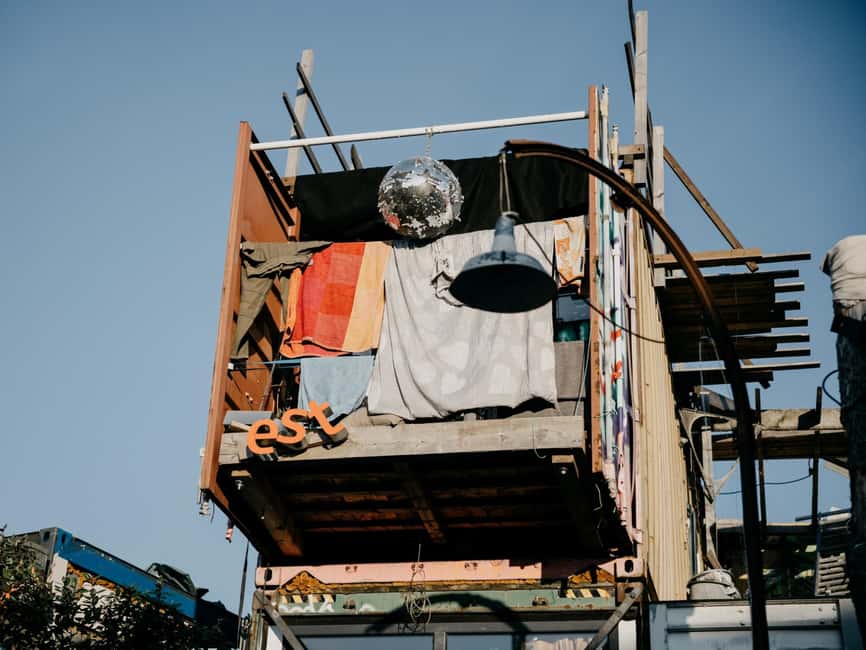
You get visits to three cool and alternative Christmas markets. That single detail changes the whole experience. Instead of bouncing through one oversized market, you see multiple festive pockets that match the neighborhoods you are walking through.
I like how the markets are not treated as the entire evening. They are part of the architecture story. You are still moving, still looking, and still learning how culture shows up in public spaces. Between market stops, you get short stretches where street art, river views, and bridges keep the walk feeling varied.
Do bring a little patience for winter queues. If you want food, remember food and drinks are not included, so you will pay for what you choose. But you also will not feel trapped in one place, because the tour is built to keep you walking with purpose.
Giesing on the far side of the Isar
The tour takes you across the Isar and into Giesing, described as one of the last authentic neighborhoods. That part matters because it keeps the night from feeling tourist-only. You get to see how Munich functions beyond the postcard zone.
You should also expect nature moments along the river, including a beautiful willow island. Even if you are not a “nature person,” it’s a nice reset inside the city. Winter light on water and the soft shapes of willow branches can make the area feel calmer than the streets around you.
Giesing is where the tour earns its “hidden architecture” label. It is not hiding because it’s inaccessible. It’s hiding because most people do not plan to walk there. With a guide, you stop guessing and start noticing.
What you learn from Philipp’s architect viewpoint
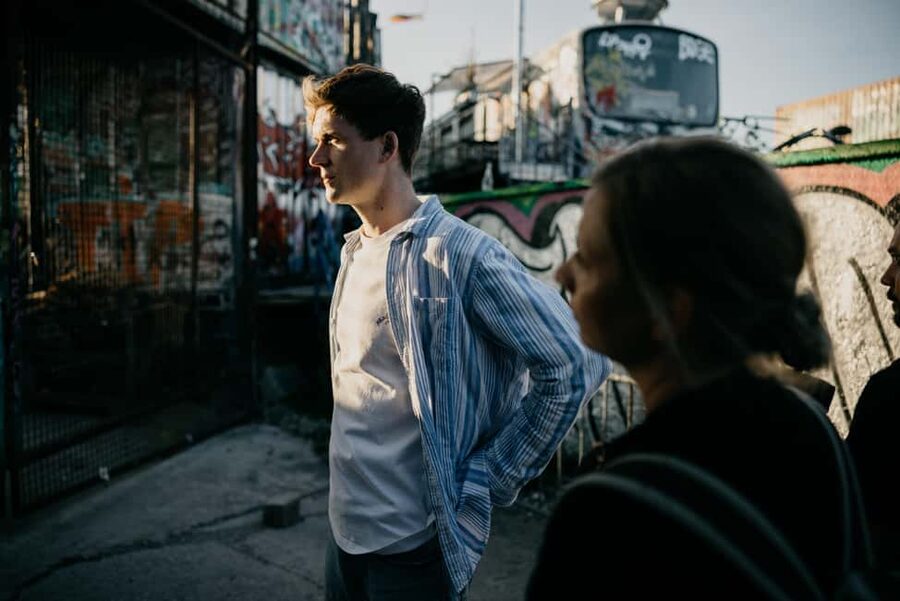
The most praised part of this tour is Philipp himself. He is a professional architect and a very talented speaker, and the tour works because his explanations connect design to real life.
You start learning how to read details, the kind that are easy to miss when you speed through a city. Things like how a building fits into a street, how a landmark changes how you see the river, and how street art can live beside serious architecture without conflict.
I also like that he actively answers questions. If you are the type who stops on the sidewalk to ask why a building looks the way it does, this tour is a good match. If you are not, he still gives enough context that you will feel smarter at the end.
One more plus from the overall experience: the tour gives you ideas to follow up after you finish. Even if you know Munich pretty well, the route focuses on areas and angles most people do not try on their own.
Price and value: $36 for 2 hours of guided design, markets, and river night views
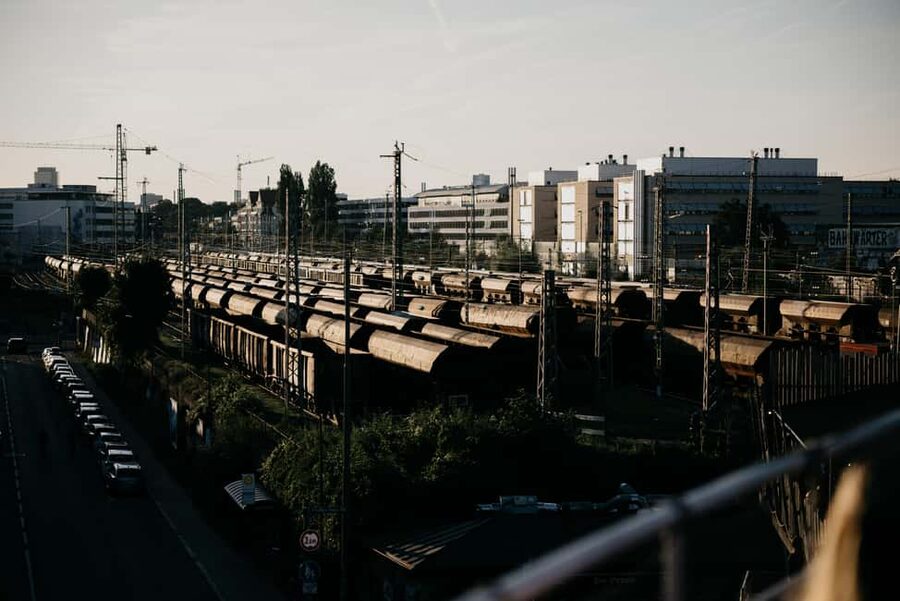
The price is $36 per person, for an approximately 2-hour guided walk. For Munich, that is solid value because the tour includes more than a basic walking commentary.
You get:
- a guided tour through Munich’s south-focused districts
- visits to three Christmas markets
- opportunities to see the city and the Isar river by night
- guided stops at multiple landmarks along the route
What you do not get is also clear. Food and drinks are not included, and transportation to and from the meeting point is on you.
Is $36 “cheap”? Not exactly. But it is not overpriced either, because you are paying for a guided route with multiple stops and structured time in places you might otherwise walk past. If you want a plan and you enjoy architecture and street culture, you will likely feel you got your money’s worth.
Practical winter tips that help on this kind of walk
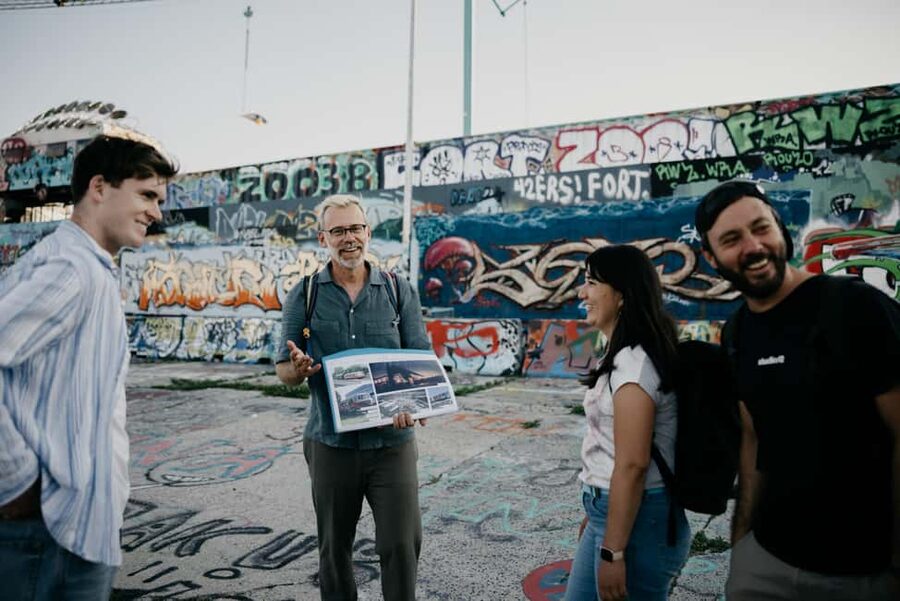
This tour is all about walking, so do the boring prep well.
Bring:
- comfortable shoes
- warm clothing
- a camera (you will want it for bridges, the river, and market lighting)
Warm clothing is not optional in winter. You are outside for long stretches, especially around bridges and the river.
Also note what is not allowed: smoking. Finally, the tour is marked as participation at your own risk, so use common sense with winter footing.
One small but useful thing: the guide wears the colorful backpack with the blue folder. If visibility is poor, that detail makes meeting up painless.
Who should book this tour, and who might skip it
Book it if you want a Munich winter evening with a design-and-culture lens. It is ideal if you like street art, want to see a different side of Munich by walking into Giesing, and you want more interesting Christmas market stops than the standard route.
Skip it if you need wheelchair access or you have mobility limitations. The tour is not suitable for wheelchair users or people with mobility impairments. Also, it is not listed for people over 95 years, so be realistic with age and walking tolerance.
If your goal is only major sights in the city center, you might find this route too niche. But if you want authenticity, calmer neighborhoods, and architectural context, this is a strong fit.
FAQ
How much does this Munich hidden architecture tour cost, and how long is it?
It costs $36 per person and lasts about 2 hours. Starting times vary, so you should check availability for the schedule.
How do I see the starting times for the tour?
The duration is listed as 2 hours, but you need to check availability to see the available starting times.
Where is the meeting point for Piazza Zenetti?
You meet at Piazza Zenetti, at the street intersection of Tumblingerstrasse and Zenettistrasse. The area has turquoise and green outdoor furniture and small trees in boxes.
Where does the tour end?
The tour ends back at the meeting point area. The itinerary also lists the finish at Gans Woanders, which is where the walk wraps up.
What is included in the guided tour?
The tour includes a guided walk through Munich’s cool hidden district in the south, visits to three alternative Christmas markets, and the opportunity to see the city and the Isar river by night.
What is not included?
Food and drinks are not included. Transportation to and from the meeting point is also not included.
What languages are available for the live guide?
The live tour guide is available in English and German.
Can I book a private group?
Yes, private group options are available.
What should I bring for a winter tour?
Wear comfortable walking shoes and bring warm clothing. A camera is also recommended.
Is the tour suitable for wheelchair users or limited mobility?
No. It is not suitable for people with mobility impairments and not suitable for wheelchair users. It is also not listed for people over 95 years.
More Guided Days in Munich



More Tours in Munich

More Tour Reviews in Munich
Newest Munich and Bavaria reviews
- Scenic Adventure Private Day Tour to The Konigssee Salzburg★ 4.5 · 3 reviews
- Jewish Museum & Jewish Quarter Guided Tour with Tickets★ 4.0 · 3 reviews
- Private Linderhof Castle, Entry-Ticket – optional Toboggan Run★ 5.0 · 3 reviews
- Private Transfer from Munich to Salzburg, English-speaking driver★ 3.5 · 3 reviews
- Private tour from Munich to Rothenburg and Harburg★ 5.0 · 3 reviews
- Arrival Transfer Munich Train Station to Munich by Luxury Van★ 5.0 · 3 reviews
Guided, compared.
 ★ 4.5Munich 3-Hour Guided Bike TourFrom $401,731 reviews
 ★ 4.6Munich’s Beer Halls and Breweries: 3-Hour Guided TourFrom $50928 reviews
 ★ 5.0Guided Dachau Concentration Camp Memorial Site Tour with Train from MunichFrom $90920 reviews
 ★ 4.6Birthplace of the Third Reich Guided Walking TourFrom $29771 reviews
 ★ 4.5Nuremberg Guided Day Trip from Munich by TrainFrom $95546 reviews
 ★ 4.7Classic Guided City Tour by Bike (English Tour Only)From $49534 reviews
 ★ 3.7Füssen: Neuschwanstein Castle Entry Ticket and Audio GuideFrom $51524 reviews
 ★ 4.6Old Town Guided Walking TourFrom $23479 reviews