
REVIEW · MUNICH THIRD REICH AND WWII HISTORY TOURS
Private Munich Old Town and Third Reich Walking Tour
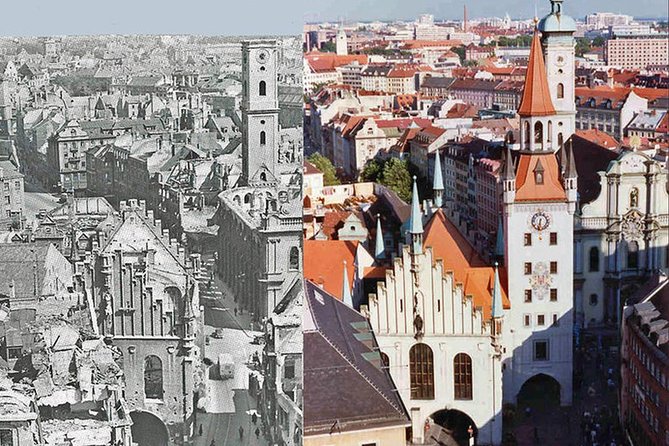
Munich has two faces, pretty and painful. This private 2-hour walk strings together Marienplatz and iconic churches, then turns to the streets tied to Hitler’s rise. I like that it’s truly private, so you can ask questions, set the pace, and steer the balance between sightseeing and serious history.
Two more things I like: you get hotel pickup or a clear meeting option at München Hauptbahnhof, and the guide works the route so you’re not stuck in a one-size-fits-all circuit. One drawback to consider is that the tour is short, so the emphasis on the Third Reich portion can vary by guide and some church areas may be closed if you start late.
Key points worth your attention
- Private guide, custom pacing: you can request what to spend more time on
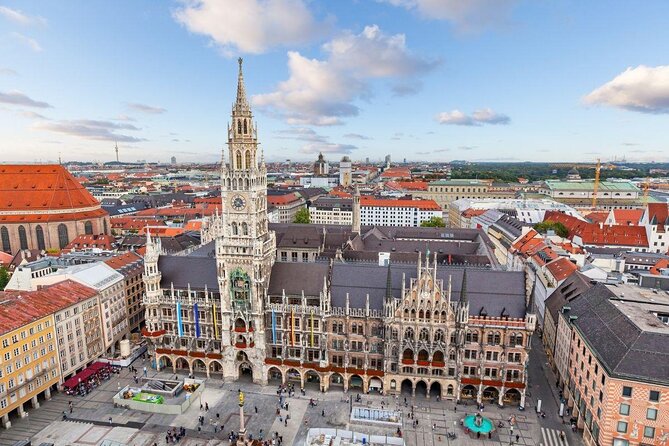
- Old Town classics in one loop: Marienplatz, Frauenkirche, St. Peter’s, Rathaus-Glockenspiel
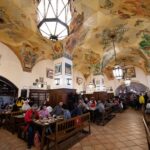
- Hofbräuhaus as a culture stop: a 3-floor beer hall going back to the 16th century
- Third Reich street-level history: early Nazi connections, Gestapo headquarters, and the 1923 Beer Hall Putsch site
- Small group size: max 9 people per tour, with a max of 10 travelers overall
Why this Munich walk mixes Old Town charm with Nazi-era reality
This is the kind of tour that helps you hold two ideas at once. Yes, you’ll see the postcard stuff: squares, churches, and the big civic theater of Munich life. But the route is also built to show you how power and propaganda used public spaces, and how the story of the Third Reich is tied directly to this city.
What makes it work for me is the guide format. Because it’s private, you’re not stuck in a lecture tempo. The better guides (I’ve seen names like Ian, Anja, Franz, Steve, Mark, Jax, and Daniel) tend to explain with a natural flow, and they’ll often tailor the “how much church?” part so you don’t waste time if you’d rather focus on history and context.
Other walks through the same years
- Munich: Third Reich & WWII Walking Tour
★ 4.6 · 6,181 reviews - Third Reich Walking Tour Munich
★ 4.5 · 4,291 reviews - Munich: Birthplace of the Third Reich Guided Walking Tour
★ 4.6 · 771 reviews - Munich World War II Sites Including Dachau Concentration Camp
★ 4.5 · 570 reviews
Meeting up at Dachauer Str. 4, München Hauptbahnhof, or your hotel
You can start in a few ways, which matters on a short, 2-hour tour. If you’re in a central hotel, pickup and drop-off are included. If not, you can meet at München Hauptbahnhof, Munich’s main station. The other listed start point is Dachauer Str. 4, 80335 München.
Either way, I’d treat arrival timing as part of the plan, not just a detail. The tour moves, and several key stops are churches and city-center landmarks. If your guide run is late, you can end up with less time than promised for outdoor viewing and any areas that may have limited access.
Marienplatz, Old Town power, and Munich’s clockwork heart
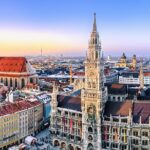
Marienplatz is Munich’s main square and it’s old, dating to 1158. It’s where the city’s civic life visually takes center stage, and it’s a smart starting point because you immediately get your bearings. Even if you only have two hours, this stop helps you understand why so much of the rest of the Old Town feels like it’s organized around tradition, government, and public spectacle.
From there, you’ll see the Old Town Hall in Gothic style and the Rathaus-Glockenspiel. This isn’t just a pretty ornament. The carillon is Munich at its most theatrical, where the city shows off craftsmanship in a daily ritual. If you like details, the guide can point out what you’re looking at and why it became part of Munich’s identity.
Practical tip: Marienplatz can be crowded, so your private guide advantage is not having to fight the flow. You can ask for a spot where you get a good view without standing in the thickest knot of people.
Frauenkirche and St. Peter’s, the religious backbone of Munich
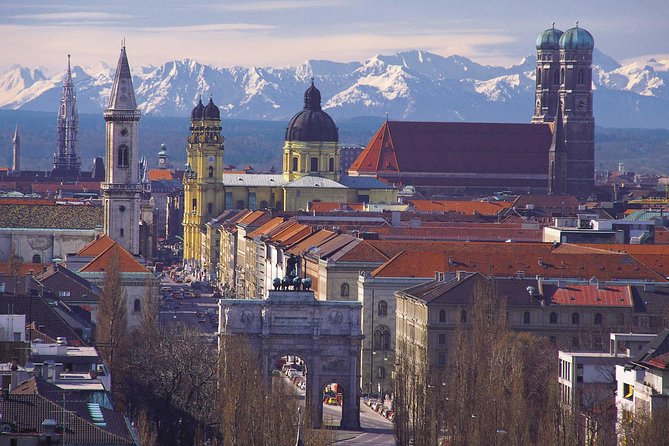
Next up are two major church stops: Frauenkirche and St. Peter’s Church. Frauenkirche is described as the largest church of Munich, serving as the cathedral of the Archdiocese of Munich and Freising. If you’ve ever wondered how a city’s religious center shapes its everyday layout, this is where you see that in stone and sightlines.
St. Peter’s Church is highlighted as the oldest structure in Munich. That one detail changes how you experience the neighborhood. You’re not just touring buildings, you’re walking in an older timeline, a reminder that today’s Munich grew through layers, not sudden reinvention.
What I like about this pairing is contrast. Frauenkirche feels like the big statement, St. Peter’s feels like the deep roots. A good guide connects that to how Munich functioned long before the 20th century, which makes the later Nazi-era sites hit harder without turning the whole walk into a single-note story.
Rathaus-Glockenspiel timing and how to keep the pace comfortable
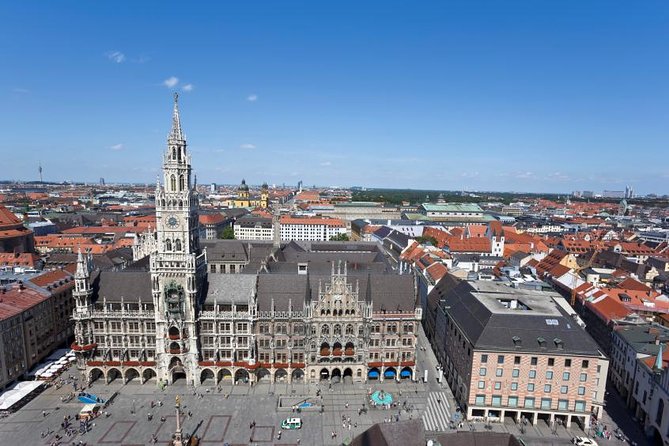
The Rathaus-Glockenspiel stop is brief, but it’s packed for what it is: a short window to see Munich’s famous carillon moment. In a private setting, you can also do something simple that group tours often can’t. You can ask to move a few steps to a better angle, or you can skip the longer milling-and-waiting part if you’ve already seen enough clock drama.
Pace is a big deal on this kind of walking tour, especially if you’re visiting in summer heat. One experience described the day as hot and the overall experience as just so-so for that reason. I’d plan for weather. Wear comfy shoes, carry water, and keep your expectations realistic: this is a 2-hour walk, not a slow afternoon stroll.
Hofbräuhaus and Neus Rathaus, culture stops with political gravity
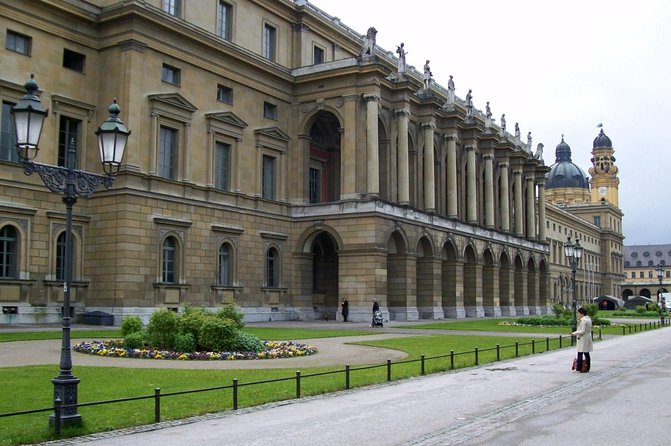
You’ll hit Hofbräuhaus, listed as Staatliches Hofbräuhaus, the famous watering hole. It’s described as a festive, three-floor beer hall dating back to the 16th century. Even if you’re not there to drink beer, it’s still an important cultural landmark because beer halls in German city life have long been social hubs. That matters for the next part of the story.
Then you’ll see New Town Hall (Neus Rathaus). Including both old and newer municipal architecture helps the walk feel less like a single corridor of landmarks. You get a sense of how civic life and public spaces evolve over time, which gives you a better context for why the Nazi era could operate so effectively once it took hold.
If you want to do it right, I’d plan your food and drinks separately. Food and drinks are not included, so treat Hofbräuhaus as a stop to see and absorb, then go eat when you’re ready.
More around Marienplatz
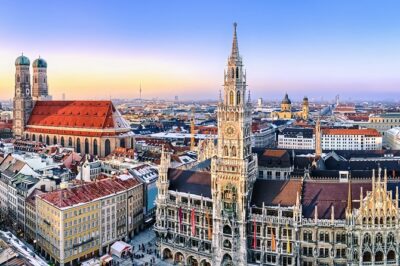
Third Reich Munich sites: early footholds, Gestapo power, and the 1923 Beer Hall Putsch
This is the part that many people book for, and it’s handled in an educational, street-level way. You’ll learn about the rise and fall of Adolf Hitler and Nazi Germany’s Third Reich, with the tour focusing on locations key to that period.
The specific stops mentioned include:
- the building where Hitler first joined the Nazi party
- the former headquarters of the Gestapo
- the place where the Beer Hall Putsch took place in 1923, also known as the Munich Putsch
This is one of the hardest historical threads you can tour, so I look for two things in a good guide: clarity and restraint. The tour description makes it clear the guide explains Munich’s past and present, then connects the Nazi story to actual locations in the city. That connection is exactly what makes a walking tour more effective than reading alone, because you see the real geography where events unfolded.
One more thing I’d keep in mind: because the entire tour is about 2 hours, some guides may spend more time on the Nazi-era sites than others. In at least one case, a guide was described as hesitant to spend much time on the topic. If Third Reich history is your main goal, ask your guide early to prioritize those specific locations and the surrounding context.
What makes the private guide format feel worth it
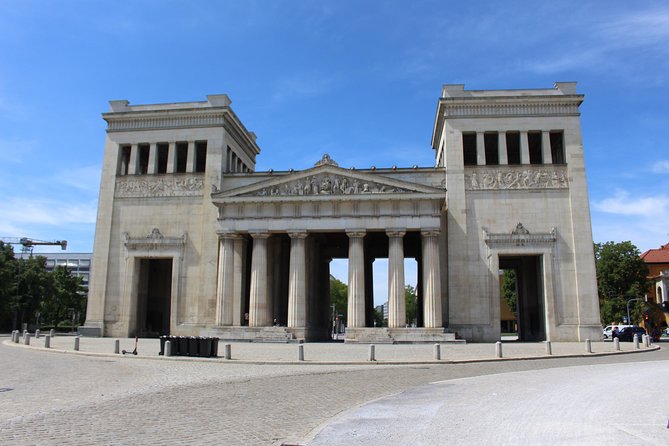
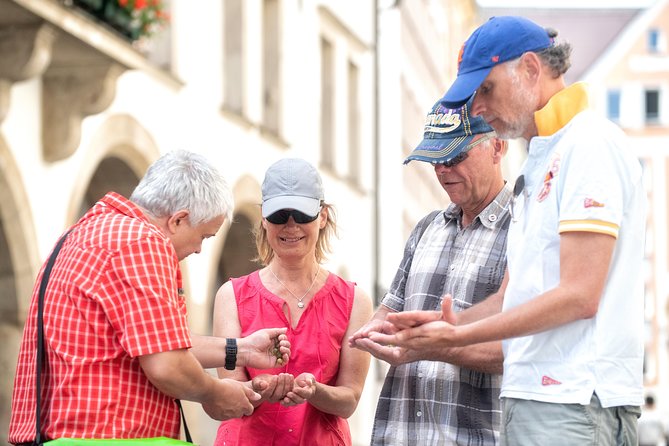
The private setup is the real value here, especially if you care about how the story gets told. This tour explicitly supports customization, so you can request what you want to see, ask questions during the walk, and adjust the pace.
Some guides also bring a more personal style. One example you’ll see in guide feedback is Ian using a conversational, chat-like approach rather than a rigid script. Another notes Steve sharing old photographs that made the stories feel more immediate. If you get lucky with a guide like that, the tour can feel like you’re learning history with someone who actually lives there, not reciting facts.
And sometimes it’s the practical tailoring that matters most. One person highlighted a guide tailoring the route to cut out more of the standard church time so they could focus where they cared. That’s a smart approach on a short schedule, and it’s exactly what private means in real life.
Price and value: is $239.65 per person a smart spend?
At $239.65 per person for an approximately 2-hour private walking tour, you’re paying for three things: a guide, a private format, and logistics handled for you. The tour includes hotel pickup and drop-off (or a clear meeting point), and it’s limited to a small group size.
So when does it make sense value-wise?
- If you’re going as a couple or small group and you want someone to connect the dots across multiple sites quickly.
- If you want both Old Town orientation and the Nazi-era context, in one compact window.
- If you don’t want to plan routes, tickets, and timing yourself across scattered landmarks.
When it may not be the best choice:
- If you’re purely after general Old Town sightseeing, you might find cheaper options.
- If you want a long, museum-style deep dive into Nazi history, a walking tour will always be shorter than a dedicated exhibition.
The sweet spot for this tour is exactly what it advertises: an efficient introduction to Munich’s classic sights with a clear, on-the-ground historical spine.
Who this tour suits best, and who should rethink it
This tour fits best if you:
- want a first-day orientation to Munich’s core sites
- prefer a guided explanation instead of wandering with an app
- care enough about history to see both the beautiful landmarks and the hard context behind them
It’s also a good fit for mixed interests. One person described the walk as a first-day highlight and orientation boost, and another praised the way the route felt like a personalized chat rather than a fixed program. With a private guide, that flexibility helps.
I’d rethink it if:
- you strongly need the Third Reich portion to be very long and museum-level. Ask questions before booking, because the total time is still limited.
- you’re sensitive to emotionally heavy content. This is not a light theme tour, even if the route includes lively sites like Hofbräuhaus.
Should you book this private Munich Old Town and Third Reich tour?
Yes, I’d book it if you want a smart, tightly run Munich introduction with both sides of the city: the pretty center and the history that shaped the 20th century. The private guide format is the main reason, and the walk includes standout Munich landmarks like Marienplatz, Frauenkirche, St. Peter’s, Rathaus-Glockenspiel, and Hofbräuhaus, then ties you to specific locations connected to the Nazi rise, the Gestapo, and the 1923 Beer Hall Putsch.
If you do book, send a clear request in advance: tell the guide you want the Third Reich stops prioritized. Bring water, wear good shoes, and plan to start strong so you don’t lose time at places that may have limited access.
FAQ
How long is the Private Munich Old Town and Third Reich Walking Tour?
It lasts about 2 hours.
Where does the tour start and is hotel pickup available?
You can be picked up from any central Munich accommodation, or you can meet at München Hauptbahnhof. The listed meeting point is Dachauer Str. 4, 80335 München.
Is this tour private, and how many people are in the group?
Yes, it’s a private tour. It’s listed with a maximum of 9 people per tour, and a maximum of 10 travelers overall.
What old-town sites are included in the walk?
The tour includes stops at Marienplatz, Frauenkirche, St. Peter’s Church, Rathaus-Glockenspiel, New Town Hall (Neus Rathaus), and Staatliches Hofbräuhaus.
Which Nazi-era or Third Reich locations does the tour cover?
The guide covers the rise and fall of Adolf Hitler and Nazi Germany’s Third Reich and includes locations such as the building where Hitler first joined the Nazi party, the former headquarters of the Gestapo, and the place where the Beer Hall Putsch took place in 1923.
What is included in the tour price?
Hotel pickup and drop-off, a private tour, and a professional guide are included.
Are food and drinks included?
No. Food and drinks are not included.
Can I cancel for a full refund?
Yes. You can cancel up to 24 hours in advance for a full refund.
More Tour Reviews in Munich
Still Around Marienplatz
The Same Years, Other Routes

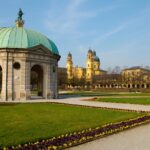
Newest Munich and Bavaria reviews
- Scenic Adventure Private Day Tour to The Konigssee Salzburg★ 4.5 · 3 reviews
- Jewish Museum & Jewish Quarter Guided Tour with Tickets★ 4.0 · 3 reviews
- Private Linderhof Castle, Entry-Ticket – optional Toboggan Run★ 5.0 · 3 reviews
- Private Transfer from Munich to Salzburg, English-speaking driver★ 3.5 · 3 reviews
- Private tour from Munich to Rothenburg and Harburg★ 5.0 · 3 reviews
- Arrival Transfer Munich Train Station to Munich by Luxury Van★ 5.0 · 3 reviews
Munich Third Reich and WWII History Tours, compared.
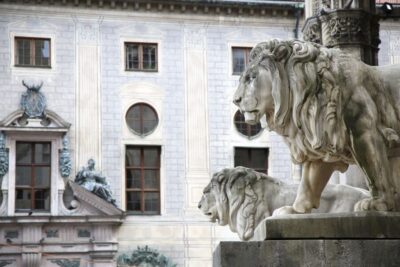 ★ 4.6Third Reich & WWII Walking TourFrom $316,181 reviews
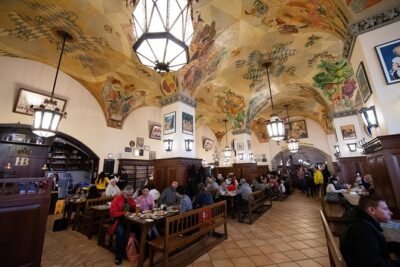 ★ 4.5Third Reich Walking Tour MunichFrom $454,291 reviews
 ★ 4.6Birthplace of the Third Reich Guided Walking TourFrom $29771 reviews
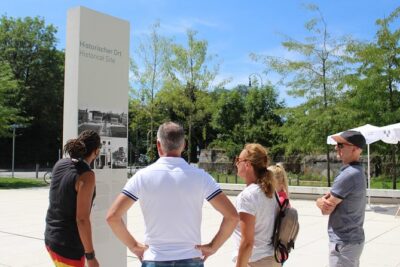 ★ 4.5Munich World War II Sites Including Dachau Concentration CampFrom $105570 reviews
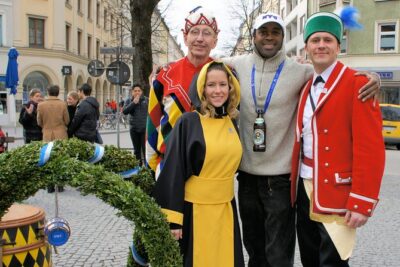 ★ 5.0Munich City Walking Tour, includes Third Reich & ViktualienmarktFrom $31458 reviews
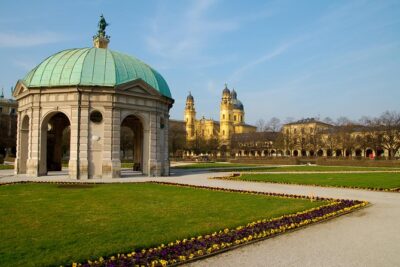 ★ 4.5Third Reich & WWII Walking TourFrom $35417 reviews
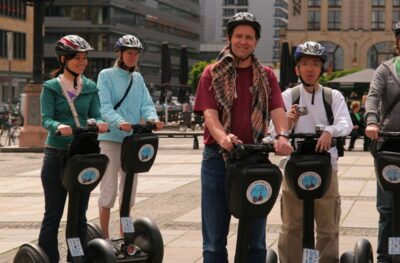 ★ 4.9Munich 3-Hour Segway Tour: Nazi Munich & Royal ArchitectureFrom $91194 reviews
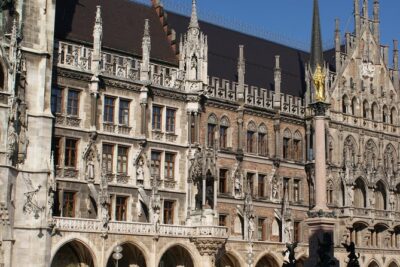 ★ 5.0Dachau Concentration Camp Memorial Site And Third Reich Day Tour From MunichFrom $145185 reviews